
 I'm LongbridgeAI, I can summarize articles.
Follow our live coverage here.
SINGAPORE – In deciding to gazette the site at 38 Oxley Road as a national monument, the Government’s considerations were for the entire site and not for the buildings and structures within it, said Acting Minister for Culture, Community and Youth David Neo.
The thinking is to develop the site into a public space like a heritage park that Singaporeans can access if it is eventually preserved and acquired, Mr Neo told the House in a ministerial statement on Nov 6.
“We will keep all options open, and strive for a solution that will unite us as a country, rather than allow this to become a point of contention or division in our society,” he added.
Mr Neo said gazetting the site of founding prime minister Lee Kuan Yew’s family home as a national monument “does not obligate the Government to keep the buildings and structures within the site in their current condition”.
Noting that the authorities have not had the chance to enter the site to assess the condition of its buildings, he said: “That is a key reason why we are opting to preserve the site rather than just the buildings or structures.”
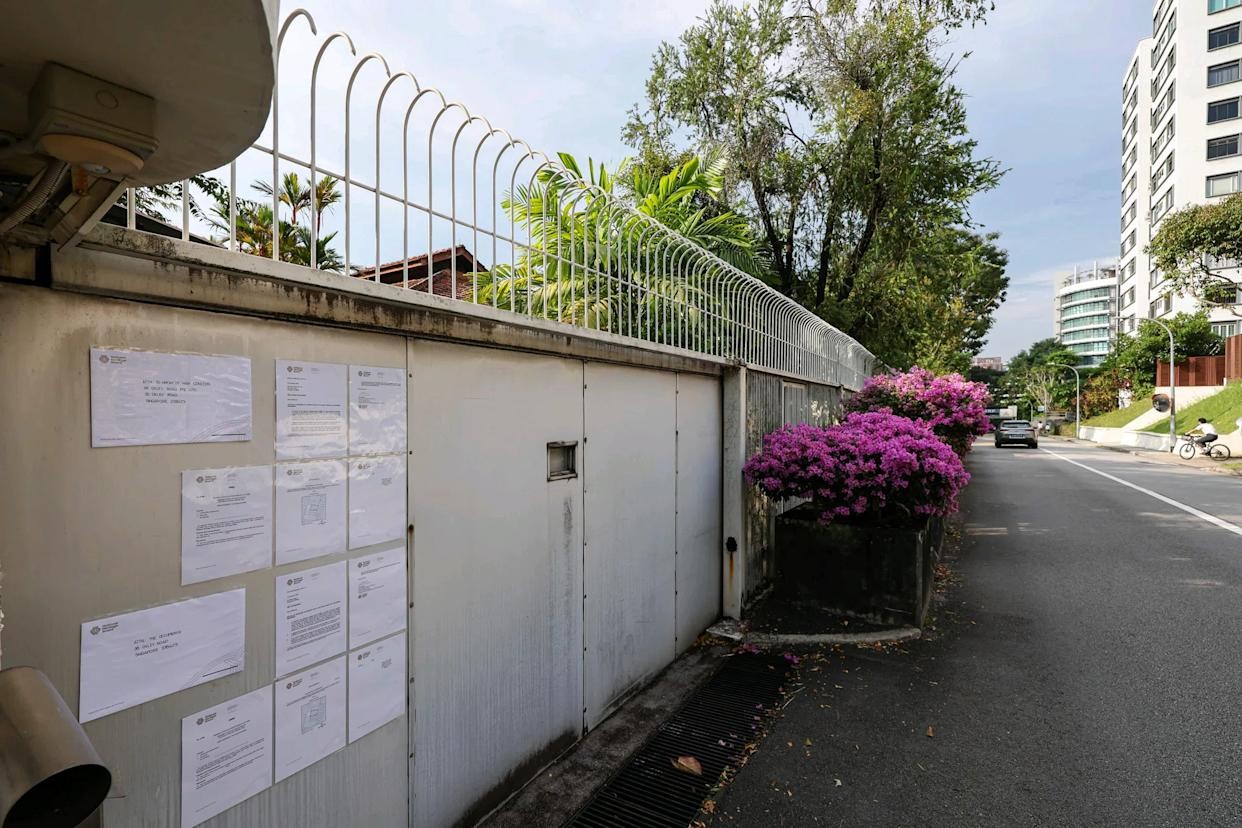
The Government on Nov 3 announced its intention to gazette the roughly 1,100 sq m site as a national monument, citing its historic significance and national importance.
Mr Neo said the Government will conduct a detailed study of the site if access it obtained.
“We will take into account factors like their existing condition, and weigh the potential benefit of retaining them against the cost,” he added.
All options will be considered for the site, he said, including those proposed by a ministerial committee on 38 Oxley Road in 2018, which include partial or full demolition of the buildings and structures.
Regardless of the option taken, the Government will respect Mr Lee Kuan Yew and his wife Kwa Geok Choo’s wishes to protect their family’s privacy, “by removing all traces of their private living spaces from the interior of the house”, Mr Neo stressed.
“Under no circumstance will the interior of the house as Mr Lee and Madam Kwa knew, be displayed or recorded or remodelled or duplicated elsewhere,” he added.
Mr Neo noted that other countries around the world have retained and converted sites associated with their nation’s independence for public education and appreciation, citing the Gandhi Ashram in India – the home of Mahatma Gandhi, who led the campaign for India’s independence from British colonial rule.
He also brought up the Independence National Historical Park in the United States, which includes buildings that witnessed the country’s key historic milestones, such as the signing of the declaration of Independence and the country’s constitution.
In many instances, said Mr Neo, changes have been made to such historical sites.
These, he said, include modifying or adapting the original buildings with new interpretive structures to better enable the public to experience the site as a park or heritage space.
That is why the Government will keep an open mind to the treatment of buildings and structures within the 38 Oxley Road site, Mr Neo said.
He told the House that the 38 Oxley Road site was where Singapore’s early leaders formulated their vision, plans and values for the country, making it a “unique and foundational part of the story of Singapore’s independence”.
Should the Government acquire 38 Oxley Road, it will not be redeveloped for residential, commercial or other private uses, he said.
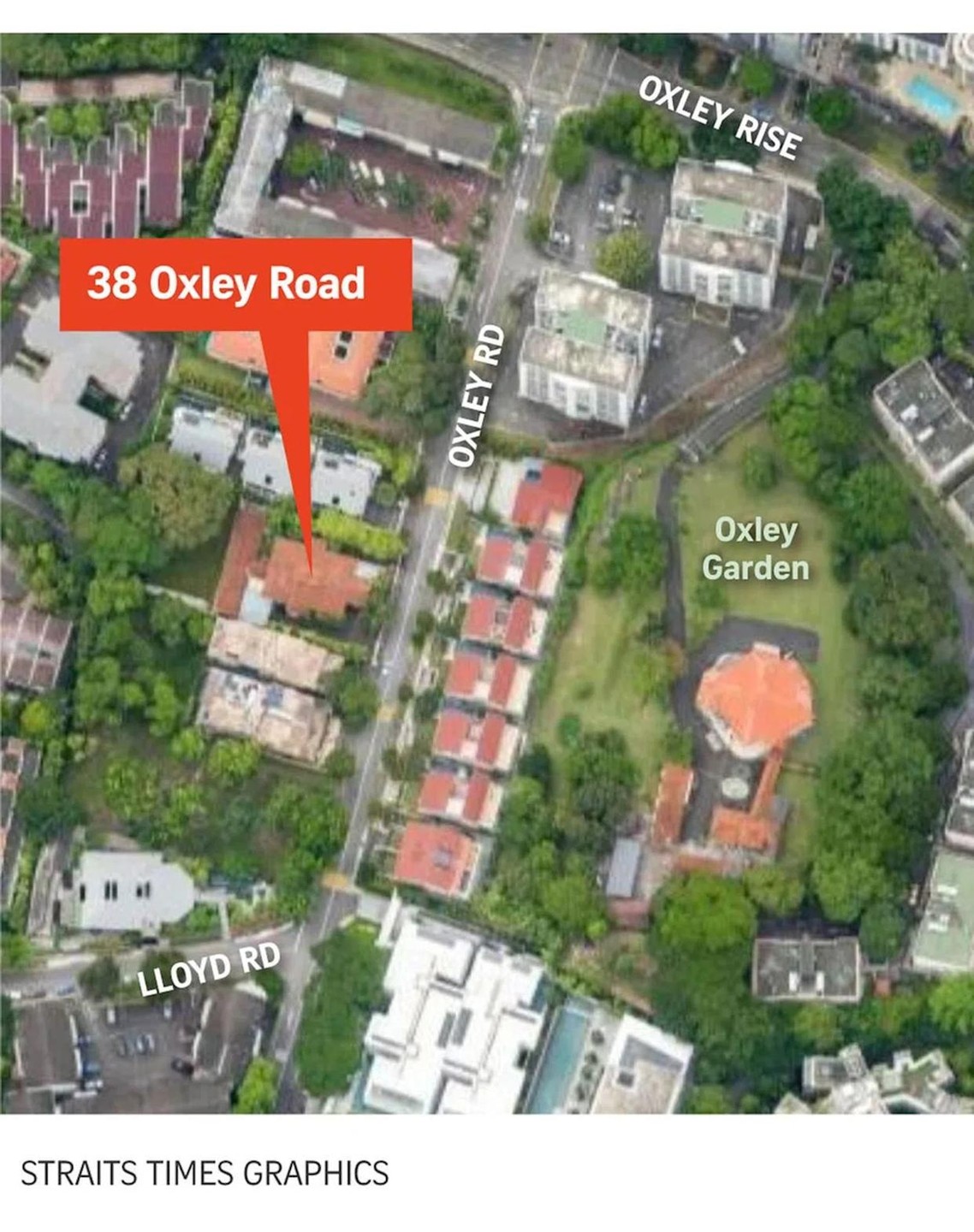
38 Oxley Road is currently owned by an entity called 38 Oxley Road Pte Ltd, whose sole shareholder is Mr Lee Kuan Yew’s youngest son, Mr Lee Hsien Yang. Mr Lee Hsien Yang’s son, Mr Li Huanwu, is the company’s director.
“Preserving the site means we will be able to avoid a situation where private parties attempt to purchase 38 Oxley Road in future just to have an address that is associated with Mr Lee’s residence,” said Mr Neo.
“I am sure all of us in this House, and the vast majority of Singaporeans would want to make sure that situation does not happen.”
He said that if 38 Oxley Road is gazetted as a national monument and subsequently acquired, the Government intends to conclude its plans on the exact use and configuration of the site, including the treatment of the buildings and structures, “well within this term of Government”.
In the interim, there will be no public access to 38 Oxley Road, he added.
Singapore’s next general election must be called by 2030.
The site’s owner – Mr Lee Hsien Yang – has until Nov 17 to submit objections to the Government’s plan to gazette the site.
The NHB, which will receive any of such objections, will assess them and make a recommendation to Mr Neo for his consideration.
“All objections submitted and recommendations made will be considered objectively and fairly as part of due process,” said Mr Neo.
Thereafter, a preservation order will be made if Government decides to gazette the site as a national monument.
The Government will then commence the process to acquire the site, as part of the plans to eventually make it accessible to the general public, said Mr Neo.
The acquisition will be done in accordance with the Land Acquisition Act.
Mr Neo noted that the site’s owner, and any occupiers and any other persons interested, will be given the opportunity to submit their claims to Singapore Land Authority (SLA) to determine the compensation.
A professional private valuer will also be appointed to assist SLA in determining the market value of the land, taking into consideration any claims submitted, he said.
If the owner is not satisfied with the compensation awarded, he can file an appeal with the Land Acquisition Appeals Board.
“The acquisition will allow the Government to take all necessary steps to safeguard the site and preserve it in keeping with its historic significance and national importance,” said Mr Neo.
Source: The Straits Times © SPH Media Limited. Permission required for reproduction
Discover how to enjoy other premium articles here