
 I'm LongbridgeAI, I can summarize articles.
We are now starting to see the real impact of oil spike on inflation data. Markets were surprised to see US producer inflation jumping to +6% y/y in April. I mean, what do you expect? But this was certainly hotter than analysts had feared and underscores stagflation concerns. Let’s see if markets will now hold onto the initial reaction we saw in the immediate response to the data, or will it be a similar story to the CPI release the day before, when the initial drop in stocks was later bought. But it is potentially bad news for risk assets and should keep the dollar forecast supported.
Stagflation fears come back to the forefront
Just as Trump arrives in Beijing for his meeting with Xi, the inflation story that markets and the US president had hoped could not materialise has suddenly come roaring back. Just one day after a hotter-than-expected CPI report rattled investors momentarily, the latest Producer Price Index data delivered an even bigger shock. Wholesale inflation exploded higher in April, reinforcing fears that the world’s largest economy may be drifting towards a stagflationary environment — where growth slows while inflation remains high. This has boosted the further because of expectations that the Fed may now have to tighten its belt again.
Producer inflation was super-hot in April
The headline PPI number rose 1.4% month-over-month, nearly triple expectations of 0.5% and marking the largest monthly increase since March 2022. On an annual basis, producer inflation surged to 6.0%, crushing forecasts for 4.8% and reaching its hottest level since December 2022. That is not the kind of number policymakers or markets wanted to see, and many analysts were certainly wrong-footed as well.
What makes the report even more concerning is the breadth of the inflation pressure. Yes, energy remains the dominant catalyst, driven largely by the earlier oil spike, but this is no longer just an oil story. Services inflation is now accelerating as higher input costs gradually seep into broader areas of the economy. That “pipeline effect” is exactly what investors feared would happen if elevated energy prices persisted long enough.
Core PPI was also hot. This excludes volatile food and energy. It surged 1.0% month-over-month versus the expected 0.3% rise. Annual core PPI climbed to 5.2%, also the highest since late 2022. That suggests inflationary momentum is becoming increasingly embedded rather than temporary.
Markets react: Bond yields and dollar extend gains
Bond markets reacted swiftly after the PPI data was released. US Treasury yields surged immediately after the release, with the 2-year yield climbing back above 4.00% for the first time since March as traders aggressively priced out any Federal Reserve rate cuts that were being priced back in towards the end of the year. Meanwhile, the benchmark 10-year Treasury yield jumped to 4.49%, its highest level since July.
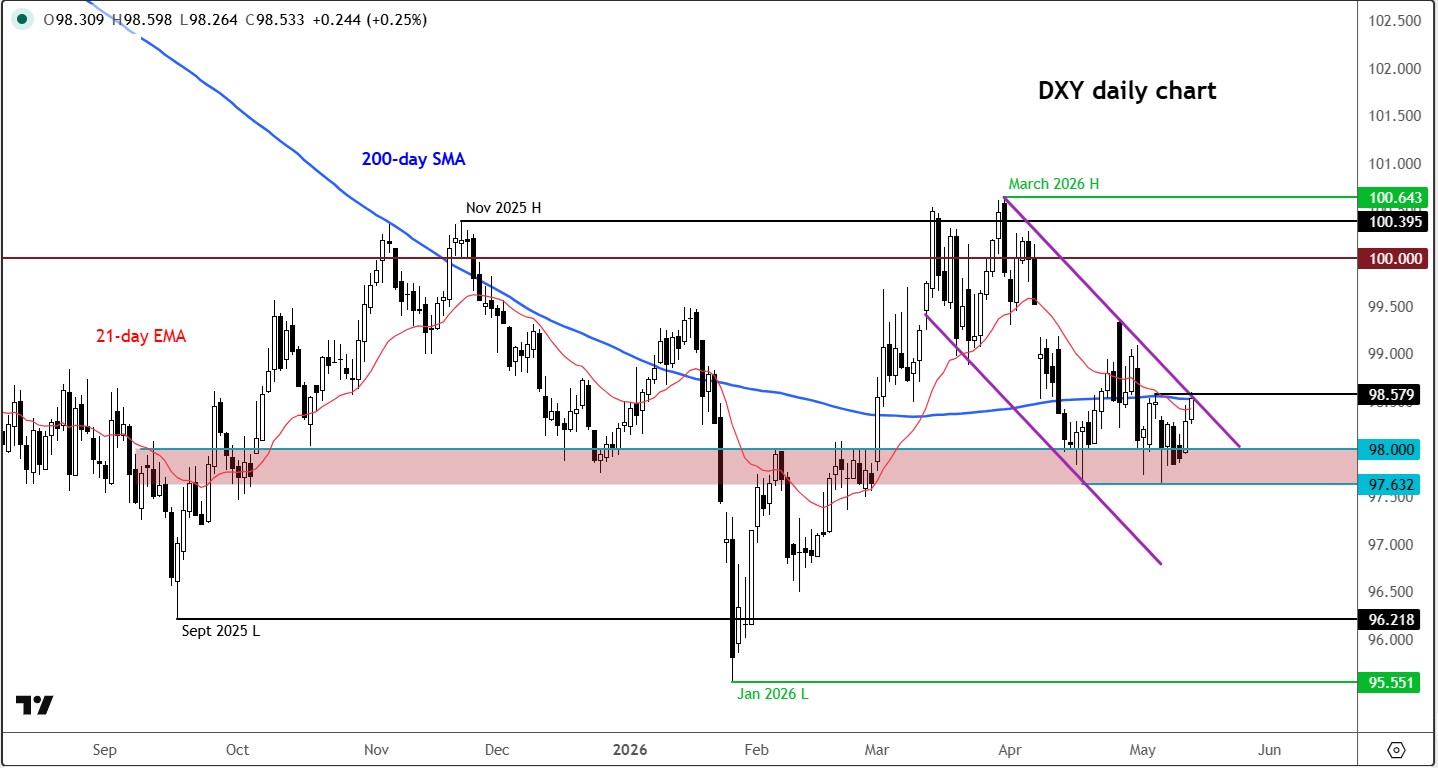
The dollar forecast could take additional, technical, boost, should the dollar index (DXY) breaks out of the bearish channel and resistance at 98.55/60 area.
But that move in yields matters because it tightens financial conditions across the economy. Higher yields push borrowing costs higher for households, corporations, and governments alike. Equity markets haven’t struggled yet but could do so moving forward because rising rates reduce the appeal of risk assets while simultaneously squeezing corporate profit margins.
So, sticky inflation, elevated rates, slowing growth, and potentially rising volatility are all ahead of us, especially if further inflation data confirms these trends.

-- Written by Fawad Razaqzada, Market Analyst
Follow Fawad on Twitter @Trader_F_R