
 I'm LongbridgeAI, I can summarize articles.
The next time you walk into a Sprouts Farmers Market, take a look around. The produce is up front. The store is small enough that you can grab dinner without logging a respectable morning walk. Somewhere between the avocados and the checkout line sits a private equity success story that started with three regional grocery chains.
In 2011, funds affiliated with Apollo Global Management helped bring Sprouts and Henry’s Farmers Markets together. The combined company bought Sunflower Farmers Market the following year and went public in 2013. Apollo sold its stake in stages, and as of September 2026, Sprouts (NASDAQ:SFM) operated 504 stores in 25 states.
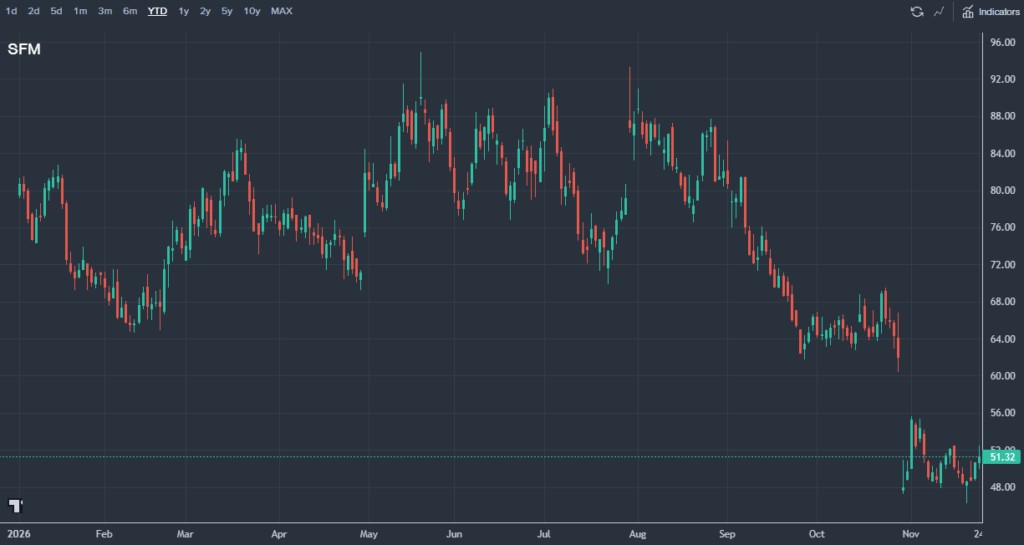
Apollo helped build a regional grocer with enough scale to become a publicly traded national company. Folks who never had a prayer of getting into an Apollo fund could buy shares, read the filings, and decide for themselves what the business was worth.
That is the part of the Apollo story I want to put to work for you. When a firm with this record takes a company public or shows a large position in its quarterly holdings report, I want to know how it got there. Sometimes the company spent years getting better while the rest of us barely knew it existed. Sometimes the story starts with a bankruptcy judge. Either way, we have far more to go on than the latest price target from a fellow who discovered the company last Tuesday.
Building a Fortune From Financial Distress
Leon Black, Josh Harris, and Marc Rowan founded Apollo in 1990, right after Drexel Burnham Lambert collapsed. They knew the high-yield bond market at a moment when plenty of people wanted to be as far from it as possible. One early opportunity came out of the failure of Executive Life. California took control of the insurer in 1991, and in 1992, it sold its junk bond portfolio to Altus Finance for approximately $3 billion.
Apollo’s involvement helped lay the foundation for its credit business. When a seller must raise cash and the usual buyers vanish, the person who can read the underlying credit gets to buy on wonderfully good terms.
Apollo carried that thinking into buyouts. The firm hunts for businesses it can improve, divisions a parent company wants gone, and companies whose operating assets can support the business once somebody fixes the debt. That is three different roads to a good purchase price. Sometimes Apollo buys the whole company. Sometimes it finances the company first and ends up owning a piece of it.
The price is what matters, along with what the investment gives Apollo the right to do.
A Track Record Worth Studying
The results are why I pay attention. Apollo reports a 24% net annualized internal rate of return across its traditional private equity funds from inception through September 30, 2026. Fund V, a 2001 vintage, finished at 44% net.
Fund VII had money ready to go during the financial crisis, earned 25% net, and realized $34.3 billion of investment value on $16.5 billion invested. One of the deals behind that record was LyondellBasell. Apollo held the chemical company’s debt, helped finance its exit from bankruptcy, and received equity in the reorganized business.
Beautiful.
Do not get carried away, though. Returns varied widely by vintage. Funds VI and VIII each reported 9% net, while Fund X stood at 19% net in September, with most of its reported value still unrealized. The long record gets my attention, but I still want to know what happened in the individual deals.
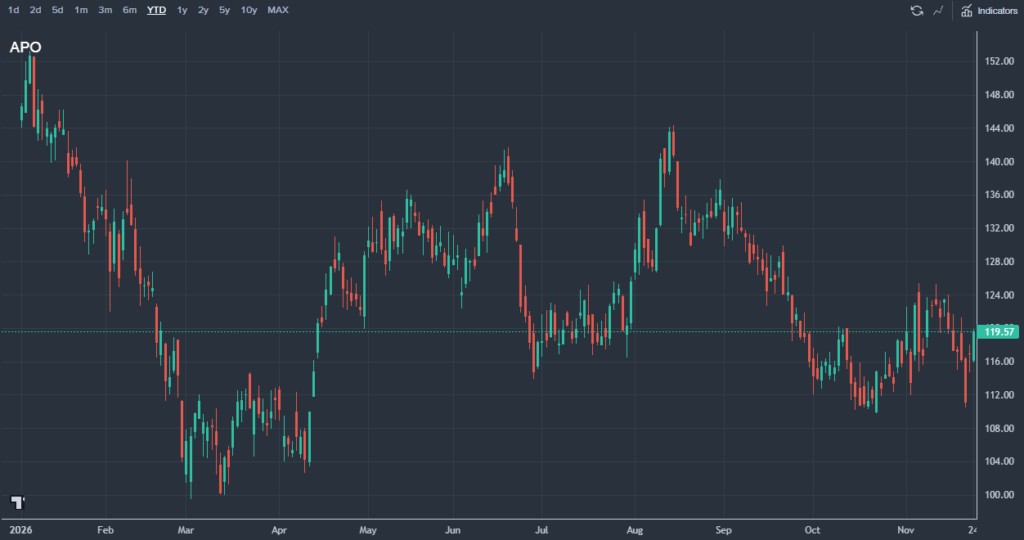
Apollo went public in 2011 under the ticker (NYSE:APO). Rowan took over as CEO in 2021, and the firm completed its merger with retirement services company Athene in 2022. By September 2026, Apollo managed approximately $1.07 trillion in assets, including $51.3 billion in its traditional private equity funds. By November, it was raising its 11th flagship fund, with a reported target of $22 billion to $25 billion.
That is a long way from the wreckage of Drexel. You can see how it got there in a couple of businesses you already know.
From Textbooks to Digital Learning
In 2013, The McGraw-Hill Companies sold its education business to Apollo funds for an announced $2.4 billion in cash. The parent wanted to focus on its financial businesses. Apollo got a textbook publisher with deep relationships across schools and universities and a growing opportunity to deliver course materials digitally.
Think about what a professor needs on day one of a semester. A book is part of it, but so are assignments, assessments, and the software students use to turn in their work. McGraw Hill built out its digital learning business, and Platinum Equity bought the company in 2021 for approximately $4.5 billion.
Those are the announced deal values. The financing and cash distributions along the way also matter when calculating what Apollo actually earned.
The same discipline applies when examining Apollo’s publicly disclosed holdings today. Understanding how the firm originally entered an investment can tell us considerably more than simply looking at the size of its current position.
Aeroméxico (NYSE:AERO): From Senior Lender to Shareholder
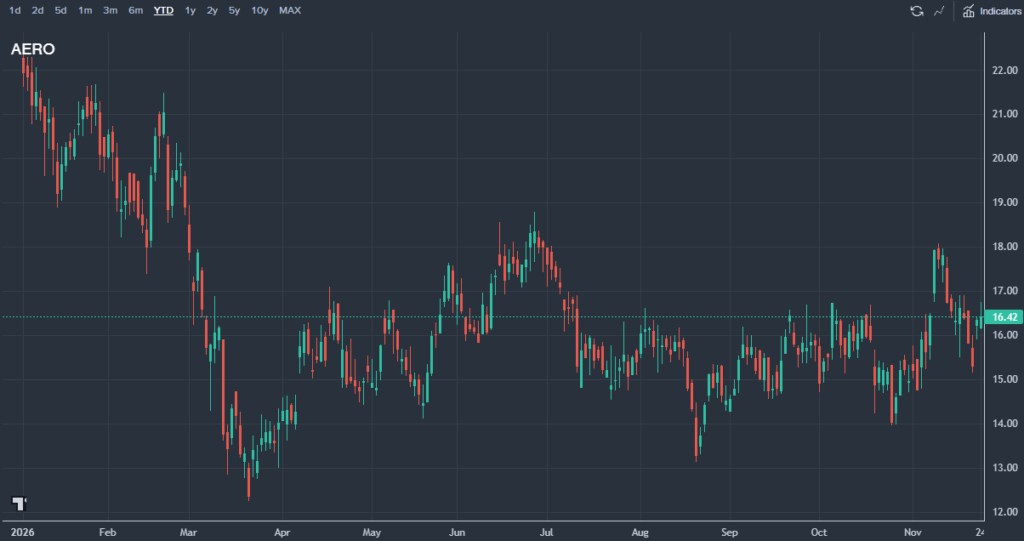
Aeroméxico took a different road to the exchange. The pandemic flattened air travel, and the Mexican carrier filed for Chapter 11 bankruptcy protection in 2020. Apollo funds committed a $1 billion senior secured financing facility to keep the airline flying through bankruptcy, with part of that financing converting into equity in the reorganized company.
The airline emerged from bankruptcy in 2022 and returned to the public markets in November 2025, pricing its U.S. depositary shares at $19. That is an operating and financing comeback we can follow directly into Apollo’s latest 13F filing.
Apollo Management Holdings filed its 13F on November 16, covering positions as of September 30, 2026. Among its holdings were approximately 27.5 million Aeroméxico depositary shares valued at $434.3 million.
That position hands us a better question than whether Apollo likes airlines. Apollo went in as a senior lender while the carrier needed cash to keep the planes in the air. The shares available to us sit behind the company’s debt, which means our investment has different economics and protections than Apollo’s original financing arrangement.
I want to know what the airline can earn through a rough year, what it must spend on its fleet, and how much cash flow is left for shareholders. The answer at today’s price is our decision.
Phoenix Education Partners (NYSE:PXED): A $633 Million Position Years in the Making
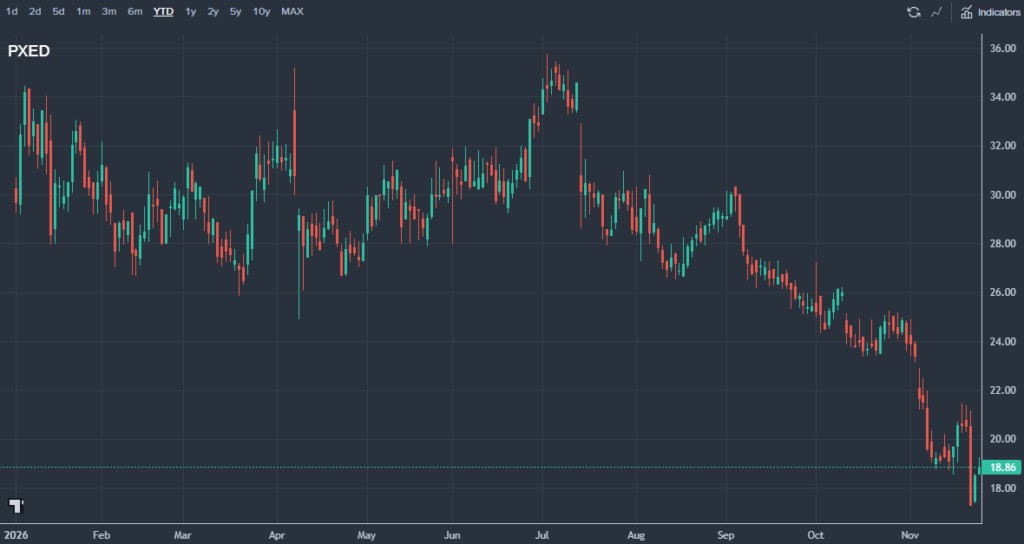
Another significant holding in Apollo’s latest 13F was 24.9 million shares of Phoenix Education Partners, valued at approximately $633.2 million. Two rows in a spreadsheet give us two very different businesses and two good reasons to open the filings.
Phoenix Education owns the University of Phoenix, which primarily serves working adults. Apollo funds and Vistria were part of the group that took its former parent private in 2017. In October 2025, the two sponsors sold shares as Phoenix Education went public at $32 per share.
The company subsequently reported more than $1 billion in fiscal 2026 revenue, with average degree program enrollment rising to 83,700 from 81,900.
That large 13F position makes considerably more sense once you understand the history that put it there. Apollo still holds a substantial position and has a financial incentive to realize additional value through future share sales at higher prices.
For us, the opportunity begins with examining the business as it exists today and determining what its earnings and cash generation are worth. Apollo’s history with the company provides valuable context, but our purchase price will ultimately determine our investment return.
Follow the Share Count
Aeroméxico and Phoenix Education illustrate how Apollo’s existing public equity holdings can originate from years of private ownership, financing, and restructuring. The next two companies offer something different: meaningful increases in Apollo’s reported share counts during the latest quarter.
Primo Brands (NYSE:PRMB): More Than Doubling Its Position
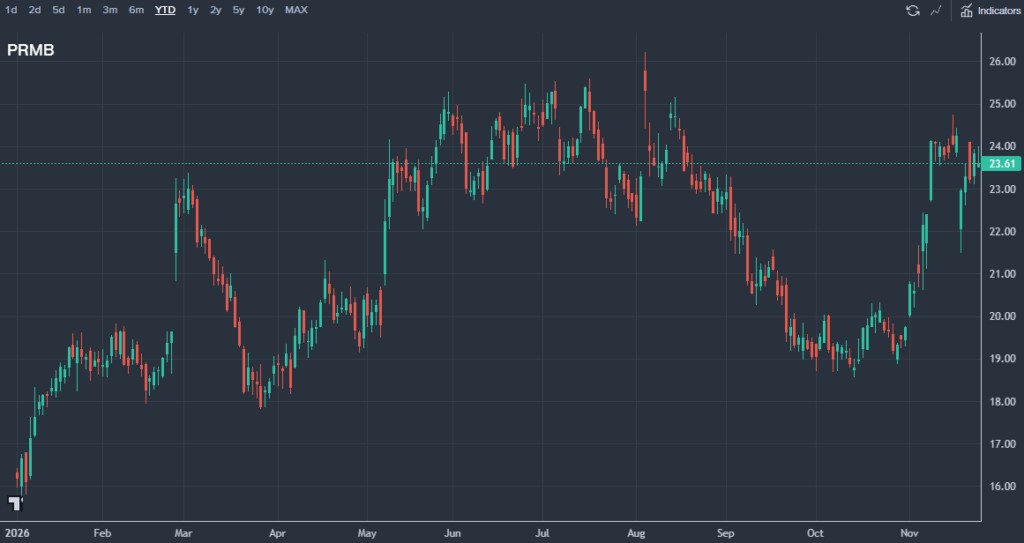
Primo Brands represents the larger move of the two stakes Apollo increased. Its reported position more than doubled from 6.89 million to 15.23 million shares, an increase of approximately 8.35 million shares, or 121%. The position was worth $290.2 million at the end of September.
If you have ever picked up a case of Poland Spring or had a five-gallon jug delivered to your office, you know the business. Primo sells branded water through retail stores, delivery routes, and refill stations.
Third-quarter sales rose 3.1% to $1.82 billion, helped by premium brands and regional spring water. However, management pointed to the low end of its adjusted EBITDA forecast for the year.
I want to see how much cash those water routes can generate after fuel, freight, and the cost of servicing $4.8 billion in net debt. Apollo’s substantial increase in its reported position gives us a good reason to examine the company’s operating performance and financial obligations more closely.
Bottled water is an easy business to understand. The economics are all in getting it to the customer.
USA TODAY Co. (NYSE:TDAY): Buying More as the Market Value Falls
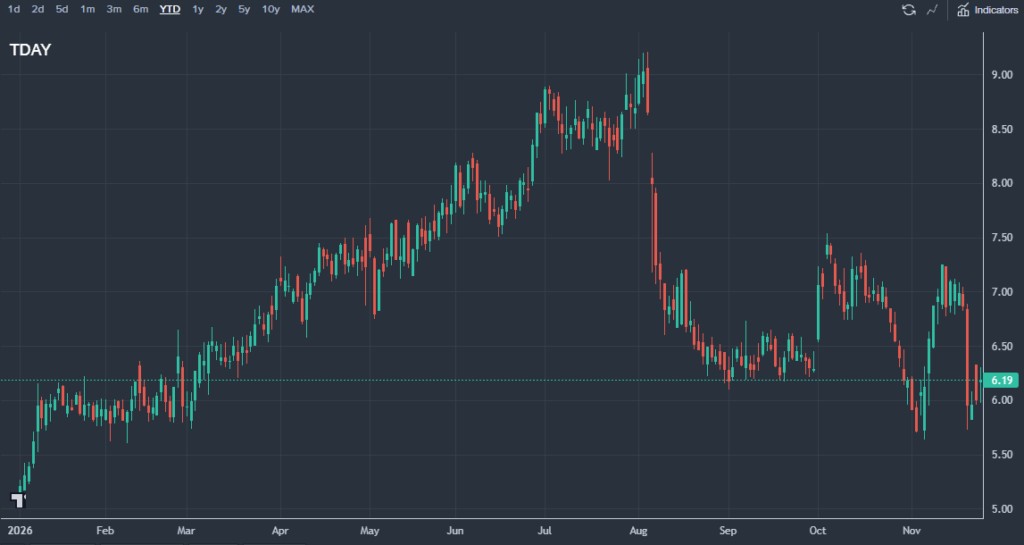
USA TODAY Co., formerly Gannett, owns the national newspaper and a network of local publications. Apollo reported 13.95 million shares, an increase of 1.82 million shares, or 15%, even as the reported value of the position fell from $103.7 million to $87.7 million.
That is exactly why I read the share column first. Looking only at the reported market value would give us a very different impression of what happened to Apollo’s position during the quarter.
Apollo knows this balance sheet well. It financed the 2019 acquisition of legacy Gannett, and funds managed by its affiliates agreed in November to make up to $50 million in additional financing available for company share repurchases.
The business still has work to do. Third-quarter revenue fell 7.4%, even with digital accounting for 48% of sales. I want to see whether digital subscriptions and advertising can grow fast enough, alongside the new $100 million annualized cost reduction plan, to leave more cash for shareholders.
The increased share count and Apollo’s continuing involvement in the company’s financing make this a situation worth investigating. The challenge is determining whether the business can generate sustainable cash flow as its revenue mix continues to evolve.
Let Apollo Find the Opportunities, Then Do the Work
Aeroméxico and Phoenix Education Partners are the places to trace existing stakes back to the original deals. Both demonstrate how a private equity or credit investment can eventually become a publicly traded security available to individual investors.
Primo Brands and USA TODAY Co. are where I would start if I wanted to know where Apollo’s reported share counts went up. Those increases give us specific businesses to investigate, with questions surrounding operating performance, debt, capital allocation, and future cash generation.
The important distinction is that Apollo may have entered these investments at different prices, through different securities, and with different protections than those available to us today. We can benefit from knowing where an experienced investment firm has committed capital without assuming that every position represents an attractive purchase at the current market price.
Read the company’s numbers and decide what you would pay for the cash flow you can reasonably expect.
Apollo has spent 36 years getting paid to find businesses and securities other people have mispriced. I am perfectly happy to let it do some of the hunting for us.
Login to unlock9,353characters for free
Due to copyright restrictions, please log in to your Longbridge account to view this content.
Thank you for your understanding and support of licensed content.