iResearch: The export scale of tool products is expected to reach a new high of 224.1 billion yuan in 2024, with a year-on-year growth rate of 13.7%
 I'm LongbridgeAI, I can summarize articles.
According to a report by iResearch Consulting, it is expected that the export scale of China's tool products will reach 224.1 billion yuan in 2024, a year-on-year increase of 13.7%. This growth is attributed to the recovery of consumer willingness in overseas markets and the increased demand for building maintenance. China's manufacturing industry occupies a leading position in the global market, providing a solid foundation for the export of tool products. In the future, the growth of infrastructure and commercial buildings, the deepening of DIY habits, and the increasing demand for product iteration will drive the industry scale to continue expanding at an average annual growth rate of 4%. It is expected that the global tool products market will exceed 60 billion USD for the first time in 2024
According to the Zhitong Finance APP, recently, iResearch Consulting released a report on consumer trends in the tool products market in Europe and America. With a complete industrial system and the scale effect of the supply chain, China's manufacturing value-added accounts for more than 30% of the global total, ranking first in the world. This industrial advantage provides a solid development foundation for the export of China's tool products. Driven by favorable factors such as the recovery of consumer willingness in overseas markets and the growth of construction and maintenance demand, the export scale of tool products is expected to reach a new high of 224.1 billion yuan in 2024, with a year-on-year increase of up to 13.7%.
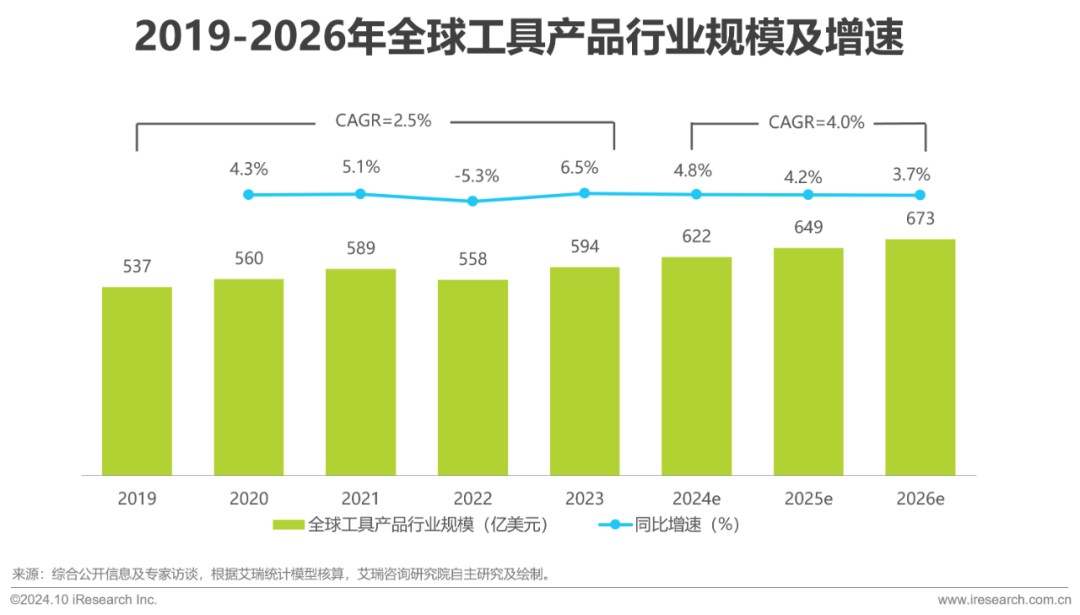
Since 2019, the global tool products market has maintained a scale of 50 billion USD, with an average annual growth rate of 2.5% from 2019 to 2023. In 2022, consumer demand for high-priced durable goods was suppressed, leading to a temporary decline in the industry. However, this situation was rectified in 2023. In the future, driven by multiple favorable factors such as the release of infrastructure and commercial building increments, deepening DIY habits, and increasing demand for product iteration, the industry scale is expected to continue to expand at an average annual growth rate of 4%, and is projected to exceed 60 billion USD for the first time in 2024.
Concept and Scope Definition
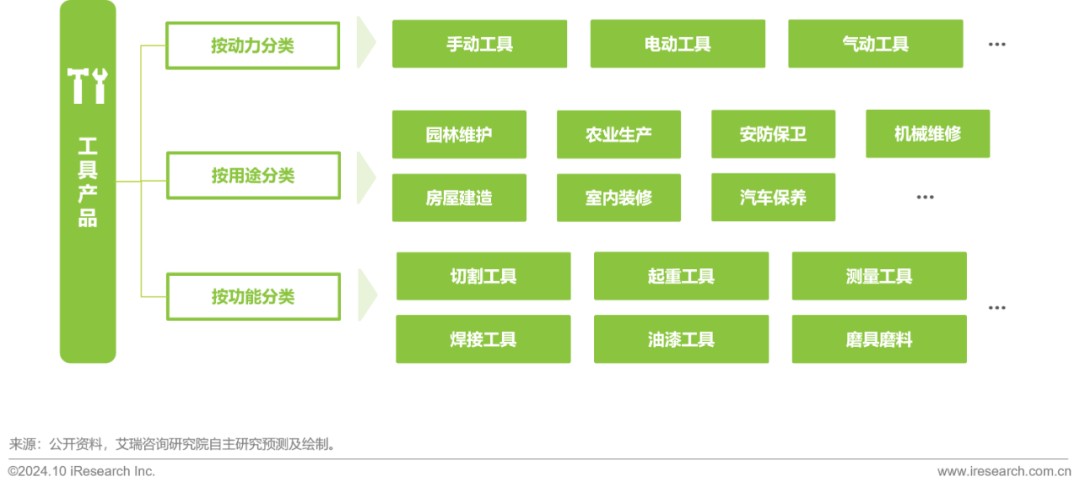
Concept and Categories of Tool Products The tool products studied in this report refer to operating tools driven by human power, electricity, or pneumatic power, which are controlled by hand to act on objects. Categories of Tool Products: · By power classification, tool products mainly include hand tools, electric tools, and pneumatic tools. · By application classification, tool products are mainly used in fields such as garden maintenance, agricultural production, security, mechanical maintenance, house construction, interior decoration, and automobile maintenance. · By function classification, tool products mainly have functions such as cutting, lifting, measuring, welding, painting, and grinding.

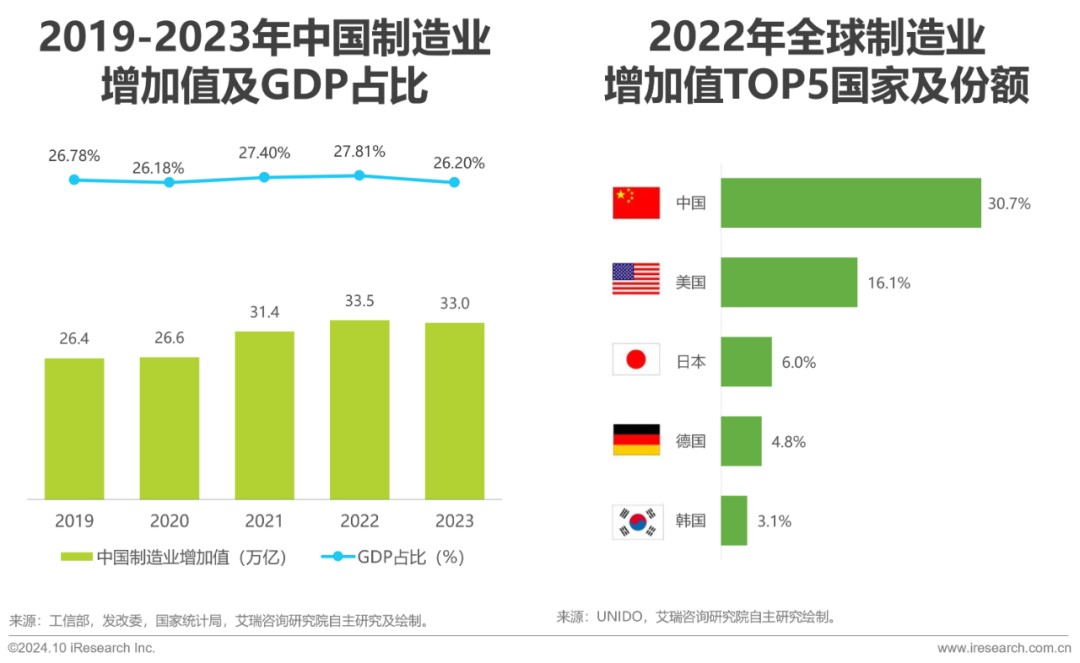
Background of Tool Products Export Development With a complete industrial system and scale effect, China's manufacturing industry has a good advantage in the global market Manufacturing is the foundation of our country, and the high-quality development of the manufacturing industry has become a top priority for promoting the high-quality development of our economy. Statistical data shows that in 2023, China's manufacturing value-added was approximately 33 trillion yuan, accounting for 26.2% of GDP, with the contribution of manufacturing value-added to GDP remaining stable at over 25% for the past five years. With a complete industrial system and the scale effect of the supply chain, China's manufacturing value-added accounts for more than 30% of the global total, ranking first in the world. This industrial advantage provides a solid development foundation for the export of China's tool products
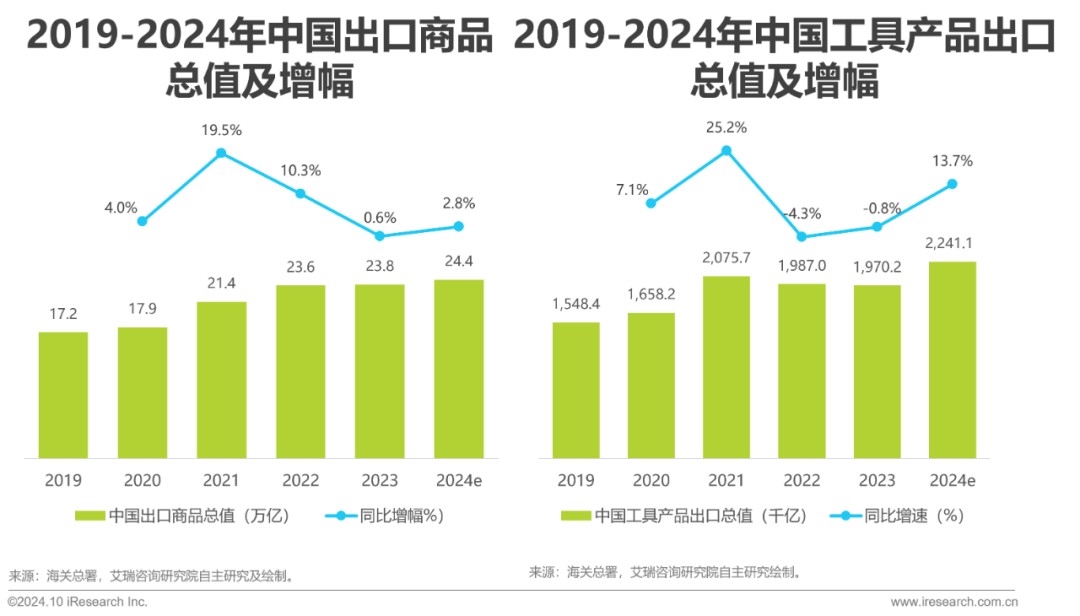
Background of Tool Product Export Development The total export value of goods continues to be released, and the growth rate of tool product exports is expected to be higher than the overall rate According to customs statistics, from January to July 2024, China's total import and export value of goods reached 24.83 trillion yuan, a year-on-year increase of 6.2%. Among them, exports reached 14.26 trillion yuan, a year-on-year increase of 6.7%. Based on this trend, the total export value of goods is expected to exceed 24 trillion yuan for the first time this year, with strong export momentum. The growth trend of tool product exports is generally consistent with the overall export market, but it experienced a significant decline in 2022 due to the impact of overseas economic activities and consumption cycles. Driven by favorable factors such as the recovery of consumer willingness in overseas markets and the growth of construction and maintenance demand, the export scale of tool products is expected to reach a new high of 224.1 billion yuan in 2024, with a year-on-year increase of 13.7%.
Background of Tool Product Export Development Under the new development pattern of domestic circulation as the main body and mutual promotion of domestic and international dual circulation, policies supporting the export of manufacturing industry continue to strengthen, benefiting tool product companies to expand overseas markets Guided by long-term strategies such as brand export and dual circulation, as well as supported by policies encouraging exports, increasing the establishment of exhibition platforms, and supporting new business formats, Chinese companies are actively responding to the call for going overseas. Tool product companies are expected to leverage the strong support for manufacturing industry exports from policies to actively expand overseas markets and explore new business potential.

Global Market Overview - Industry Scale The global tool product market is expected to exceed 60 billion USD this year, showing a steady development trend Since 2019, the global tool product market has maintained a scale of 50 billion USD, with an average annual growth rate of 2.5% from 2019 to 2023. In 2022, the high inflation in the European and American markets and the continuous interest rate hikes by the Federal Reserve narrowed liquidity, suppressing consumer demand for high-priced durable goods, leading to a temporary decline in industry scale. However, this situation was corrected in 2023. iResearch believes that the main favorable factors for the industry in the future will be the release of incremental demand in infrastructure and commercial construction, the deepening of DIY habits, and the increasing demand for product iteration. With multiple favorable factors driving the market, The industry scale is expected to expand at an average annual growth rate of 4%, with a forecast to surpass USD 60 billion for the first time in 2024 and reach USD 67.3 billion by 2026.
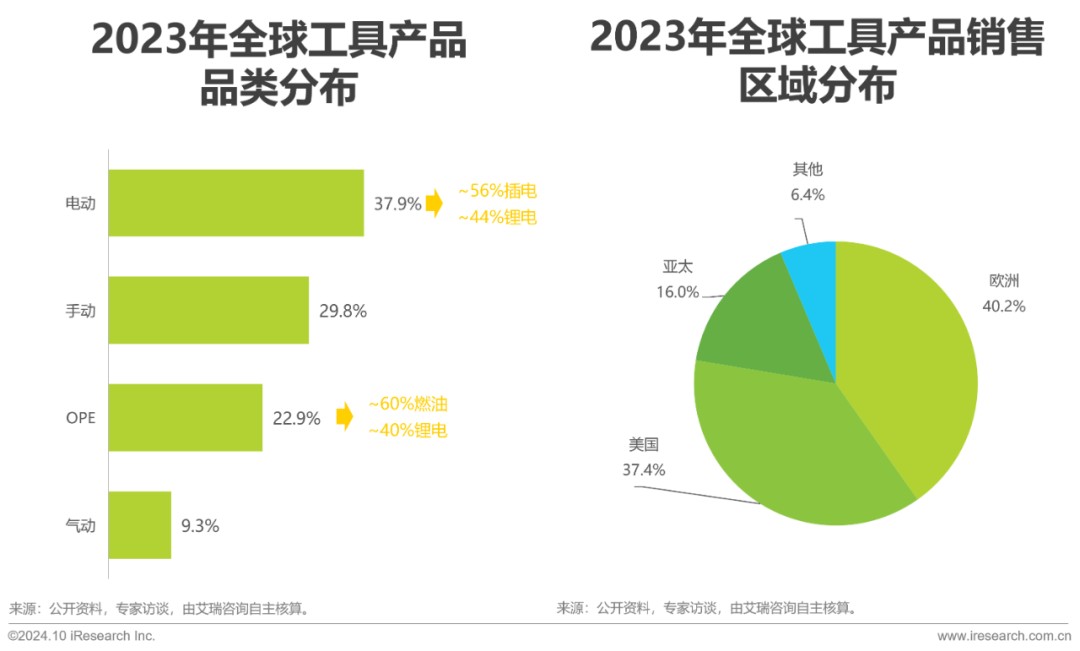
Global Market Overview - Categories & Regions The trend of electric and lithium battery tools is prominent, with the United States and Europe as core markets From the category perspective, electric products account for the highest proportion. On one hand, electric tools have replaced some traditional manual tools due to their efficiency; on the other hand, the emergence of lithium battery products has enhanced the portability of electric tools, further deepening the penetration of electric products. In addition, OPE products have also improved the safety and environmental issues of traditional fuel-powered products through lithium battery technology. With continuous technological advancements, the performance of lithium battery products is also expected to improve. From a regional perspective, the European and American markets account for as much as 77.6%, with a high prevalence of DIY habits in these markets, driving strong consumer demand for tool products in high-frequency scenarios such as household maintenance.
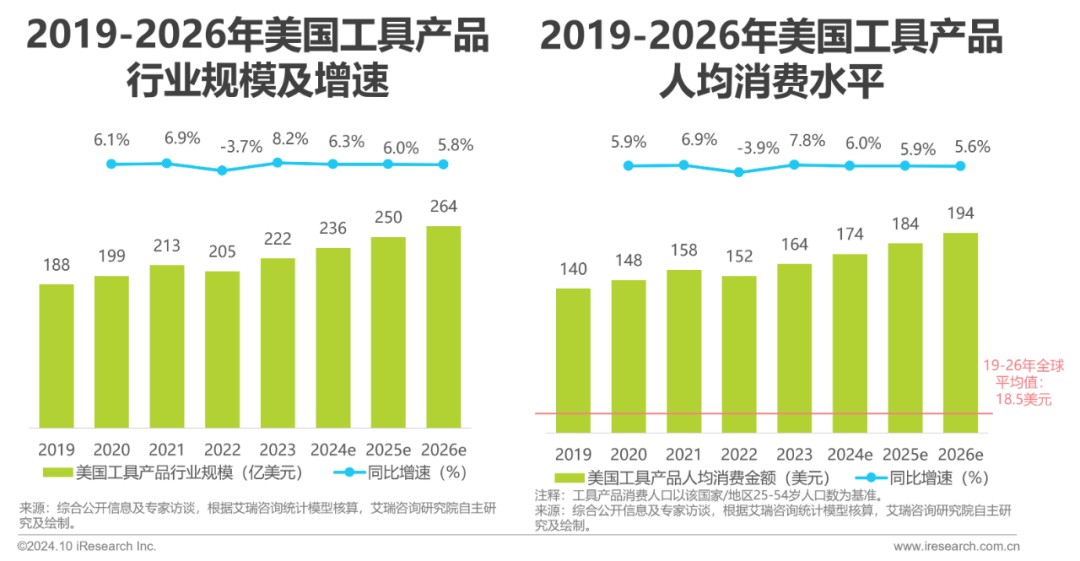
U.S. Market Overview - Industry Scale & Per Capita Consumption Demand for construction and maintenance, deepening DIY habits, and iterative demand drive U.S. market growth above global levels, with consumption levels expected to continue rising The growth rate of the U.S. tool market is nearly two percentage points higher than the global level. In 2020 and 2021, much of the outdoor consumption shifted to home consumption, benefiting tool product sales. In 2021, the U.S. tool product market size surpassed USD 20 billion for the first time. In 2022, high inflation and the Federal Reserve's interest rate hikes led to a contraction in consumer willingness and a decline in industry scale, but this situation eased in 2023. Coupled with the demand for product upgrades, tool product consumption began to recover. Moving forward, with the continuous increase in construction and maintenance demand from U.S. consumers, deepening DIY habits, and rising product iteration demand, the industry is expected to maintain a compound annual growth rate of 5.9%. In terms of per capita consumption levels, the average was around USD 150 from 2019 to 2022, reaching USD 164 in 2023. As the country with the highest per capita GDP among large economies (2023: USD 81,700), U.S. per capita consumption of tool products is significantly higher than the global level and is expected to continue to rise.
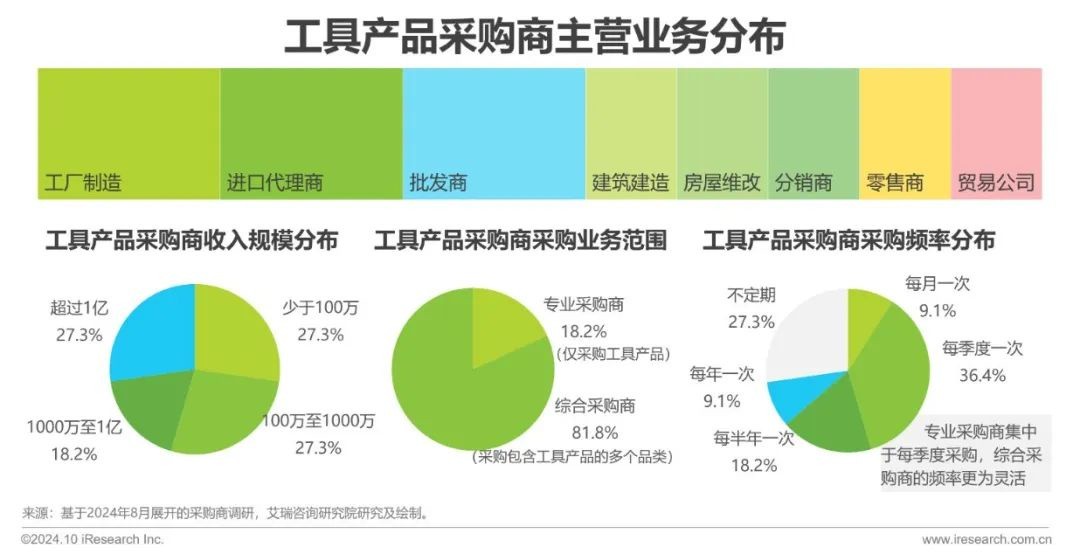
 Buyer Demographics American buyers span diverse business types and income scales, with differentiated purchasing frequency The range of tool products and application scenarios is broad, and buyers have diverse main businesses. From the distribution of American buyers, it covers various types of enterprises, including factory manufacturers, construction and home renovation service providers, import agents, traders, tool product wholesalers/distributors/retailers, etc., encompassing businesses of various operational conditions and income scales. Due to the diversity of businesses, more buyers need to purchase a variety of categories, including tool products. In terms of purchasing frequency, professional buyers who only need to purchase tool products have a stronger certainty of demand for tool products, with more regular purchasing frequency, concentrated on purchasing once per quarter; in contrast, the purchasing behavior of comprehensive buyers is more flexible.
Factors Influencing Purchasing Decisions Focus on the two core elements of price and quality, establishing and consolidating mutual trust In the purchasing decision-making process, American tool product buyers mainly focus on price (63.6%) and quality (81.8%), followed by product innovation, customization capability, supplier reputation, delivery time, and other factors; additionally, some buyers actively consider the compliance of products and suppliers. Under the influence of these factors, the main challenges faced by buyers also revolve around price and quality, with 81.8% of buyers believing that quality control is the primary challenge. Suppliers should strengthen their insights and service capabilities regarding the core concerns of buyers, making their purchasing decision-making process smoother, and are expected to enhance the overall purchasing experience and product service satisfaction of buyers by improving product information transparency, enhancing the closeness of two-way communication, and increasing product diversity, thereby increasing cooperation frequency and stability.
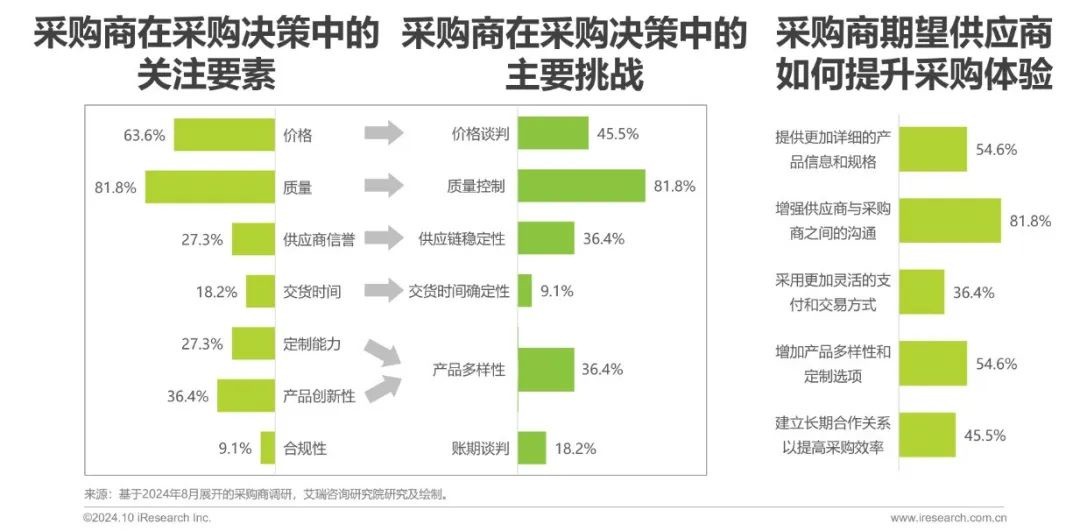
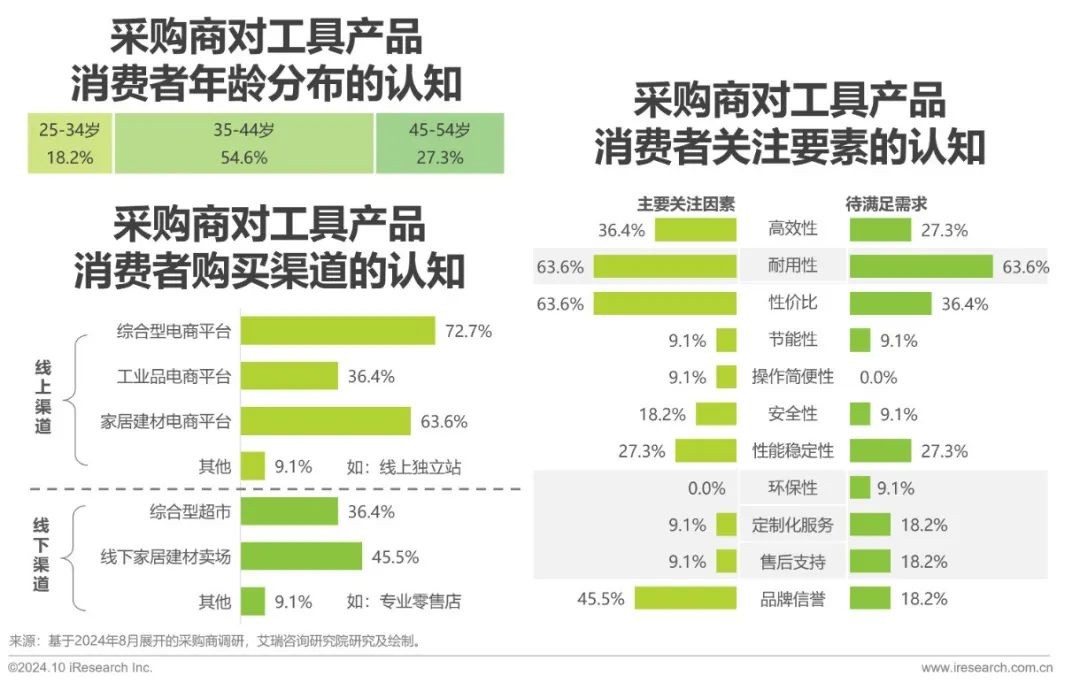
Consumer Insights High penetration rate of online platform channels, durability reflects core product competitiveness American buyers believe that consumers in the American tool product market are mainly concentrated in the middle-aged group of 35-45 years old (54.6%), preferring to purchase through online channels, such as comprehensive e-commerce platforms (72.7%), home improvement and building materials e-commerce platforms (63.6%), etc. Consumers pay more attention to the durability, cost-effectiveness, and brand reputation of tool products, among which some consumers believe that durability still needs further improvement (63.6%), while demands for environmental friendliness, customization, and after-sales support have not been fully met. For Chinese tool product suppliers, aligning with consumer demands is expected to enhance their competitive advantages and sales scale in front of buyers, such as strengthening direct and indirect coverage of tool product e-commerce platform buyers, improving product quality assurance and durability, and enhancing customization service capabilities
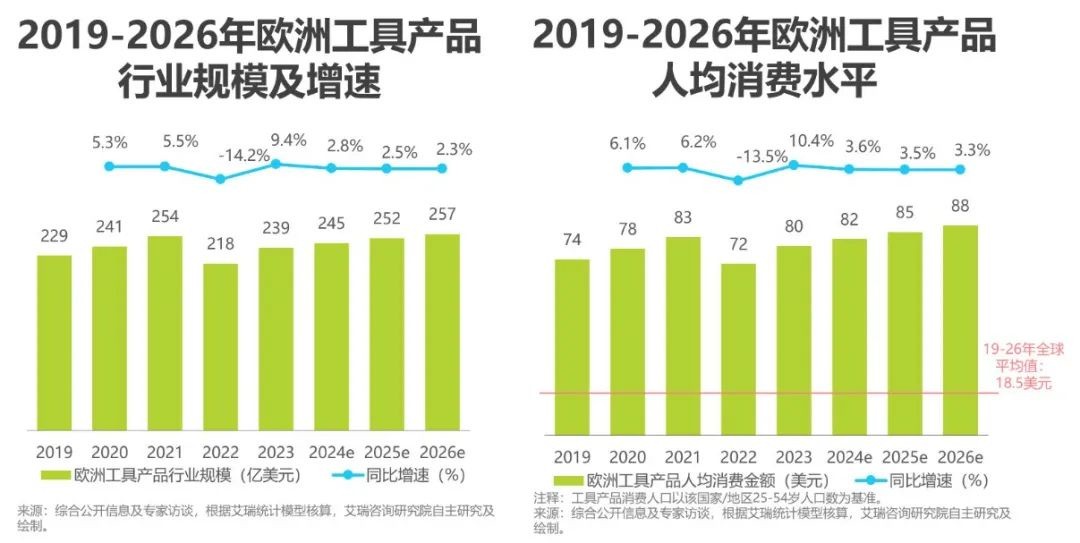
Overview of the European Market - Industry Scale & Per Capita Consumption The largest market globally, economic recovery consumption tends to stabilize, and market quality is relatively high From 2019 to 2023, the European tool product market maintained a share of over 40% globally, making it the largest market, with growth rates generally consistent with the global average. The year 2022 was somewhat special, as the industry experienced a decline, with a drop far exceeding the global average, primarily due to the high inflation environment in Europe leading to reduced consumer behavior, and the intensification of disputes in Europe further weakened consumption capacity and willingness. In 2023, inflation eased, and the recovery of DIY demand drove the market back to 2020 levels, with stable growth expected from 2024 to 2026. In terms of per capita consumption, except for 2022, the European per capita level has generally remained around $80, which is more than four times the global average, indicating high market quality. However, there are significant differences in economic development levels across different regions in Europe, with developed economies having higher per capita consumption levels, while developing economies will also see increased tool product consumption due to construction demand. Overall, there is still room for improvement in future European per capita consumption.
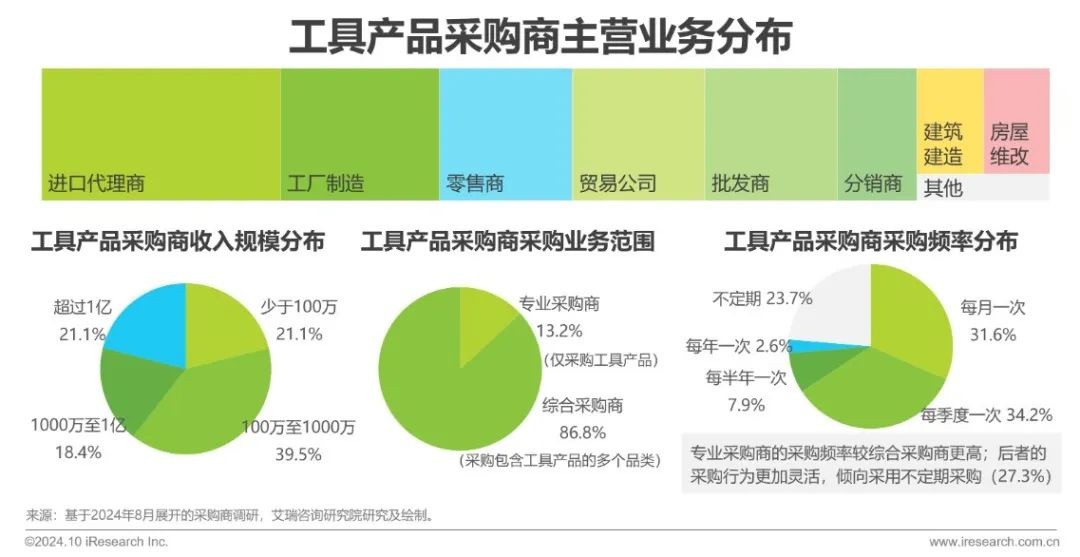
Profile of Purchasing Groups European purchasers are mainly for resale, flexibly adjusting inventory levels through high-frequency procurement The main businesses of European tool product purchasers include import agents, factory manufacturers, and various types of enterprises. Compared to the situation in the United States, the proportion of purchasers in Europe engaged in direct production, such as factory manufacturing, construction, and home renovation, is relatively lower, while the proportion of purchasers for resale, such as import agents, retailers, trading companies, and wholesalers, is relatively higher. Additionally, there is a higher proportion of medium-sized purchasers among European tool product purchasers, with more being comprehensive purchasers. In terms of procurement frequency, European purchasers tend to choose medium to high-frequency procurement on a monthly and quarterly basis (65.8%), significantly higher than the situation in the United States (45.5%).
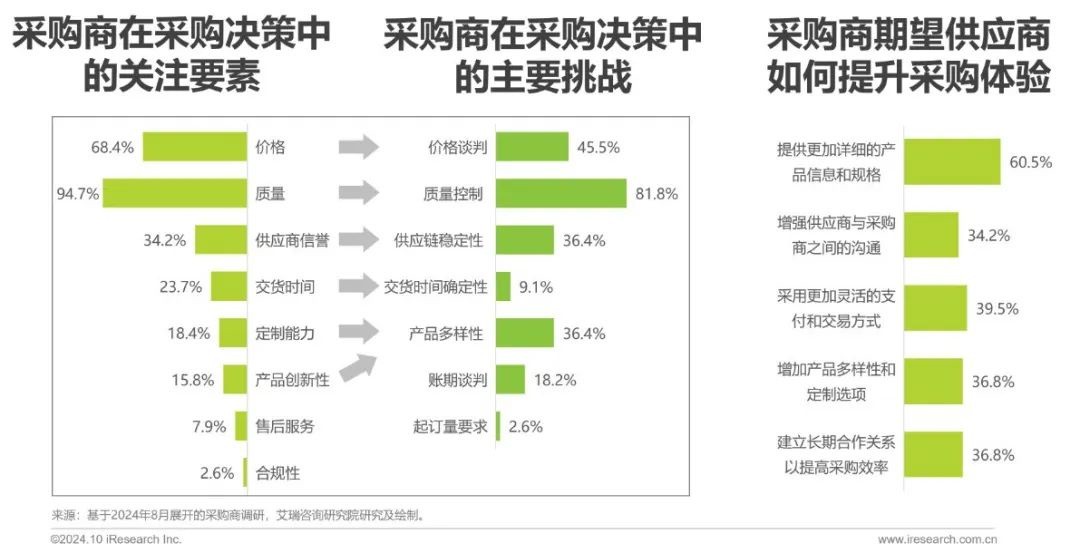
Factors of Procurement Decision-Making Core focus on product quality, with high demands for product information transparency and quality certainty In the procurement decision-making process, European tool product purchasers primarily focus on price (68.4%) and quality (94.7%), followed by factors such as supplier reputation, delivery time, and customization capabilities; Affected by key factors, the main challenge for buyers also comes from quality control (81.8%). At the same time, buyers believe that there are also certain challenges in price negotiation, supply chain stability, and product diversity. This aligns with the trend of suppliers focusing more on offline procurement channels and preferring to enhance product quality certainty and reliability through offline experiences. Under the influence of this trend, compared to the situation in the United States, European buyers expect suppliers to provide more detailed product information and specifications to enhance their purchasing experience.
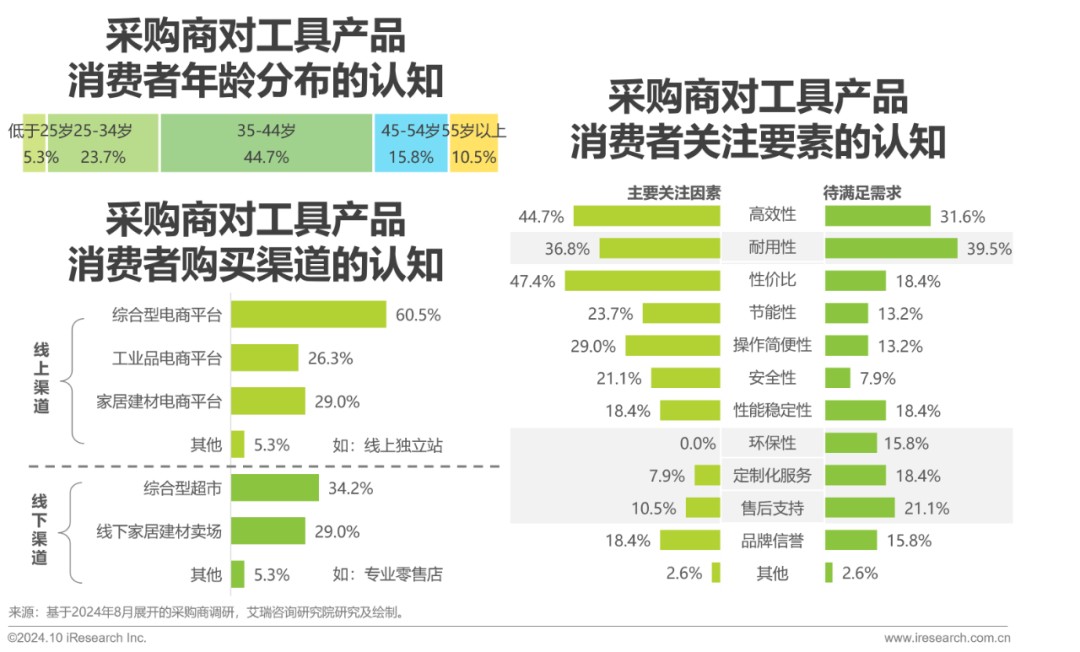
Consumer Insights Widespread user base, with a greater focus on factors that can enhance actual usage experience European buyers believe that the main consumer group in the European tool product market is more widely distributed than in the U.S. market, concentrated among middle-aged individuals aged 35-45, with a small number of young people under 25 and elderly individuals over 55, who prefer to purchase through comprehensive e-commerce platforms (60.5%). European consumers value factors such as cost-effectiveness, efficiency, and durability of tool products, among which efficiency and durability have not been fully met; additionally, European consumers believe there is further room for improvement in the environmental friendliness, customization services, and after-sales support of tool products. Compared to the U.S. situation, European consumers have a higher satisfaction level with the durability of current tool products and have higher requirements for energy efficiency, ease of operation, and safety. European buyers may increase their focus on these factors in their purchasing decisions.
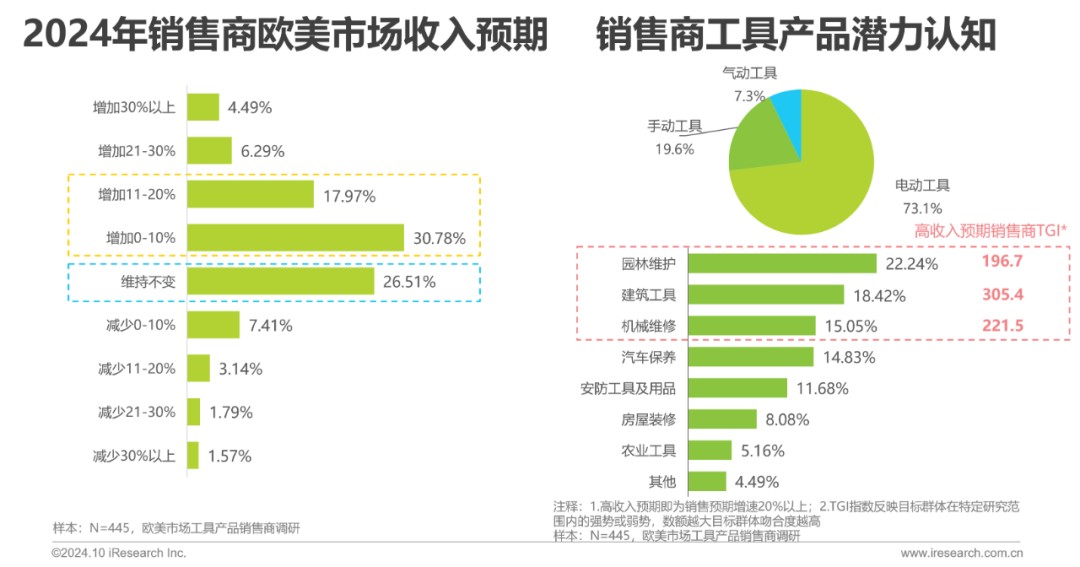
Supply Insights in the European and American Markets - Sales Expectations Sales expectations are steadily rising, and suppliers are expected to increase their layout in electrification and high-growth potential categories Sellers generally have a relatively optimistic attitude towards revenue expectations for 2024, with nearly half believing the growth range will be between 0-20%, which is basically consistent with the annual tool export forecast data. Another 26.5% are more conservative, believing the overall level will remain consistent with last year. In terms of category potential, benefiting from portability and efficiency, electric tools are expected to have good development potential, and it is reasonable to speculate that the supply side will increase its planning for electric products in the future. Additionally, sellers believe the three categories with the best potential are garden maintenance, construction, and mechanical repair tools, which align with the current product layout. It is expected that the supply side's product planning will basically maintain the existing situation this year. Sellers with high revenue expectations are more optimistic about construction, mechanical repair, and garden tools, which will also accelerate the supply side's focus on high-potential categories.
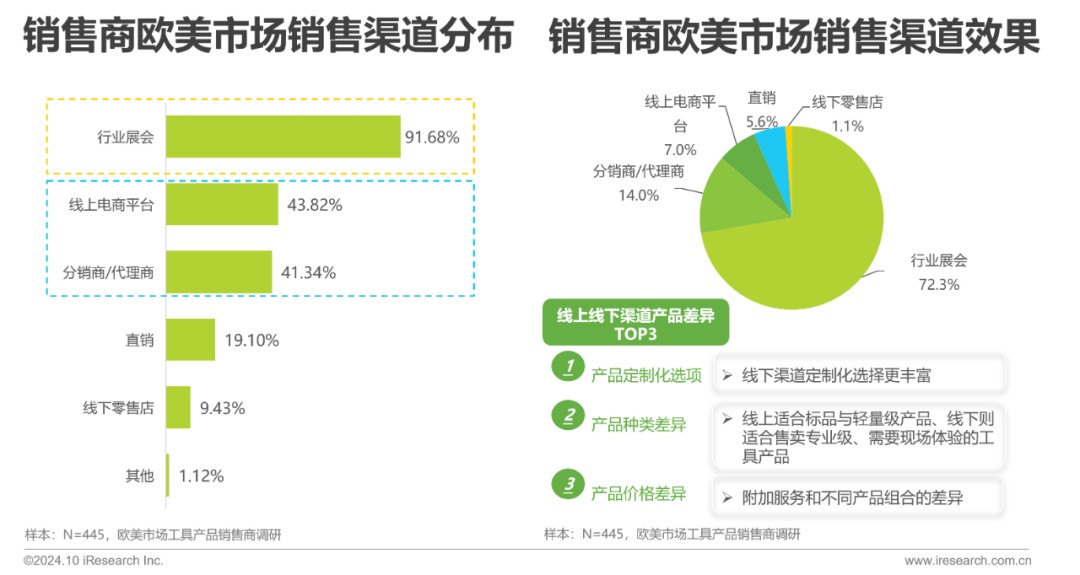
 Insights into Supply in the European and American Markets - Sales Channels Exhibition channels are favored, and formulating product strategies based on the characteristics of each channel to enhance synergy is key Research results show that distributors mainly adopt a multi-channel layout, with industry exhibitions being the highest, while online sales are primarily conducted through e-commerce platforms. Distributors and agents with local resources are also major channels, and there is some layout in direct sales and offline retail stores, but they are more easily constrained by local brands and channels. From an effectiveness perspective, over 70% of distributors choose industry exhibitions, confirming the efficiency of professional channel matchmaking; followed by distributors and agents, who mainly possess local sales resources and can relatively stably digest supplies; third are online platforms, where the popularity of e-commerce has driven the online consumption of tool products, and offline retailers have also begun to enter online channels. The product differences between online and offline channels mainly come from customized services, product combinations, and price differences. Distributors should formulate corresponding product strategies based on the characteristics of different channels to enhance the synergy of multi-channels.
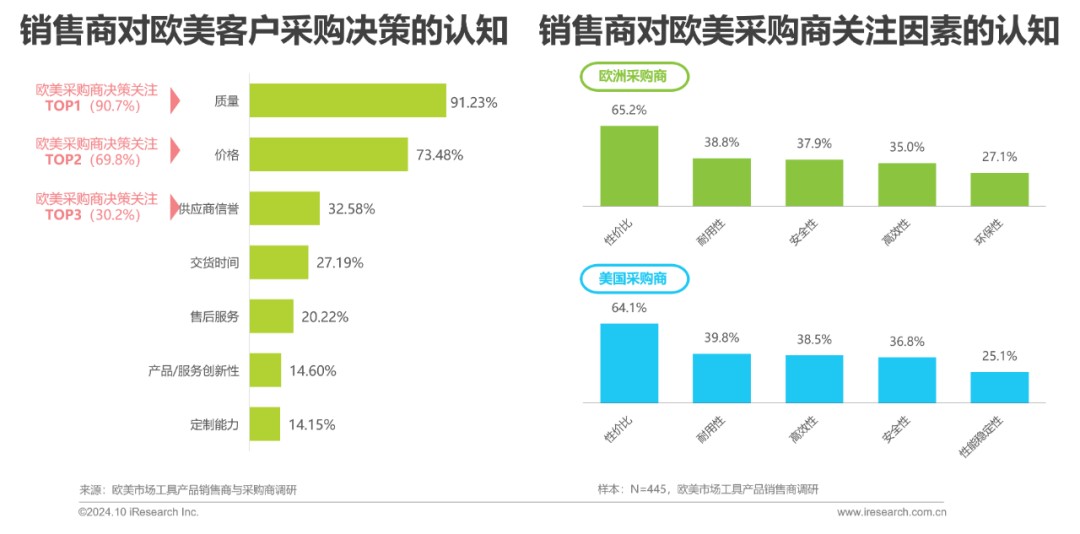
Insights into Supply in the European and American Markets - Procurement Decision Awareness Both supply and demand sides have a consistent understanding, with quality, price, and reputation being key to decision-making; the pursuit of cost-effectiveness and performance is a consensus among European and American buyers A comparison of research data between distributors and buyers shows that both sides have a relatively unified understanding of procurement decisions, with quality, price, and supplier reputation being the top three influencing factors. Looking at the feedback from distributors regarding the top five core concerns of European and American buyers, cost-effectiveness is their most core concern, followed by the pursuit of product performance such as durability, safety, and efficiency. The last point shows a difference: European buyers pay particular attention to the environmental friendliness of products, while American buyers focus more on performance stability.
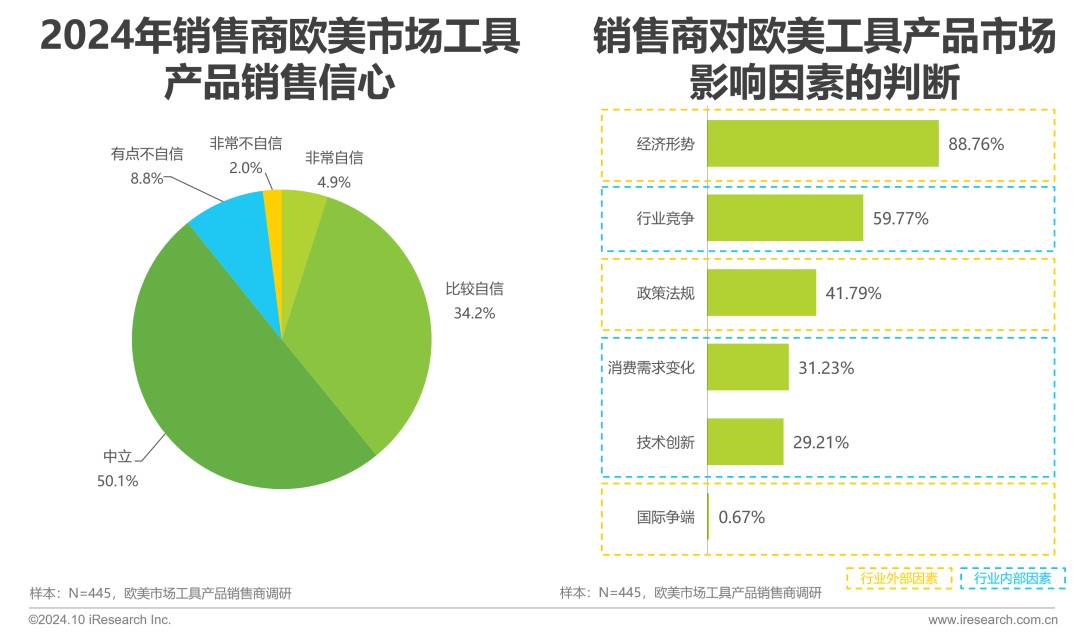
Insights into Supply in the European and American Markets - Confidence Forecast Distributors generally hold a neutral preference for forecasts; in the future, Chinese manufacturers should strengthen risk awareness externally, adopt flexible layouts, deepen product strength, and enhance added value internally to improve competitiveness Research results indicate that nearly 90% of distributors maintain a neutral preference regarding their sales expectations for the year, with nearly 40% expressing strong or moderate confidence, while another half hold a neutral attitude towards annual sales expectations. Distributors believe that the overall market will be influenced by both internal and external factors, with external factors mainly including economic conditions, policies and regulations, and international disputes, while internal factors mainly involve industry competition, demand changes, and technological innovation. In an increasingly volatile overall environment, Chinese manufacturers should actively adjust their strategies, strengthen risk awareness and flexible layouts externally, and deepen product strength and enhance added value internally to enhance their survival and competitiveness in the international market

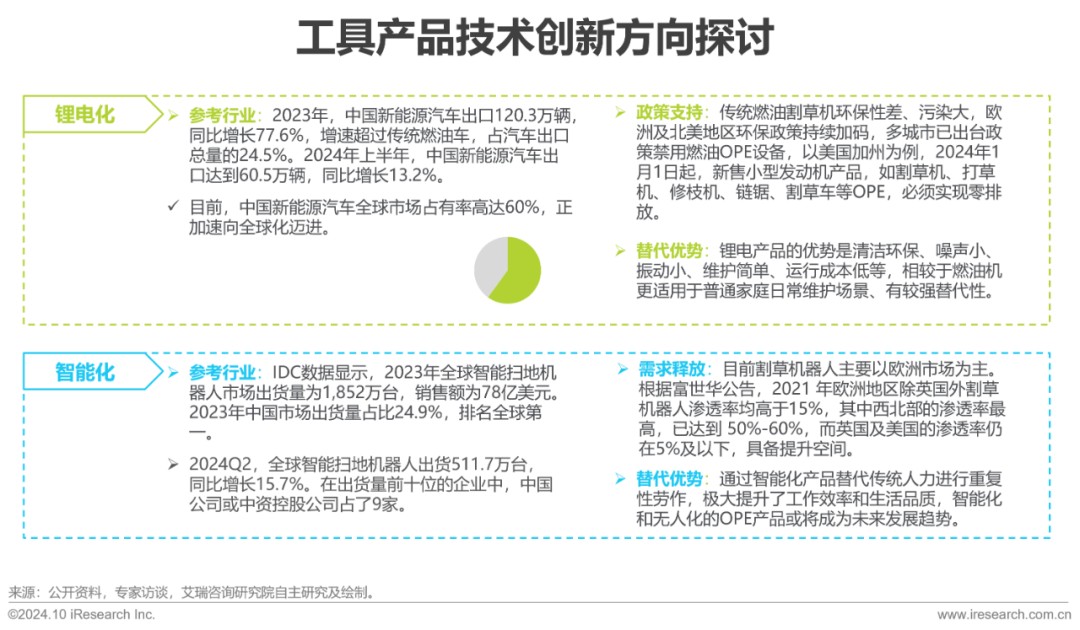
Technology and Product Innovation Focus on innovation in technology and quality, launching more environmentally friendly and intelligent high value-added tool products Referring to the development of advantageous parallel industries, domestic suppliers are expected to deepen their penetration into the European and American markets through technological innovations such as lithium battery electrification and intelligence. On one hand, by learning from the development history of the new energy vehicle industry, under the promotion of environmental policies such as the ban on fuel equipment and achieving zero emissions in Europe and America, combined with China's increasingly mature lithium battery industry chain, it is a reasonable technological innovation path to develop lithium battery tools suitable for household use. Future breakthroughs in battery technology will further enhance the efficiency and popularity of lithium battery tools. On the other hand, by referencing the development of China's intelligent sweeping robots in the global market, under the backdrop of the continuous release of demand for intelligent tool equipment in the European and American markets, the research and development of intelligent tool products to meet overseas consumers' demands for improving work efficiency and quality of life is expected to become another feasible technological development path.
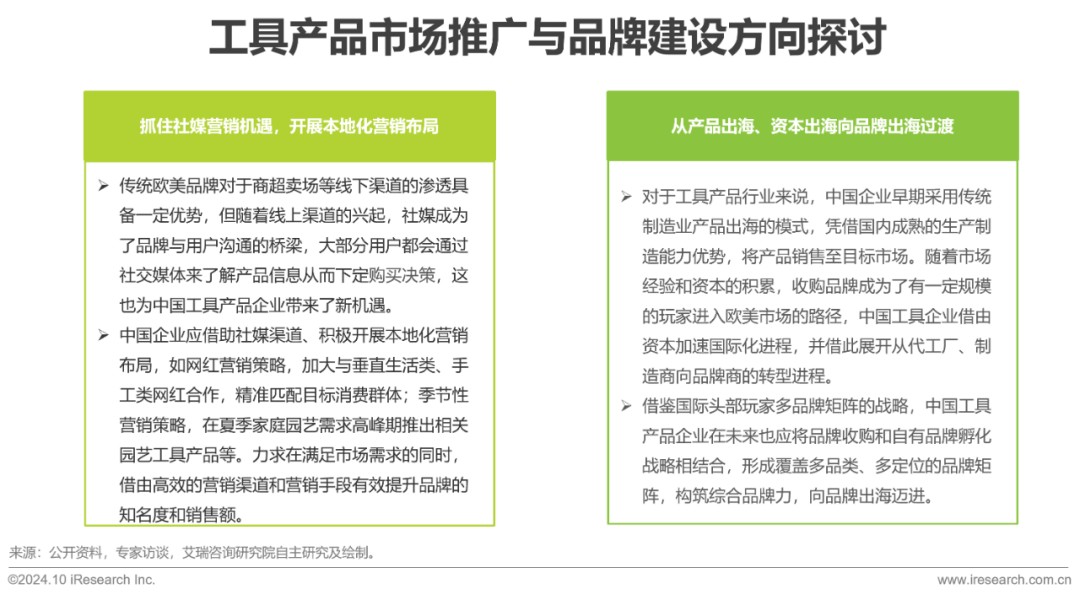
Market Promotion and Brand Building Utilize social media channels to strengthen localized marketing layout and build a brand matrix to enhance international influence In terms of market promotion, Chinese enterprises should actively carry out localized marketing layouts by leveraging the rise of social media channels, such as implementing content marketing strategies in collaboration with vertical lifestyle and DIY influencers to accurately reach target consumer groups; adopting seasonal strategies to promote gardening tool products during peak gardening seasons, and reasonably matching local consumption habits. While meeting market demand, enhance brand awareness and sales through efficient channels and strategies. In terms of brand building, Chinese tool companies initially focused mainly on OEM models, emphasizing brand export. However, with the accumulation of experience and capital, Chinese companies are accelerating their layout in the European and American markets through brand acquisitions. From the experience of leading overseas brands, forming a brand matrix with multiple categories and positions is the main path to entering international markets and enhancing brand awareness. In the future, Chinese tool product companies should also balance acquisition and incubation on the road to internationalization, building a diversified brand matrix and enhancing international influence.
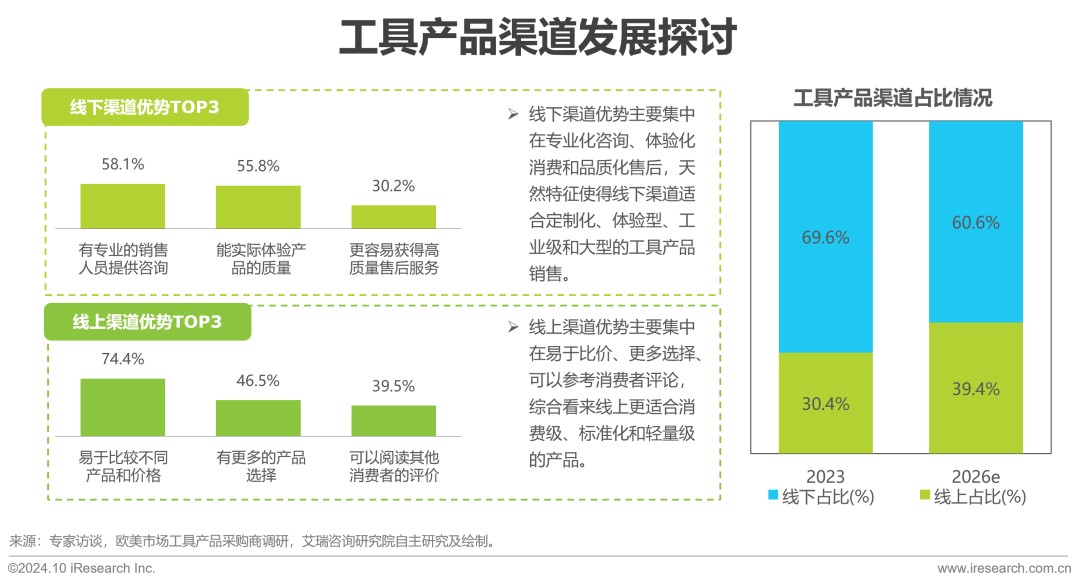
 Channel Outlook Online and offline channels present differentiated characteristics, and the integration of online and offline channels will become the trend for tool products going overseas There are significant characteristic differences between online and offline channels. The advantages of offline channels lie in professionalism, experiential aspects, and high-quality service, making them suitable for selling customized, experiential, and industrial-grade tool products. In contrast, the advantages of online channels include ease of price comparison, more choices, and the ability to reference consumer reviews, making them more suitable for selling consumer-grade, standardized, and lightweight products. Although tool products essentially belong to the durable goods manufacturing industry, with the deepening of the DIY trend in mainstream markets in Europe and America and the iteration of tool product technology, they increasingly exhibit characteristics of consumer goods at the sales end. In 2023, the distribution structure of online and offline channels has shown a ratio of 3:7, and it is expected that by 2026, this ratio will approach 4:6. The integrated development of online and offline channels has become a mainstream trend. Developing corresponding product strategies based on different channel characteristics and enhancing channel collaboration should be the focus for China's tool product export enterprises in the future.