
Earning a million a day, this type of domestic small appliances becomes the sales champion on TikTok
 I'm LongbridgeAI, I can summarize articles.
Some small household appliances have become the new favorites of modern families due to their simplicity, portability, and multifunctionality. In the TikTok Shop US region, a portable ultrasonic air humidifier has seen a surge in sales, reaching 13,600 orders in the past 7 days, with a growth rate of 2923.95%, topping the home appliance sales chart. The humidifier is priced at $13.29, suitable for travel and multiple scenarios, with a total of 22,600 units sold and a total GMV exceeding $330,000. Its success is closely related to the content marketing model, with transaction volume mainly coming from influencer short videos
Author: TT123 Cross-border E-commerce

Image source | pexels
Last year, the small home appliance sector was undoubtedly the hottest track in cross-border e-commerce. In the North American market, from kitchen air fryers to living room ice makers, and personal care small appliances like hair removal devices, all became category bestsellers.
As consumer demand continues to rise and undergo new changes, new players are still emerging in the small home appliance sector. They rely on product differentiation and accurately identify consumer pain points to engage in a new round of competition in this field.
Currently, some small home appliances are becoming the new favorites of modern households due to their simplicity, portability, and multifunctionality.
Ten thousand orders per week, topping the charts upon launch
TT123 found that recently, a portable ultrasonic air humidifier has seen a continuous surge in sales on TikTok Shop in the U.S. According to data, in the past 7 days (February 10-16), sales reached 13,600 orders, with a sales growth rate of 2923.95%, topping the appliance sales chart on TikTok Shop in the U.S.
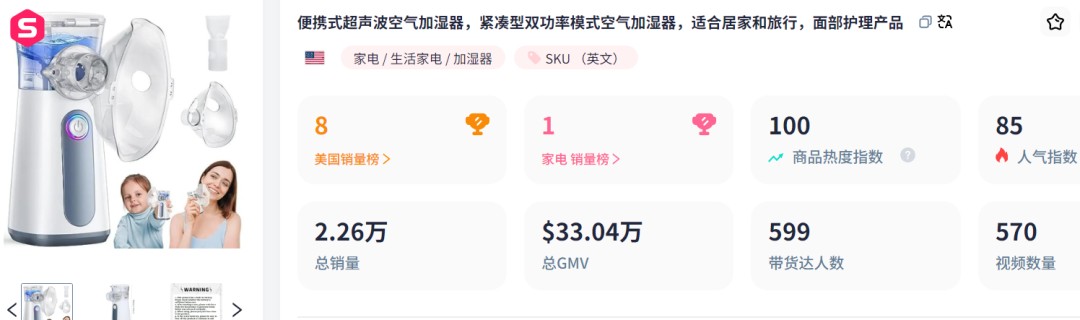
Image source: FastMoss
This humidifier comes from the TONVVD store and was just launched in January this year, currently priced at $13.29 on TikTok Shop in the U.S. The product features simple operation, strong portability, flexible dual power modes, and multi-scene applications, making it particularly suitable for people who frequently travel or work in different locations. Additionally, this humidifier also has health care functions, which can be used for facial care and children's sleep breathing health.
As of now, the TONVVD portable humidifier has sold 22,600 units, with a total GMV exceeding $330,000. According to backend data, its product popularity index and interest index are still on the rise.
Topping the charts upon launch, in addition to its favorable price and rich features, what else did the TONVVD portable humidifier do right? The answer is closely related to its content marketing model.
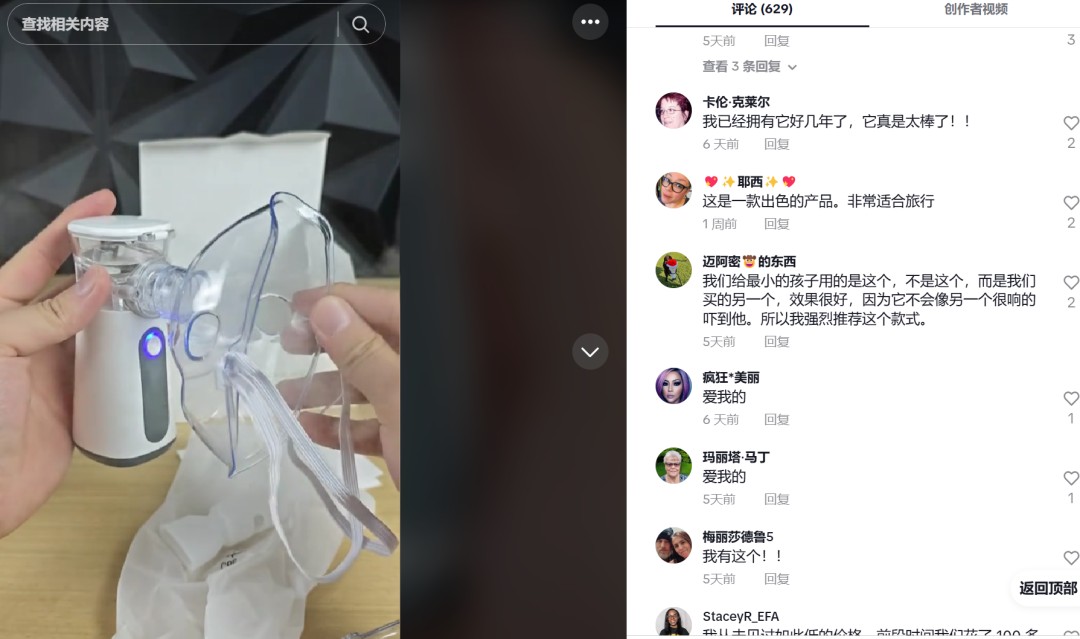
According to backend data analysis, the transaction volume of the TONVVD portable humidifier mostly comes from influencer short videos. Currently, TONVVD has already connected with 599 influencers, with the number of related product videos at 570. It is worth mentioning that TONVVD does not randomly connect with influencers or only look at follower counts, but instead seeks collaboration with TikTok influencers in electronic technology and beauty care based on the product's own characteristics. This has proven to be a wise move Among the influencers in the Jianlian community, a user named k2c.selected focuses on electronic technology content on TikTok. In the past 28 days, they have sold nearly 4,000 humidifiers. On February 11, k2c.selected posted a video about the TONVVD portable humidifier on TikTok, which has garnered over 3.4 million views and 48.3K likes. In the video, k2c.selected demonstrates how to use the humidifier and switches between different usage modes for various occasions.
Source: TikTok
Many users who have already used the product have turned into "word-of-mouth" promoters, commenting in the video’s comment section that the humidifier is excellent, has been used for a long time, and is also suitable for travel.
Coincidentally, TT123 observed that in the U.S. market on TikTok, another smart small appliance that has just been launched for over a month and focuses on portability has also recently made a significant profit.
Mini Iron Earns $160,000 Daily
This highly profitable small appliance is the portable electric iron, which ranks second in sales in the home appliance category on TikTok in the U.S. According to data, on February 16, this portable electric iron sold 8,481 units, with total sales exceeding $160,000, topping the TikTok U.S. best-selling product list for that day.
It is understood that this portable iron comes from a cross-border store named juntuo, priced at $16.99 in the U.S. market on TikTok. Unlike traditional irons, which are heavy and bulky, this product is designed to be compact, only the size of a palm, and its handle is foldable, making it easy to store and carry, suitable for business trips and travel. Additionally, it features a quick heating function, reaching the ideal temperature in just 30 seconds, saving time.
Moreover, the product has both dry and wet ironing capabilities, allowing it to function like a traditional iron for dry ironing and also achieve steam wet ironing, which is very friendly to certain fabric types, avoiding damage to clothing due to improper ironing. As of now, this portable electric iron has sold 15,000 units, with a total GMV of $229,400.
Furthermore, the same portable electric iron, priced at $24.99 on Amazon, has also shown its blockbuster qualities. In the past month, over 7,000 units of this same portable iron have been sold, and the product's popularity remains strong, with similar types of irons on Amazon also achieving good sales results.
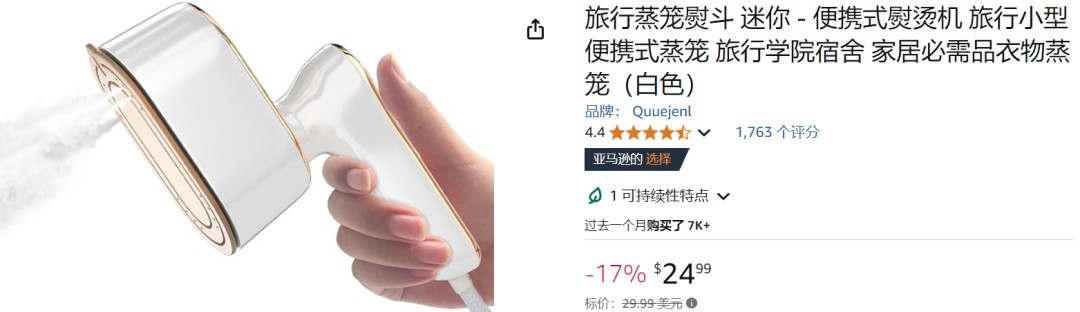 Image source: Amazon
From portable multifunctional humidifiers to lightweight and efficient electric irons, the frequent emergence of popular small household appliances seems to conceal a huge business opportunity, which is that products that can make consumers' daily lives more convenient and efficient have the chance to become bestsellers.
For cross-border sellers, compared to the increasingly fierce competition in the domestic small appliance market, the North American market seems to have greater potential. To pursue long-term strategies in overseas markets, it is essential to pay close attention to the current trends in the U.S. small appliance consumption market.
Functionally Segmented Small Appliances Are Favored
The North American small appliance market is large, mature, and diverse, capable of meeting various household needs. Thanks to consumers' pursuit of simplified lifestyles and convenience, North America accounts for over 25% of the global small appliance production market.
Data shows that the North American appliance market is expected to reach USD 66.16 billion in 2024 and is projected to grow to USD 76.33 billion by 2029, with a compound annual growth rate of 2.9%.
When Americans purchase small household appliances, convenience and timeliness are their top priorities. Portable, easy-to-use, and time-efficient products often become key factors in American consumers' purchasing decisions. Additionally, the ability to be used in multiple scenarios is also a feature they pay attention to when selecting small appliances.
Therefore, they tend to purchase multifunctional portable small appliances that not only meet basic usage needs but can also adapt to various usage scenarios, such as in the office or while traveling. For the aforementioned popular humidifiers and irons, their characteristics of being easy to store and travel-friendly give them a strong market advantage.
Moreover, environmentally conscious and sustainability-minded American consumers are more willing to choose efficient and low-energy-consuming products, especially energy-saving, eco-friendly, and smart small appliances, which are particularly favored. When it comes to brand selection, American consumers do not have a "local brand preference" and consider well-known foreign brands more, which is a positive signal for Chinese brands looking to expand overseas.
Additionally, among the family of small appliances, kitchen appliances have a comparative advantage in entering the U.S. market over other categories. In a survey of appliance ownership in the U.S., 82% of American households own a microwave, 81% own a refrigerator, and 72% own cooking appliances and ovens, indicating that American households have a fixed basic process and methods for cooking, and are willing to spend more budget on kitchen appliances. Among small appliance categories, coffee machines, bread makers, and juicers have consistently been long-term bestsellers.
It is worth mentioning that in the U.S. market, popular small appliances often have very strong functional segmentation characteristics, which is closely related to the future development trends of small appliance products. By 2025, as the global small appliance market enters a stage of stock competition, product homogeneity will become increasingly evident. In the face of the vast and ever-changing U.S. market, what else can domestic cross-border sellers do regarding small appliances?
Seeking Breakthroughs in "Small Demands"
In recent years, with high quality and practicality, domestic small appliance brands have gradually risen in overseas markets. In the wave of going overseas, several industry dark horses and listed companies have emerged, such as Douhe Technology, Chenbei Technology, Xinbao Electrical Appliances Holdings, and BEAR APPLIANCE, among others The success of these brands in breaking through is not only due to their continuous research in product quality and brand building but also their ability to accurately penetrate niche markets and identify small demand markets.
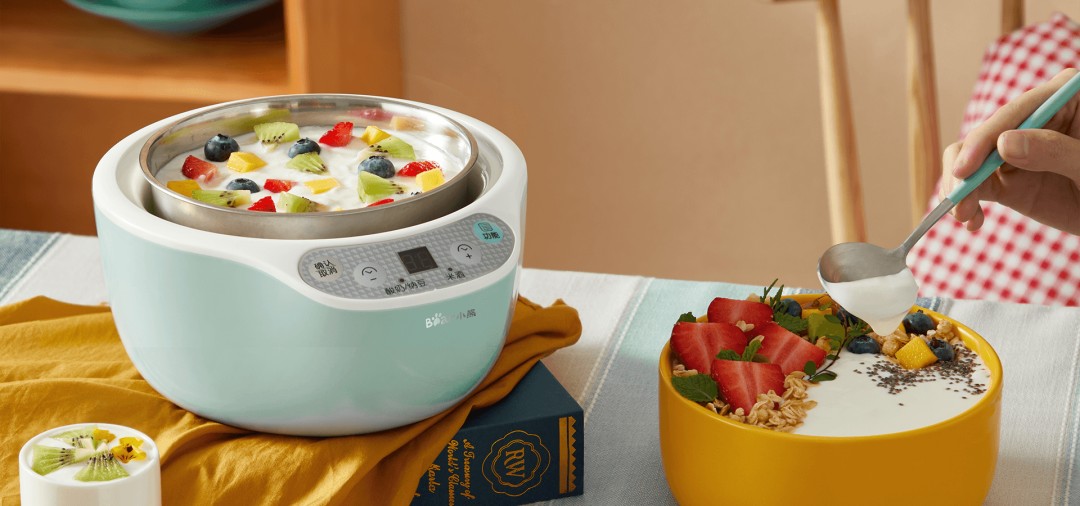
Taking BEAR APPLIANCE as an example, at its inception, BEAR APPLIANCE successfully "broke out" with its yogurt maker and rapidly expanded its product line over the next six years, focusing on small kitchen appliances as its core business, launching a series of innovative small appliance products such as bean sprout machines and egg cookers. Accurately targeting non-mainstream users and non-mainstream product categories to create new categories became BEAR APPLIANCE's initial strategy. The success of the yogurt maker also confirms a principle: the reason niche categories are niche is that they have not yet met the needs of the mass market. As long as user needs are met, "small demands" can also create large categories.
Source: BEAR APPLIANCE official website
Therefore, currently, cross-border merchants looking to break through in the red ocean market need to continuously seek the ability to address "small demands," which means constantly refining product functions to meet the needs of different consumer groups.
At the same time, to better adapt to the market demands of different countries and regions, small appliance cross-border e-commerce will pay more attention to localization strategies, deeply understanding local consumers' consumption habits and needs, and developing products and services that align with local market characteristics.
The consumer market for smart small appliances in the United States has broad prospects, but it also faces challenges related to data security and privacy protection. Brands and manufacturers need to continuously innovate and optimize products to gain consumers' trust and satisfaction. In the future, small appliances can only truly strike gold overseas by grasping user thinking, focusing on research and innovation, and enhancing brand value, moving towards high value-added segments.
In conclusion
TT123 believes that with the continuous advancement of technology and the gradual improvement of living standards, more and more consumers are beginning to pursue a more convenient and refined lifestyle, thus naturally expanding the market for small appliances into more diverse niche categories.
Cross-border merchants should pay timely attention to market trends, seek out blank markets, and gain a competitive advantage. They can also take alternative paths and engage in differentiated competition. By focusing on clearly defined but less competitive niche market areas, they can stand out by meeting unique demands. Finding blue oceans in the red ocean and establishing their own competitive advantages is essential.