

Oracle’s Force Majeure Notice Exposes a Bigger Problem for the AI Build-Out
 I'm LongbridgeAI, I can summarize articles.
Oracle issued a force majeure notice for its Project Jupiter AI data center due to natural gas pipeline delays, impacting partners Bloom Energy and Energy Transfer. Despite the delay, analysts remain bullish, reaffirming buy ratings and forecasting significant upside. The notice is viewed as a contractual defense rather than a project cancellation, with Oracle's strong backlog and revenue growth supporting long-term confidence in its AI infrastructure build-out.
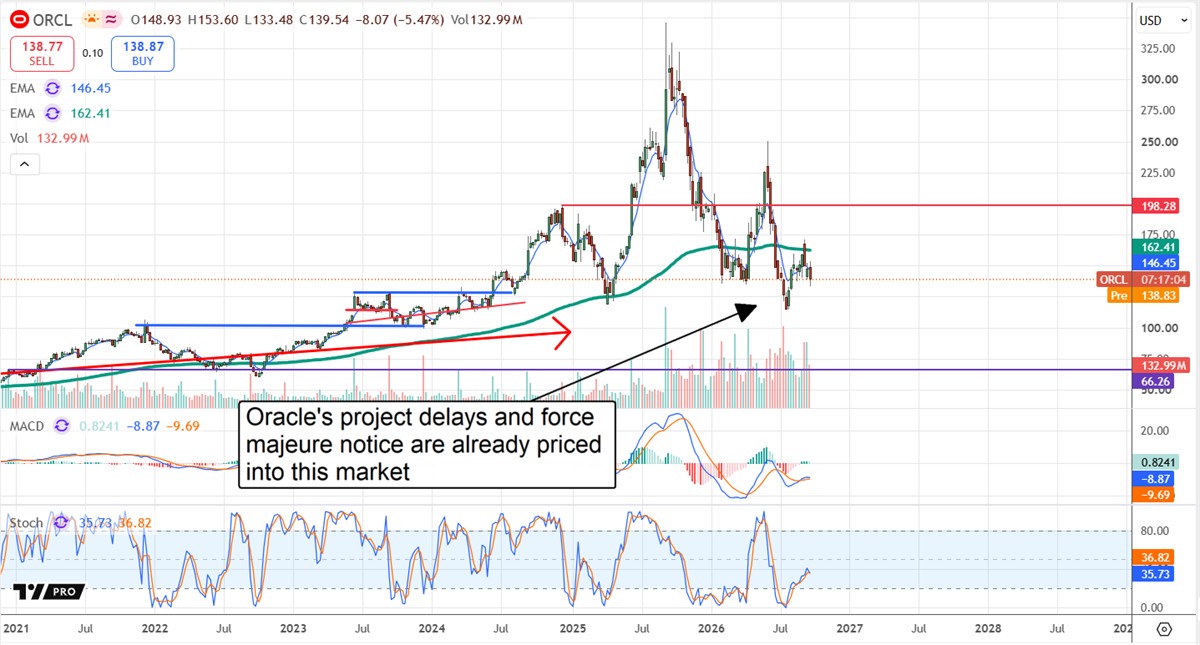
As it stands, the notice warns that contractual payments would be delayed if the project isn’t completed on time. Oracle is linking its ability to monetize its investment to payments that face headwinds beyond its control. Among the questions is whether force majeure will be upheld in court, if it ever comes to that, but that issue may never need to be tested. Between then and now, Oracle says Project Jupiter remains on its planned schedule despite the infrastructure challenges.
Oracle Chokes on Energy Bottleneck: Ripple Effects to Follow?
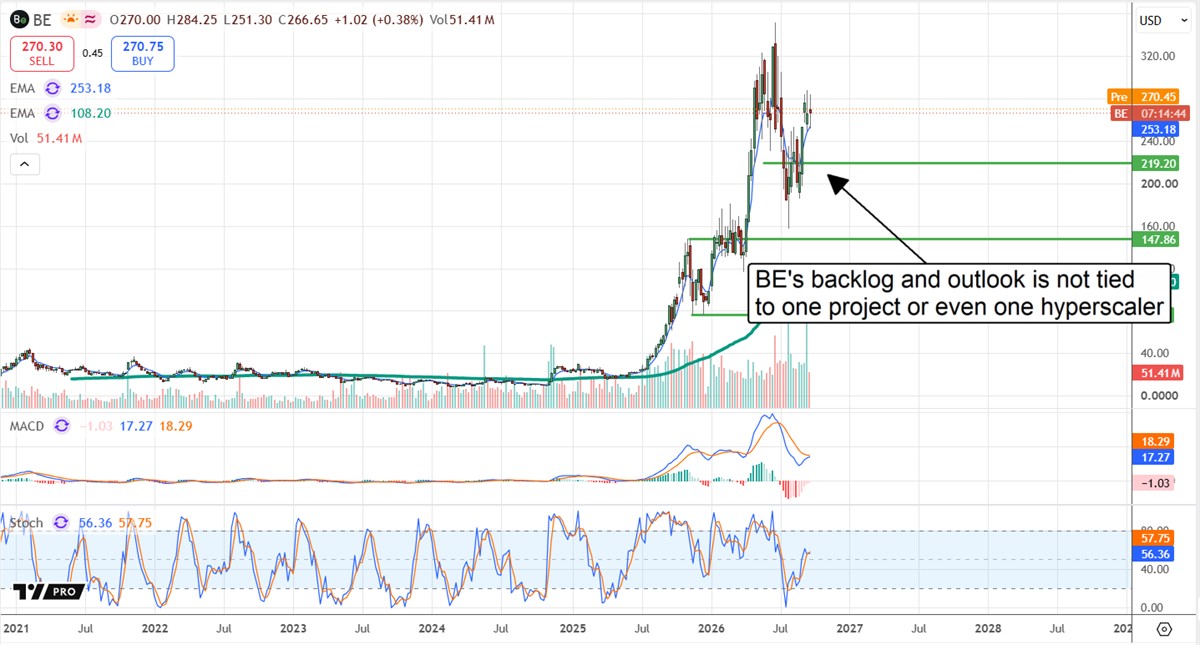
The bottleneck in question is energy and, more specifically, regulatory approval for a natural gas pipeline. The pipeline is intended to supply natural gas to the project's fuel-cell microgrid, with Bloom Energy NASDAQ: BE providing the fuel-cell technology. The risk for Bloom Energy is the monetization of its massive backlog, which is tied to the New Mexico project.Delayed construction may delay revenue, cash flow, and profits, but worse, it could lead to lost contracts. Again, CEOs from affected companies, including project developer Blue Owl Capital NYSE: OWL, say they are fully committed to the build-out, and Oracle's notice is currently a warning rather than evidence that the project has been canceled.
Investors should remember that Bloom Energy has a contractual obligation to Oracle, but its revenue outlook and backlog aren’t tied to a single project. It has the flexibility to shift production to other projects, Oracle’s or elsewhere, and the clients are numerous. A key highlight from its last report and conference call is that all hyperscalers and most neoclouds have validated the technology, and orders are rolling in.
Another company exposed to the impact is Energy Transfer, LP NYSE: ET, the pipeline manufacturer and operator behind Oracle’s force majeure notice.However, its stock price took the smallest hit, as its huge midstream footprint and operational leverage offset the delay, making it more of a headache than a potentially existential crisis. Its business is driven by rapidly improving infrastructure globally, industrial demand, and the shift to greener energy sources.
The biggest risk for Energy Transfer and them all is that the pipeline dispute remains unresolved, keeping the project from crossing a critical 0.6-mile stretch, or alternate power sources or locations can’t be found. The caveat is that, in the end, the data centers will be built; the only questions concern this particular project and whether significant delays will arise elsewhere.
Mixed Reactions Fail to Alter the AI Narrative
Analysts' mixed reactions focused on Oracle’s pragmatic, contractual move as a logical defense, given the regulatory delays and the obvious bottlenecks in AI. Ratings and price targets were reaffirmed, forecasting robust upside for the stock over time. The 40 analysts MarketBeat tracks with current coverage show a strong conviction in the Moderate Buy rating, with an 80% Buy-side bias and no Sell ratings logged.Price target movements were mixed over the summer, but reflect conviction in the consensus, which forecasts approximately 85% upside from the critical support level. The likely outcome is that Oracle’s stock price continues experiencing volatility in the near- to mid-term, but rises to the consensus and then higher over time as its data center projects come online.
Oracle’s risk is the same as everybody else’s: monetizing its AI infrastructure. The project delay is a concern, but not the only driver, so the risks are limited, as other projects are in the works, and recent results show momentum. Revenue growth accelerated to nearly 30%, underpinned by hypergrowth in cloud segments; guidance forecasts continued acceleration, and the backlog suggests high-level growth for years to come. Oracle’s remaining performance obligation (RPO), a measure of contracted but not earned income, rose to $664 billion, or 7.3x this year’s consensus revenue estimate.
What investors should keep in perspective is that Oracle isn’t a tech start-up trying to ramp production to meet anticipated demand but an established blue-chip player with the capacity to deliver. Its contracts are not mere memoranda of understanding but solid agreements, backed by upfront payments, hardware commitments, or both, suggesting that execution is the only issue. In this scenario, Oracle only needs to execute the strategy to convert its backlog.
Should You Invest $1,000 in Oracle Right Now?
Before you consider Oracle, you'll want to hear this.
MarketBeat keeps track of Wall Street's top-rated and best performing research analysts and the stocks they recommend to their clients on a daily basis. MarketBeat has identified the five stocks that top analysts are quietly whispering to their clients to buy now before the broader market catches on... and Oracle wasn't on the list.
While Oracle currently has a Moderate Buy rating among analysts, top-rated analysts believe these five stocks are better buys.
View The Five Stocks Here

Continue following MarketBeat
Add MarketBeat as your preferred source on Google to see our latest stories in your feed.
Add As Preferred Source