

US August PCE Preview: Inflation May Remain Sticky, How Will US Stocks, Dollar, and Gold React?
 I'm LongbridgeAI, I can summarize articles.
The US will release August PCE data on Sept 30, with markets expecting sticky core inflation (0.3% MoM). High energy prices and resilient services costs may limit Fed easing room. Stronger-than-expected PCE could reinforce 'higher for longer' rate hike expectations, pressuring stocks and gold while strengthening the dollar. Conversely, softer data might ease rate hike fears, boosting equities and weakening the greenback.
TradingKey - On Wednesday, September 30 (ET), the U.S. will release the August Personal Consumption Expenditures (PCE) price index, one of the inflation metrics most closely watched by the Federal Reserve. The market generally expects that the August PCE will continue to show sticky U.S. inflation pressures, with core PCE in particular likely remaining at elevated levels. Given recent cautious remarks from Fed officials and rising oil prices that have heightened market concerns over a resurgence in inflation, this PCE data will serve as an important basis for assessing the Fed's subsequent policy path.
Energy Drives Up Headline Inflation as Core Inflation Remains Sticky
From the perspective of market expectations, the August PCE is highly unlikely to afford the Federal Reserve significant room for easing. According to a Bloomberg survey, economists expect headline PCE to rise 0.5% month-on-month in August, up from 0.4% in July; core PCE is expected to rise 0.3% month-on-month, up from 0.2% in July.
Pressure on the August PCE comes primarily from two fronts. First, a rebound in energy prices could push up headline inflation. International oil prices have remained high recently, and energy costs may pass through to end-users via transportation, logistics, and consumer goods prices. Second, core services prices remain sticky, especially housing, healthcare, insurance, and certain consumer services prices, which could make it difficult for core PCE to fall rapidly.
Previously released CPI and PPI data have already indicated that U.S. inflationary pressures have not fully dissipated. While overall goods price increases remain limited, services inflation and energy prices could still provide support for the PCE. Therefore, the key for this PCE reading is not whether inflation remains high, but whether it will further reinforce market expectations of 'higher for longer' interest rates.
If the August core PCE reaches 0.3% or higher month-on-month, the market may view the disinflation process as slowing, making it difficult for the Fed to signal easing in the short term. If core PCE comes in below expectations, particularly if services inflation shows signs of cooling, it could alleviate market fears of another rate hike in October.
August PCE May Fuel October Fed Rate Hike Expectations
Current market pricing for the Fed is already leaning hawkish. Recent rising oil prices, climbing US Treasury yields, and resilient US economic data have prompted investors to reassess the likelihood of further policy tightening by the Fed. Against this backdrop, the August PCE data will directly influence market expectations for the October policy meeting.
If PCE comes in higher than expected, particularly if core PCE ticks up again, the market may further bet on continued interest rate hikes by the Fed. For the Fed, as long as inflation remains significantly above its 2% target and employment and consumption have not noticeably weakened, there is little reason on the policy level for a swift pivot toward easing.
If PCE aligns with expectations, the market reaction may be relatively muted, but it will still be hard to reverse the dominant theme of "higher for longer." Only if core PCE comes in significantly below expectations and demonstrates a sustained cooling in services inflation might the market lower rate-hike expectations, which could also trigger a temporary pullback in US Treasury yields.
Impact of August PCE on US Stocks, Dollar, and Gold
For US stocks, the impact of the August PCE lies mainly in valuation pressure. If the PCE comes in below expectations, especially if core PCE MoM is below 0.3%, market expectations for Fed rate hikes may cool down, which in turn will drive down US Treasury yields. This will favor a rebound in the Nasdaq, AI tech stocks, and the semiconductor sector. If the PCE exceeds expectations, US stocks may face greater pressure, as high inflation will push up real interest rates and US Treasury yields, which is unfavorable for high-valuation growth stocks, and tech stocks that previously recorded significant gains may experience a valuation pullback.
For the US dollar, strong PCE data typically strengthens support for the currency. If the August inflation data comes in above expectations, the market will continue to bet on the Fed maintaining higher interest rates for longer, and the US Dollar Index may stay strong, particularly against low-interest-rate currencies such as the euro and the Japanese yen. If the PCE aligns with expectations, the US dollar may continue to fluctuate at high levels; only when core PCE is significantly below expectations and drives down US Treasury yields will the US dollar be likely to experience a phased pullback.
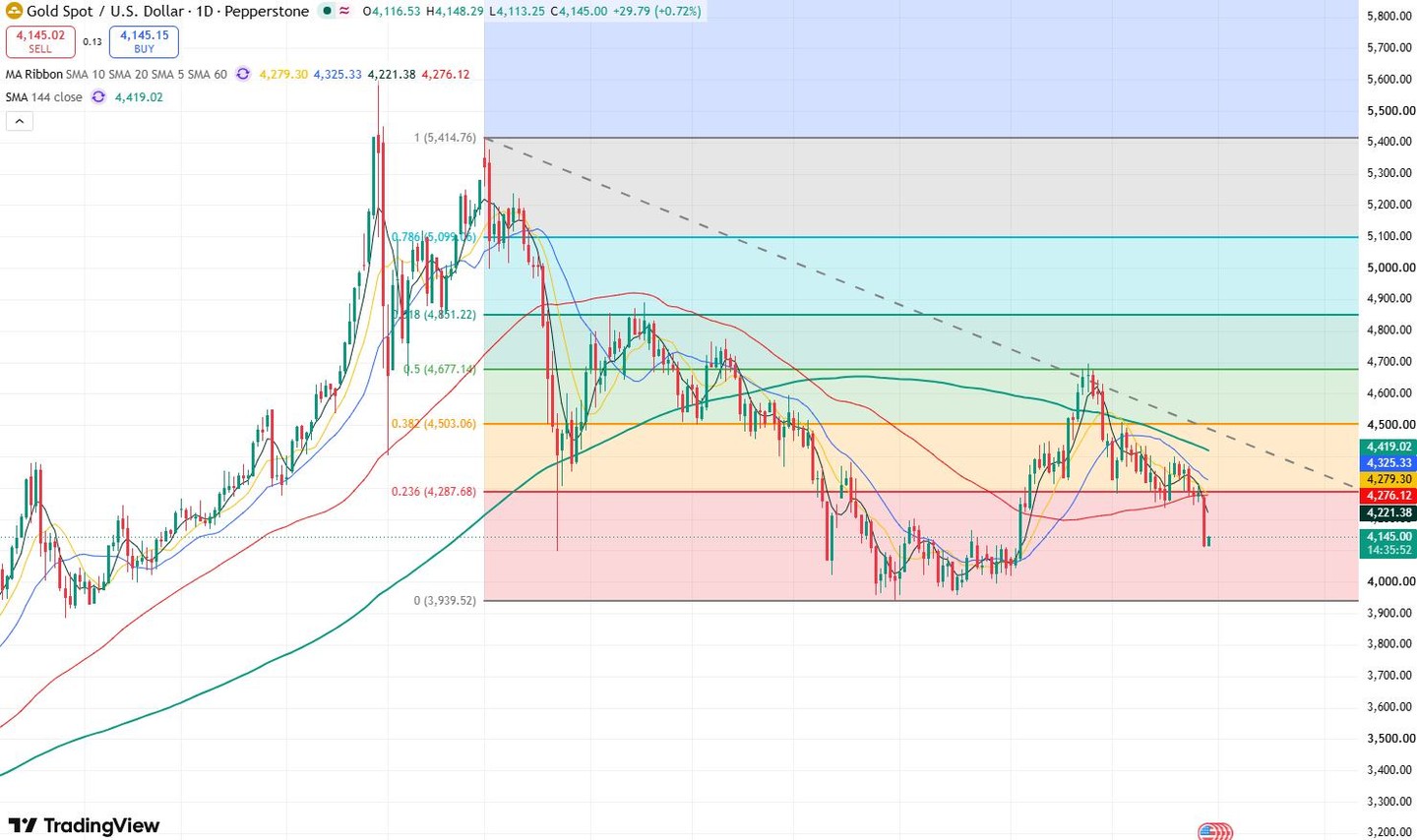
Gold Price Daily Chart, Source: TradingView
For gold (XAUUSD), the key still lies in changes in the US dollar and real interest rates. If the PCE is higher than expected, gold may remain under pressure and continue to test downward toward the $4,100 level, or even fall further toward the $4,000 level, as strong inflation will push up rate hike expectations and drive the US dollar and US Treasury yields higher, thereby weakening the appeal of gold as a non-yielding asset. If the PCE is lower than expected, gold may gain an opportunity for a recovery, especially if the US dollar and US Treasury yields pull back together, with gold prices expected to test the $4,250-$4,300 resistance range again.
Find out more