

Under liquidity pressure, BTC faces a key battle in this zone.
 I'm LongbridgeAI, I can summarize articles.
Key Takeaways:
This week, global risk assets and the crypto market were characterized by "intensified macro headwinds, valuation corrections in tech stocks, and pressure from crypto pullbacks." The Federal Reserve kept interest rates unchanged, and rising TGA and declining reserves led to marginal tightening of liquidity. Tech stocks faced valuation pressure against the backdrop of high capital expenditures and diverging cash flow. BTC fell below the 81.5k ETF cost line amid a period of net outflows from ETFs and a decline in risk appetite in US stocks, but still held above the 77.9k True Market Mean. Long-term holders' selling pressure was under control, and the market entered a phase of repricing at key cost levels.
Looking ahead, the current pullback is more of a stress test under macro headwinds than a structural reversal.
If ETFs see a sustained return of inflows, stablecoin supply stabilizes and rebounds, leading to improvements in Coinbase Premium and spot CVD, the recovery could evolve into an upward trend. However, if the 77.9k core cost zone is breached and exchanges experience inflows while realized losses widen, the risk of a second round of deleveraging will increase. Overseas Macro: Rising TGA and declining reserve requirements are creating mild liquidity headwinds, while tech stock devaluation is suppressing risk appetite. Market Structure: Hedge funds are reducing their AI-related exposure, with BTC and ETH ETFs experiencing net outflows of approximately $202 million and $431 million respectively in a single week. On-chain data: Selling pressure from long-term holders is waning, but stablecoin supply and new spot funds remain weak, and BTC is repricing within its cost range. Events to watch: The midterm elections, October unemployment rate, and the structure of US Treasury issuance will affect risk appetite and bank reserves. 01 Macro: Liquidity is tightening marginally, and tech stock devaluation is suppressing risk appetite. The US federal funds rate remains at 3.75%–4.00%. Total General Aggregate (TGA) size rose to nearly $1 trillion, while bank reserves declined on average each week, making the short-term financing environment more sensitive to changes in liquidity. Across asset classes, the S&P 500 fell 0.6%, the Nasdaq fell 2.0%, and the US dollar index strengthened slightly; risk appetite cooled, but there was no systemic pressure of a simultaneous forced sell-off in global risk assets. The technology sector showed significant divergence. Cloud vendors with high capital expenditures and cash flow pressures faced valuation reassessments, while companies with stronger cash flow buffers and clearer enterprise AI applications were relatively resilient. Hedge fund net selling mainly came from long position reductions rather than new short positions, reflecting a shift in allocation from crowded themes to defensive and valuation-matched strategies.
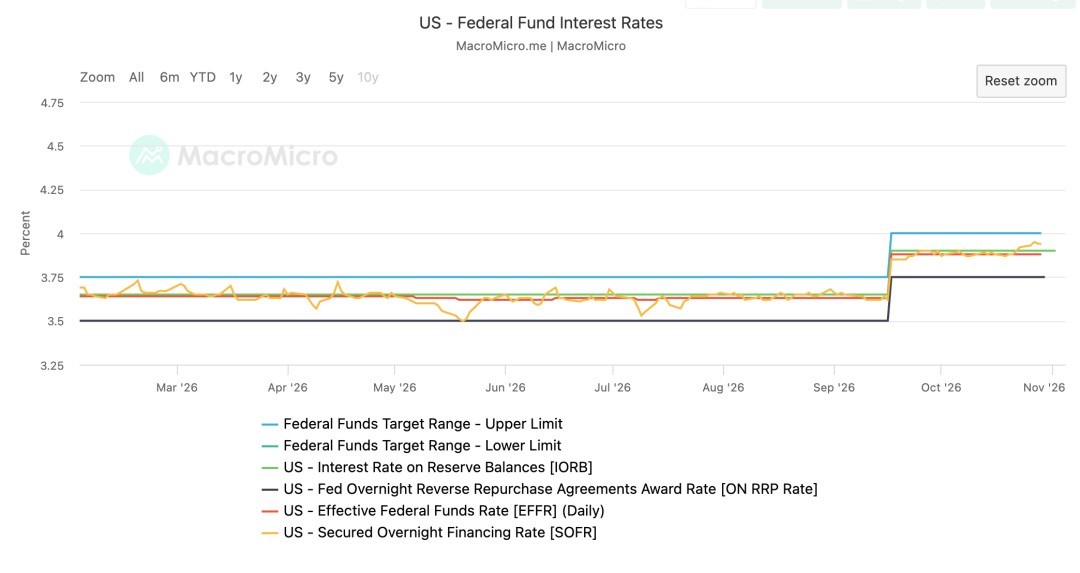
Federal Funds Rate
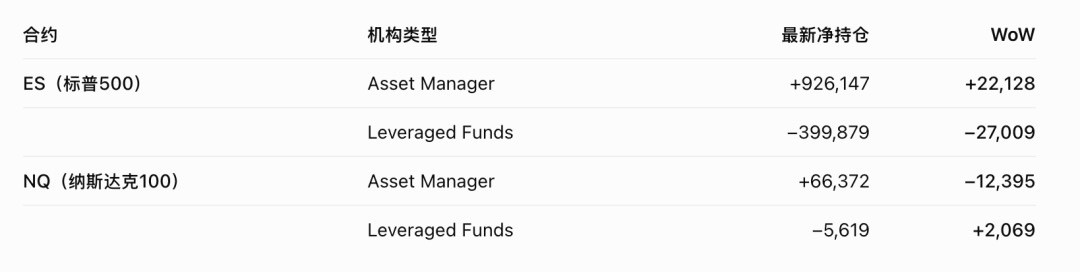
Changes in Institutional Positions in Stock Index Futures
02 Market Structure: ETF Outflows and Stable Existing Holdings Coexist
On the demand side, Bitcoin and Ethereum ETFs Net outflows of approximately $202 million and $431 million were recorded in the past two weeks, respectively, as traditional financial channels remained cautious amid macroeconomic uncertainties. Some digital asset treasuries and institutional allocations continued, but the buying intensity was insufficient to fully offset ETF outflows. The supply side remained relatively stable. Selling pressure from long-term holders significantly weakened, and exchange inflows remained low. After breaking below the 81.5k ETF Cost Basis, BTC found support above the 77.9k True Market Mean; the current 77.9k–85.3k range will determine whether the recovery can continue.
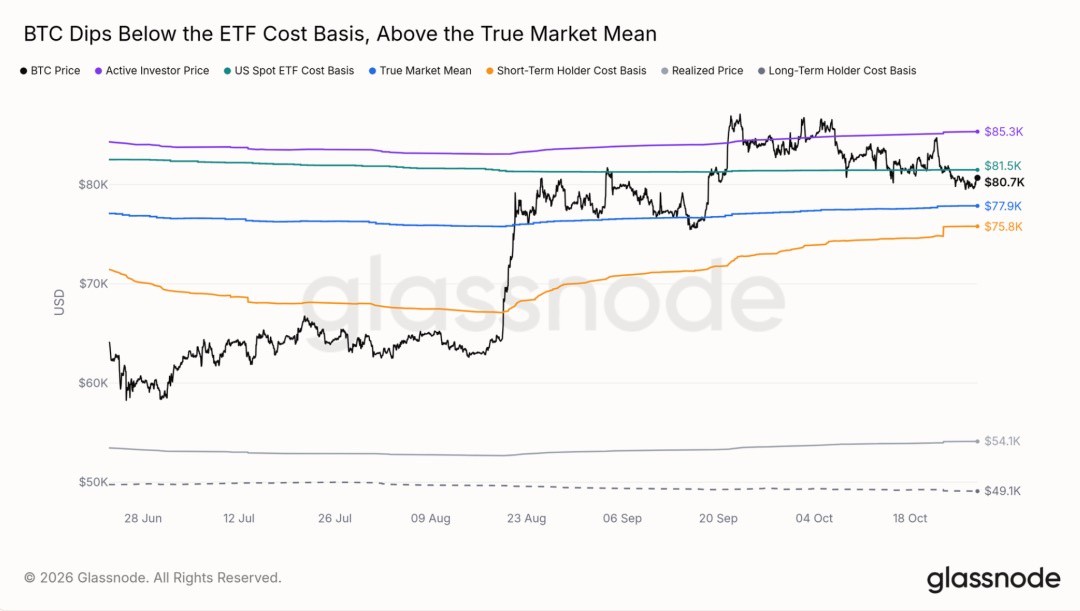
BTC Cost Band and Current Price Position
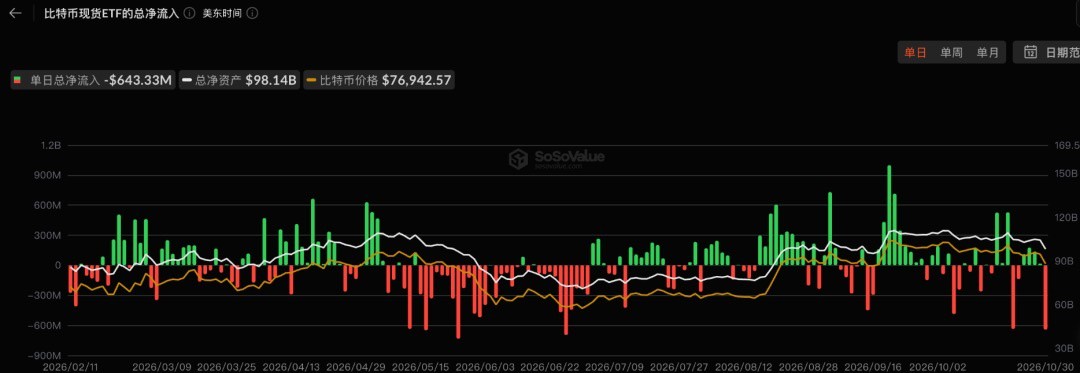
Bitcoin ETF Fund Flow
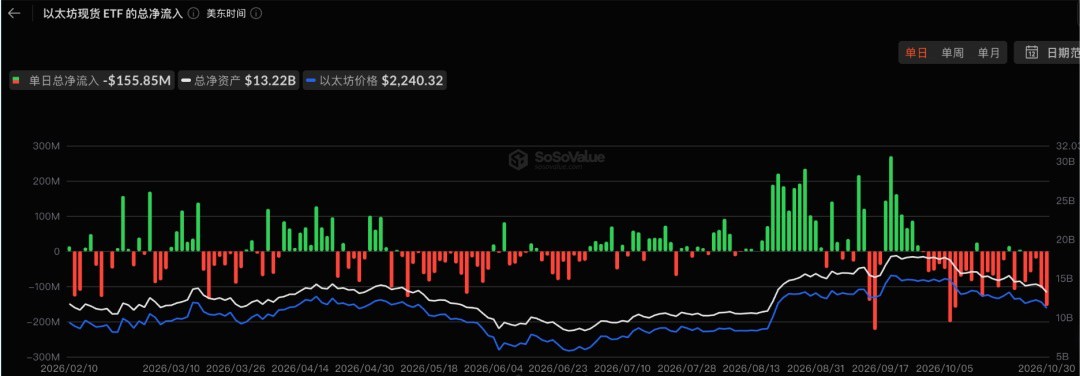
Ethereum ETF Fund Flow
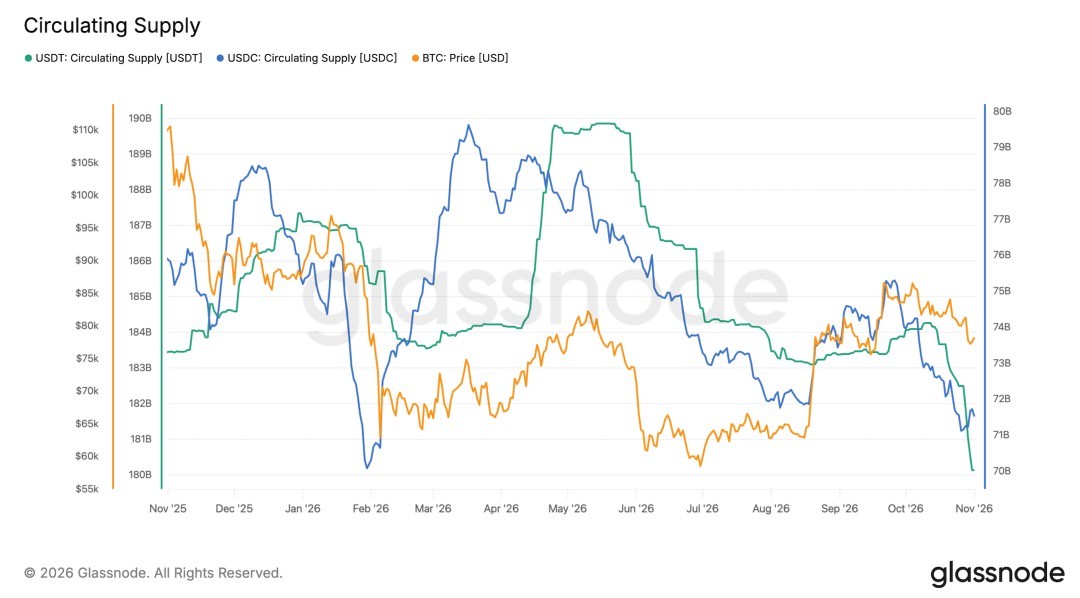
Stablecoin Supply Changes
03 On-chain Data: Leverage Resilience Remains, Spot Market Resilience Still Needs Validation
CVD shows the market is in a buyer's phase, but Coinbase Premium remains weak, indicating insufficient active buying in the US spot market, limiting the rebound slope. Meanwhile, CME open interest and funding rates remained stable after the decline, indicating no disorderly liquidation of leveraged long positions.
CVD shows the market is in a buyer's phase, but Coinbase Premium remains weak, indicating insufficient active buying in the US spot market, limiting the rebound slope.
Currently, there is no confirmed signal that prices, spot prices, and leverage are all strengthening simultaneously. Short-selling liquidity remains above. If macro risk appetite stabilizes and new spot demand improves, the market has room for upward correction; conversely, leverage and liquidity risks below the cost zone still need to be monitored.
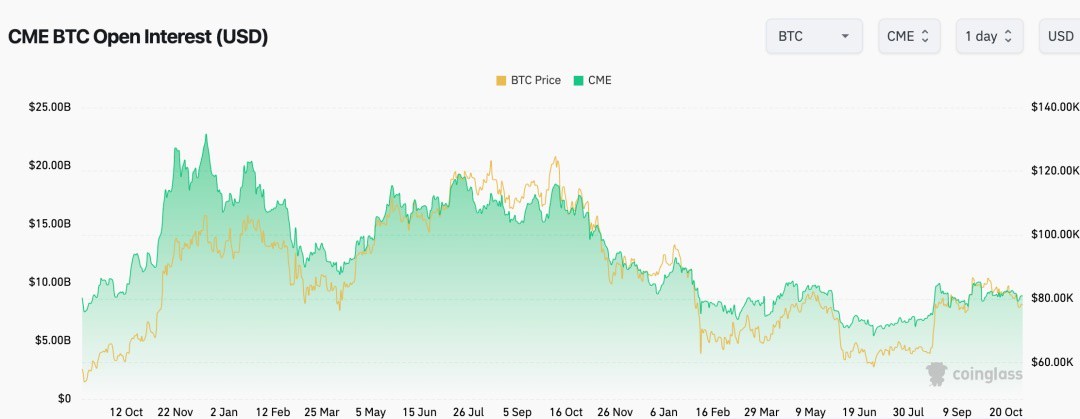
CME BTC Futures Open Interest
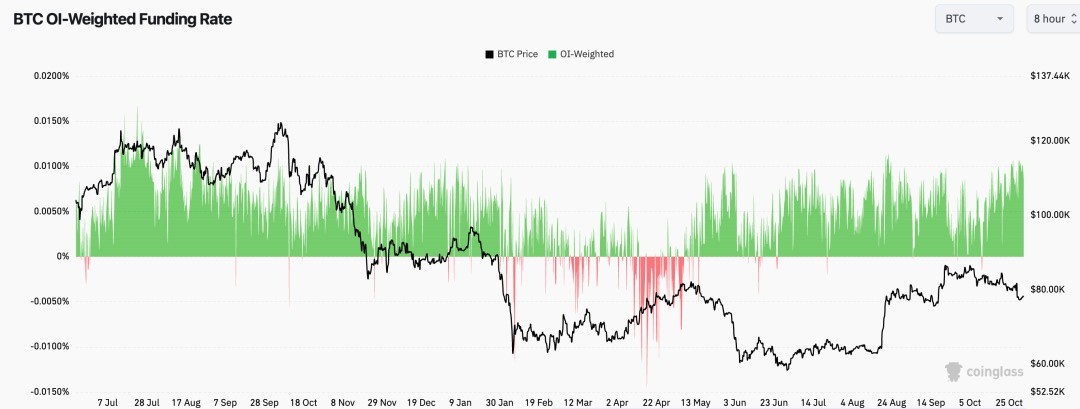
BTC weighted funding rate
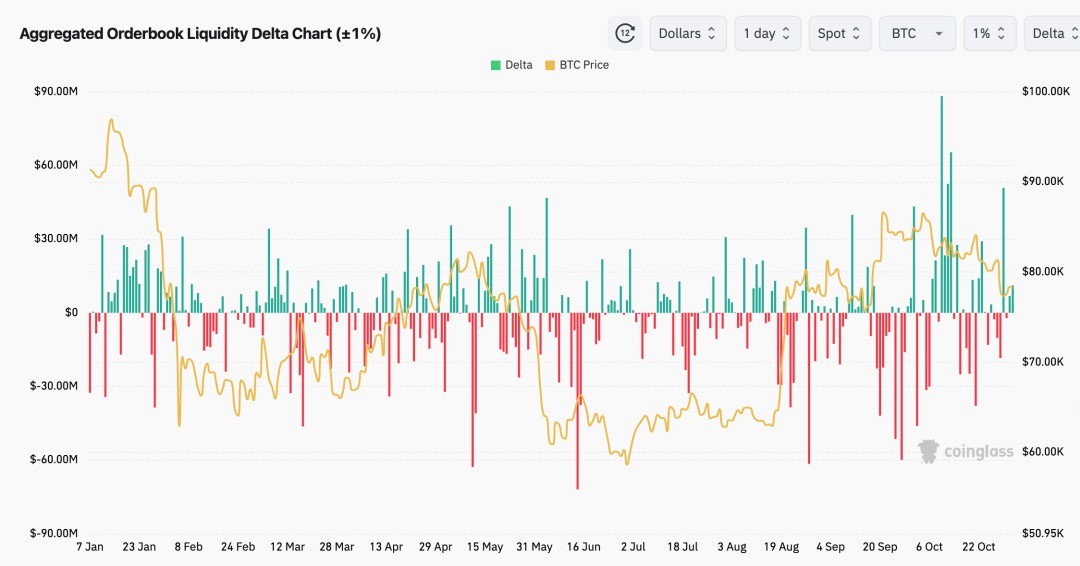
Aggregated Orderbook Liquidity Delta Chart
04 Market Dynamics: Trading and Settlement Infrastructure for Tokenized Assets Enters the Implementation Stage
The Hong Kong Securities and Futures Commission (SFC) has approved two tokenized public money market funds, the ChinaAMC Hong Kong Dollar Digital Currency Fund and the ChinaAMC US Dollar Digital Currency Fund, to conduct secondary trading on the licensed VATP, marking the transition of tokenized investment products from pilot programs to real-world secondary market operations. The Hong Kong Monetary Authority (HKMA) is simultaneously advancing EnsembleTX, using tokenized central bank currency to support 24/7 real-value interbank settlement, and extending it to secondary and repurchase transaction trials of tokenized Exchange Fund Bills. A verifiable connection path is beginning to form among the three layers of infrastructure: assets, funds, and settlement. In the US, the OCC released the GENIUS Act, implementing final rules to provide a prudent regulatory framework for the issuance, reserve, redemption, and risk management of payment stablecoins. The SEC simultaneously updated its FAQ on the securities attributes of digital assets, continuing to base its judgments on actual control, system operation, and asset usage. At the industry level, Bullish and Equiniti demonstrated the transfer of tokenized shares linked to the issuer's formal equity record, while Predicate's funding reflects how programmable KYC, AML, and transfer control are becoming key infrastructure for regulated on-chain finance. Binance Incident: Risk Control in Exchange Operations Becomes a Core Infrastructure Issue Binance disclosed that a multi-stage cyberattack, through social engineering, malware, compromised internal AI tools, and endpoint intrusion, gained unauthorized access to its internal wallet signature service, resulting in asset transfers from multiple hot wallets. Binance estimates that approximately $6.34 billion in digital assets were affected and stated that no evidence of wallet private key leaks has been found. The platform has suspended withdrawals, revoked affected authorizations, rebuilt relevant wallets and internal systems, and is working with law enforcement, on-chain analytics firms, and asset issuers to track and freeze assets. Binance stated that approximately $2.85 billion in assets have been frozen or intercepted, and the related losses will be covered by SAFU and company funds. As of October 31, 98% of the affected token assets have been replenished and can be verified via proof-of-reserve. Technical investigations and independent security reviews are still ongoing. This incident highlights the infrastructure requirements for large exchanges in terms of security governance, access control, hot wallet isolation, asset verifiability, and emergency operations. For institutional participants, in addition to trading depth and compliance qualifications, operational risk control and incident coverage mechanisms should be essential dimensions for ongoing due diligence on counterparties.