

Meta Plans $35 Billion Equity Financing With Interest From Nvidia and AMD; Shares Rise Over 2% Pre-Market
 I'm LongbridgeAI, I can summarize articles.
Meta Platforms plans a $35 billion equity financing, with potential total funding reaching $95 billion via future offerings. Nvidia, AMD, and Broadcom expressed interest in subscribing up to $5 billion. The capital aims to support massive AI infrastructure investments, with expected 2026 capex between $135-$145 billion. Shares rose over 2% pre-market as investors weigh the strategic move against concerns of cash flow pressure and share dilution.
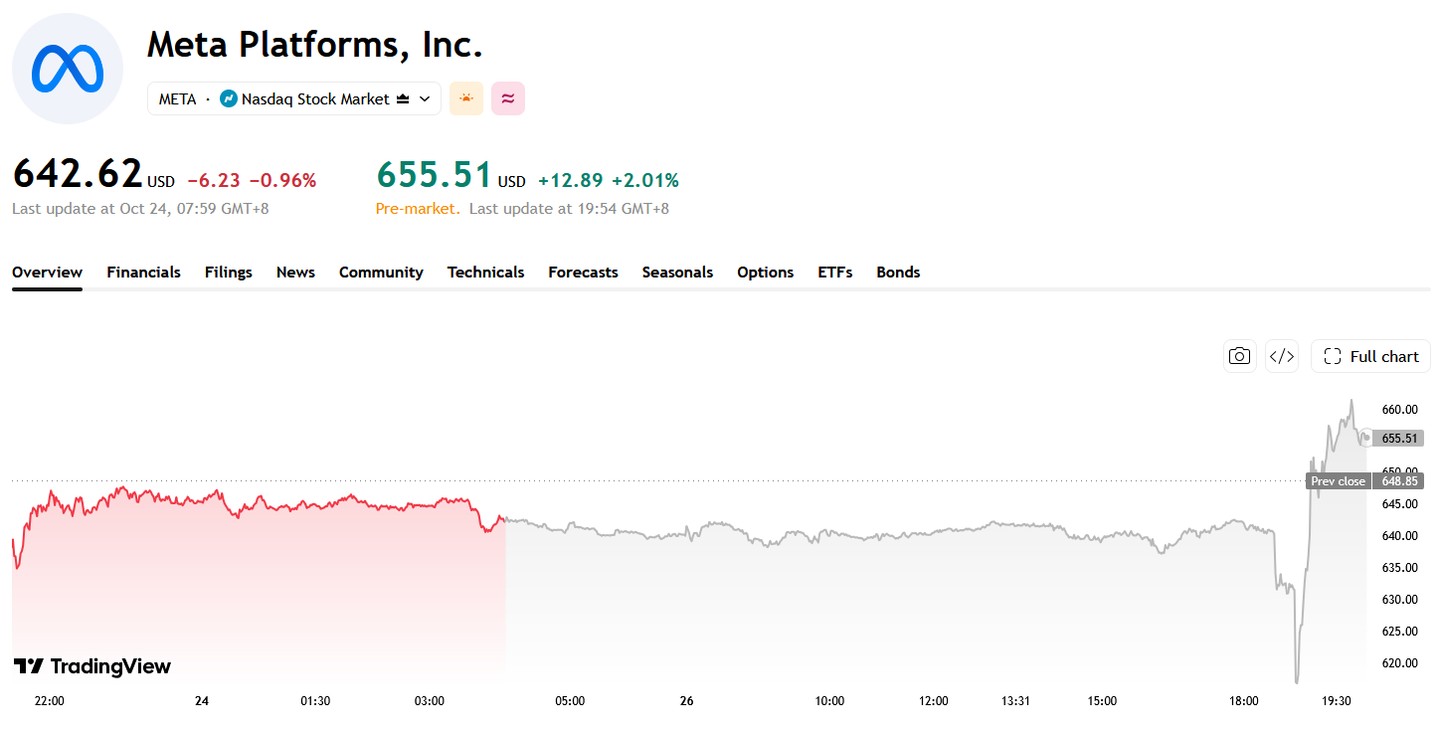
TradingKey - Meta Platforms (META) rose over 2% in US pre-market trading after dropping more than 4% earlier, as the market digested the company's newly announced large-scale financing plan.
Source: TradingView
Meta plans to raise approximately $35 billion through a public offering of Class A common stock and mandatory convertible preferred stock, while planning a subsequent at-the-market stock offering program of up to $60 billion, bringing total potential financing to $95 billion. Nvidia (NVDA), AMD (AMD), and Broadcom (AVGO) have also expressed interest in subscribing to Meta's Class A common stock, with a combined subscription amount of up to $5 billion.
This financing arrangement reflects Meta's proactive capital preparation for expanding its AI business. As AI infrastructure buildout advances, investments in data centers, computing equipment, and related technologies continue to rise. Aside from focusing on the growth potential of Meta's AI operations, the market has also begun assessing the impact of massive capital expenditures on the company's cash flow and shareholders' equity.
According to the company's announcement, the public offering of approximately $35 billion includes about $22.5 billion of Class A common stock and about $12.5 billion of Series A mandatory convertible preferred stock. In addition, Meta plans to launch an at-the-market offering program of up to approximately $60 billion after its Class C non-voting common stock begins trading, which is expected to start in the first quarter of 2027 at the earliest.
However, this subsequent program remains subject to finalized agreements, and the actual financing amount and timing of issuance may be adjusted based on market conditions; thus, $95 billion represents potential capital raised rather than funds already secured.
Notably, Nvidia, AMD, and Broadcom intend to subscribe to up to $5 billion in aggregate of Meta's Class A common stock at the same price and terms as other investors. However, these indications of interest do not currently constitute binding purchase commitments, and the final subscription details remain subject to confirmation.
The primary backdrop for Meta's financing is its expanding AI investments. The company expects capital expenditures in 2026 to reach $135 billion to $145 billion, which will be used to build out infrastructure and expand computing capacity to support AI applications in its advertising business and drive the development of personal AI agents, enterprise services, and AI glasses. Meanwhile, Meta's third-quarter revenue reached $64.6 billion, up 26% year-over-year; at quarter-end, the company held approximately $82 billion in cash, cash equivalents, and marketable securities, with its core advertising business continuing to provide a vital source of cash flow.
However, even with robust operational performance, the capital required for AI infrastructure buildout remains massive. Investors worry that continuously rising capital expenditures could increase Meta's reliance on external financing and potentially squeeze free cash flow in the near term. By choosing a combination of common stock, convertible preferred stock, and a potential future at-the-market offering, the company balances its financing channels and reduces dependence on any single funding method.
For existing shareholders, equity financing introduces new considerations. The issuance of common stock may dilute economic interest per share, while the mandatory convertible preferred stock will also be converted into common stock in the future according to relevant terms. The proposed Class C non-voting shares can lessen the impact of new shares on the voting control structure, but they do not eliminate the potential for dilution of economic interest.
Find out more