

Warren Buffett's Successor, Greg Abel, Has Over 35% of Berkshire Hathaway's $359 Billion Portfolio Invested in Just 2 Undeniable Winners
 I'm LongbridgeAI. Here is the key information I extracted
- Apple accounts for 21.8% of Berkshire's invested assets valued at $78.03 billion, which Abel intends to retain for long-term compounding growth.…
For the first time in well over half a century, Berkshire Hathaway (BRKA +0.09%)(BRKB +0.27%) entered the year in uncharted territory. Its longtime leader, Warren Buffett, retired as CEO at the end of last year, handing the proverbial baton, and the oversight of Berkshire's $359 billion investment portfolio, to Greg Abel.
Buffett's successor wasted little time overhauling Berkshire's portfolio in the first quarter. But while several changes were made, one central investing thesis remains the same: portfolio concentration. Both the Oracle of Omaha and Abel strongly believe in concentrating Berkshire's invested capital in their best ideas, which is why Apple (AAPL -0.14%) and American Express (AXP -1.56%) currently account for more than 35% ($126.7 billion) of invested assets!

Warren Buffett and his successor, Greg Abel, believe in highly concentrated portfolios. Image source: Getty Images.
Apple: $78.03 billion (21.8% of invested assets)
Warren Buffett began piling into the iPhone maker during the first quarter of 2016. While Apple's technology and its innovation are often what attract investors, Buffett was lured by its ability to keep customers loyal and charge a premium for its physical devices (iPhone, iPad, and Mac). In other words, he viewed it as more of a consumer-goods titan than a triumphant tech company.
But in the nine quarters leading up to the Oracle of Omaha's retirement (Oct. 1, 2023 – Dec. 31, 2025), Buffett dumped 75% of Berkshire Hathaway's stake in Apple. While some of this selling might be tax-based, Apple's premium valuation may also have played a role.
When Buffett initially purchased Apple stock, it was valued at a trailing 12-month (TTM) price-to-earnings (P/E) ratio of 10 to 15. It now commands a TTM P/E ratio of 38.

AAPL PE Ratio data by YCharts.
Despite Apple being historically pricey, Berkshire's newest boss has no intention of sending it to the chopping block. In Abel's inaugural letter to shareholders, he referred to the iPhone maker as a business that will "compound over decades."
Apple's shift to higher-margin subscription services, along with its integration of Apple Intelligence into its physical devices, is a recipe for accelerated growth.
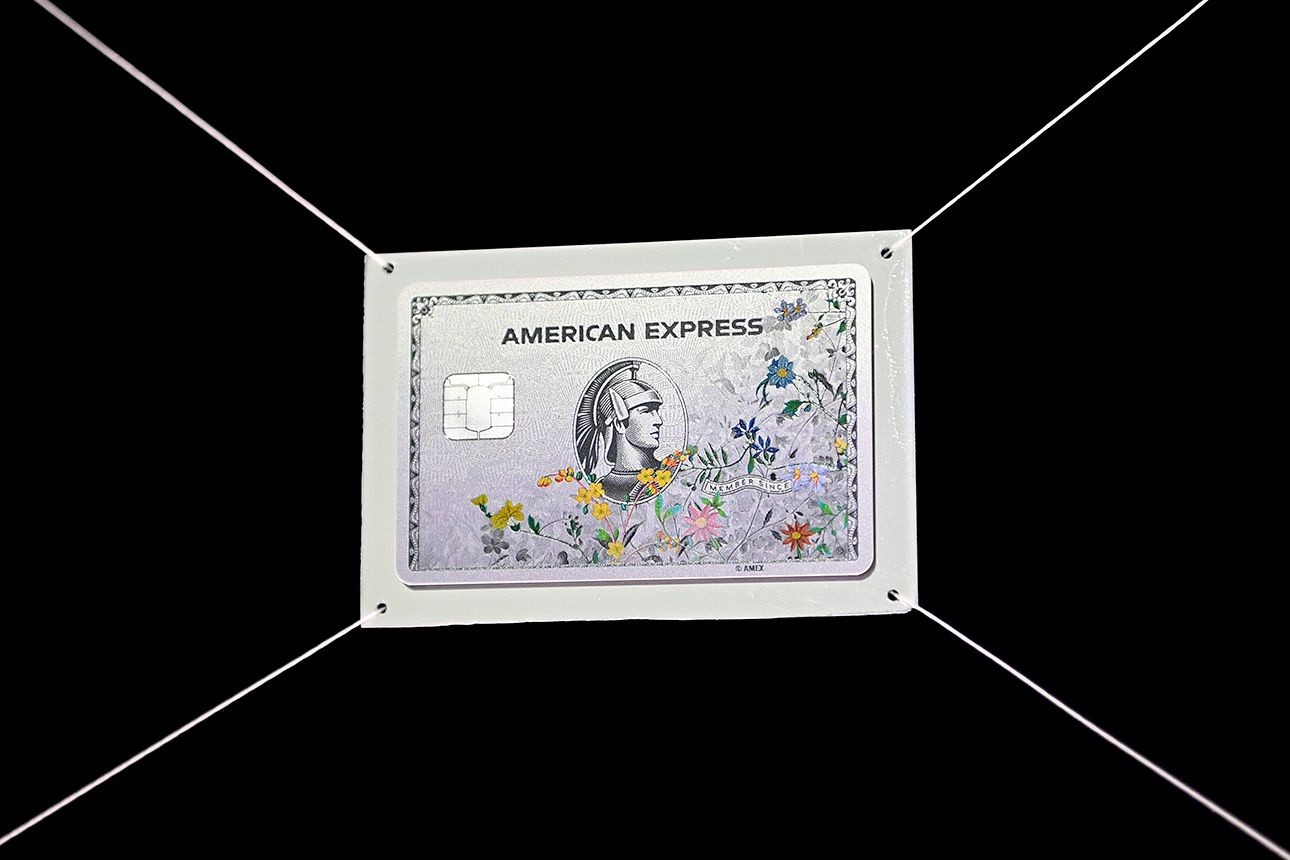
Image source: Getty Images.
American Express: $48.67 billion (13.6% of invested assets)
Berkshire Hathaway's second-largest position, credit-services provider American Express, is another legacy holding from its now-former boss, Warren Buffett. Amex, as it's more commonly known, has been a continuous holding by Berkshire since 1991.
The beauty of Amex's operating model is threefold.
Firstly, it can generate revenue from both sides of the transaction counter. It's the third-largest payment facilitator in the U.S., enabling it to collect merchant fees. But it's also a core lender, with cardholders paying annual fees and/or interest income.
AXP - American Express
NYSE · As of 4:00 PM ET 11/12/26
 Moneyball Superscore86/100
Key data points
Secondly, Amex has a knack for attracting affluent clientele. Individuals with higher incomes are less likely to alter their spending habits or to fail to pay their bills during minor economic downturns. This makes Amex less sensitive to recessions than its peers and helps it bounce back from economic downturns relatively quickly.
Third and most importantly, Amex generates a jaw-dropping yield relative to cost for Berkshire Hathaway. Berkshire's cost basis in Amex is about $8.49 per share. Meanwhile, American Express has a base annual payout of $3.80 per share, working out to an annual yield on cost of almost 45%!
Put another way, Amex's dividend income alone is doubling Berkshire's initial investment in the company of just shy of $1.29 billion every nine quarters (27 months).
Where to invest $1,000 right now
When our analyst team has a stock tip, it can pay to listen. After all, Stock Advisor's total average return is 850%* — a market-crushing outperformance compared to 210% for the S&P 500.
They just revealed what they believe are the 10 best stocks for investors to buy right now, available when you join Stock Advisor.
See the stocks ›
*Stock Advisor returns as of November 13, 2026.