


[Zhou's Weekly] The Fed can't print RAM even with rate hikes (Week 38, 2026 | Issue No. 288)
 I'm LongbridgeAI, I can summarize articles.
This week, three things went up in price simultaneously.
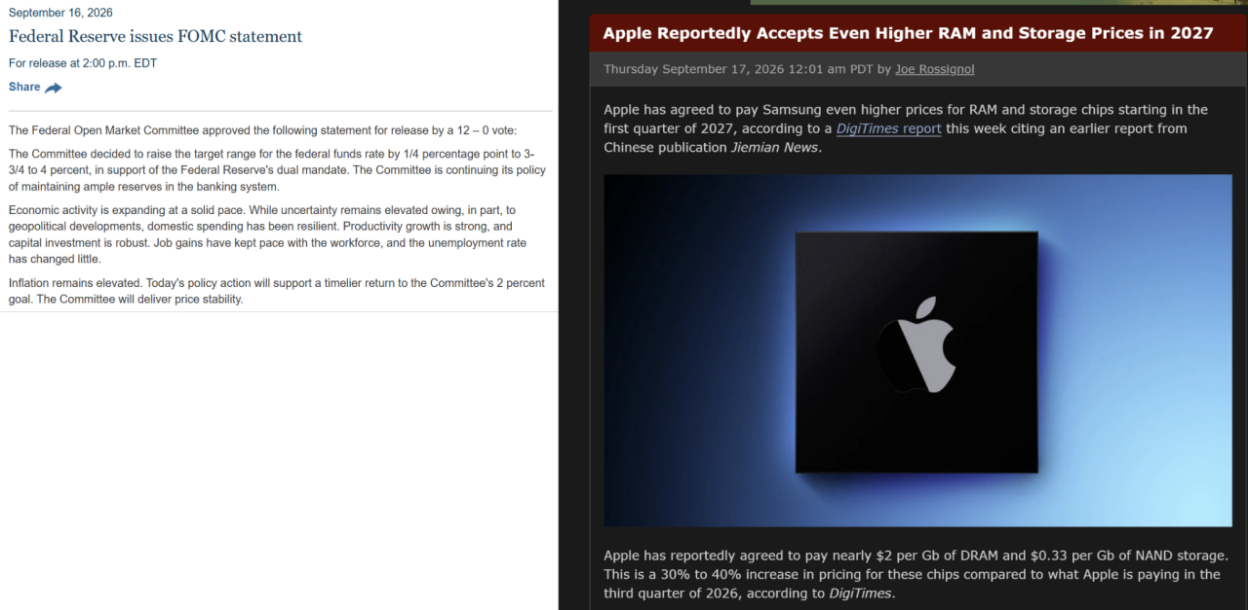
The first is money. On Wednesday, the Fed hiked rates by 25 basis points to 3.75%-4.00%, passing unanimously 12-0, marking its first rate hike since July 2023.
The second is memory. According to DigiTimes, Apple has agreed to buy DRAM at nearly $2 per GB and NAND at $0.33 per GB starting from Q1 next year, 30% to 40% more expensive than in Q3 this year. This is the buyer with the strongest bargaining power in the world.
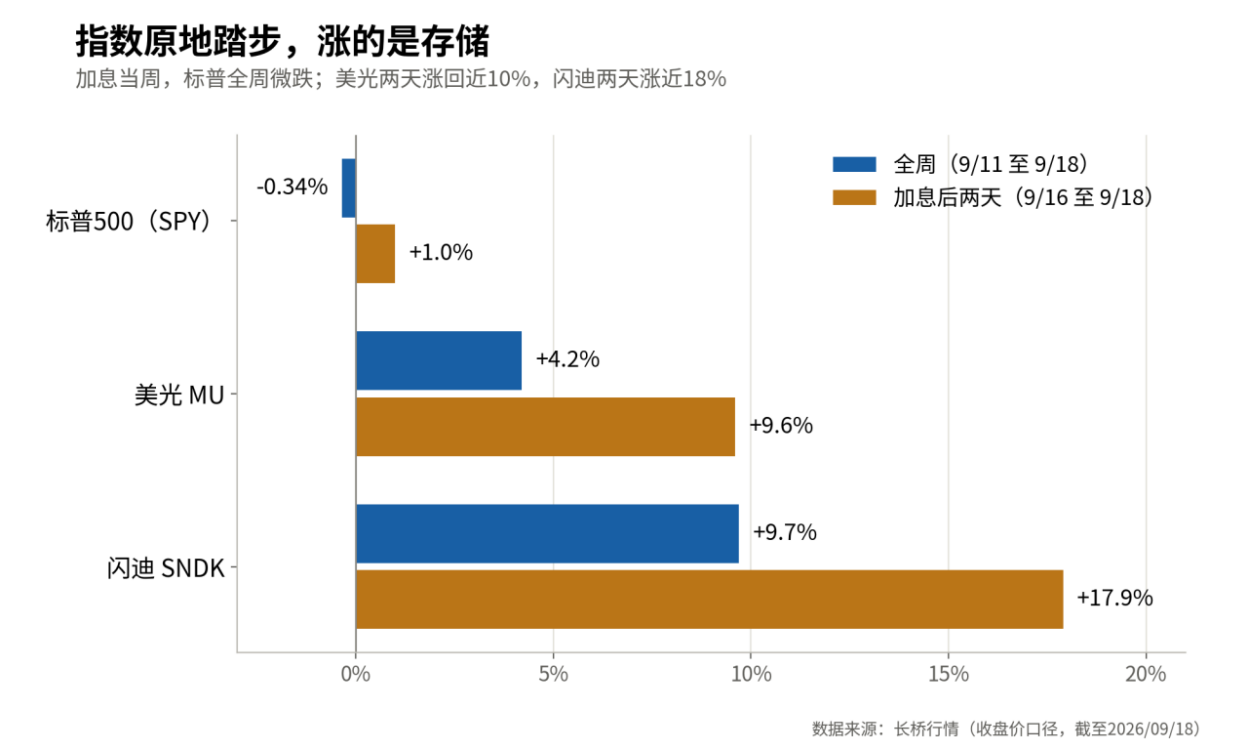
The third is storage stocks. SanDisk surged 11% on Friday alone, while Micron rose 9.6% over two days.
By textbook definition, after a rate hike, high-beta stocks should fall first, yet the result was reversed. In this episode, we will follow these three price tags and look at them one by one.
The First Price Tag: The Price of Money
Let's set one thing straight first. Many people have the impression that "the US stock market rose for two days after the rate hike," but this statement is only half true.
The S&P 500 fell 0.44% on Wednesday, rebounded by 1.0% combined on Thursday and Friday, and ended the week down 0.34%. The Dow Jones Industrial Average fell for three consecutive weeks. Indices merely returned to their starting point; what actually rose was storage.
The macro rationale for those two days of rebound is not complicated: the shoe dropped. Oil prices fell about 3% on Thursday, with Brent returning to $103.65, and the 10-year US Treasury yield fell back to 4.96%. CICC compared this rate hike to Alan Greenspan's 'preventive rate hike' in 1997. On such days when rate hikes are realized, they often mark the peak of interest rates and the bottom of the stock market.
The problem is, this is just the stock market's reading.
The Fed's statement had only three paragraphs, with the last sentence being: 'The Committee will achieve price stability.' In the dot plot, 16 out of 18 officials believe there will be at least one more hike this year, and the median for 2027 is the same as this year at 4.1%, meaning no cuts next year. Core PCE is forecast at 3.4% this year, and inflation won't return to 2% until 2029.
Wall Street itself lacks consensus. Goldman Sachs changed its stance twice within four days and now bets on another hike in October, arguing that 'continuous action is more natural than hiking once and stopping.' Morgan Stanley and JPMorgan are looking at December. Citi believes there won't be any more hikes this year, with rate cuts starting in June next year.
The bond market gave its own answer on Friday: the 2-year US Treasury yield hit 4.744%, a multi-year high, and CME data shows a 53.1% probability of another hike in October.
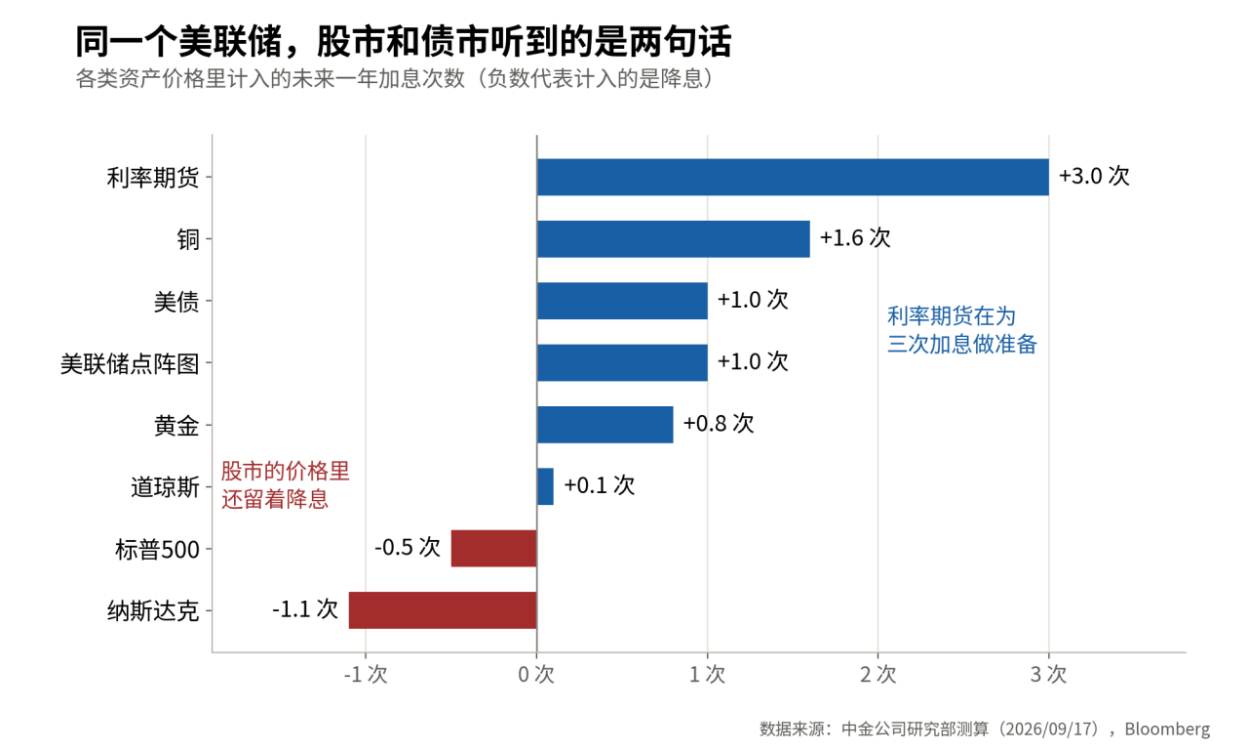
CICC calculated a ledger: futures prices have priced in three rate hikes over the next year, while the S&P has priced in negative 0.5 times, and the Nasdaq has priced in negative 1.1 times.The same Fed, but the stock market and bond market heard two different messages. One side or the other will have to admit they were wrong.
The Second Price Tag: The Price of Memory
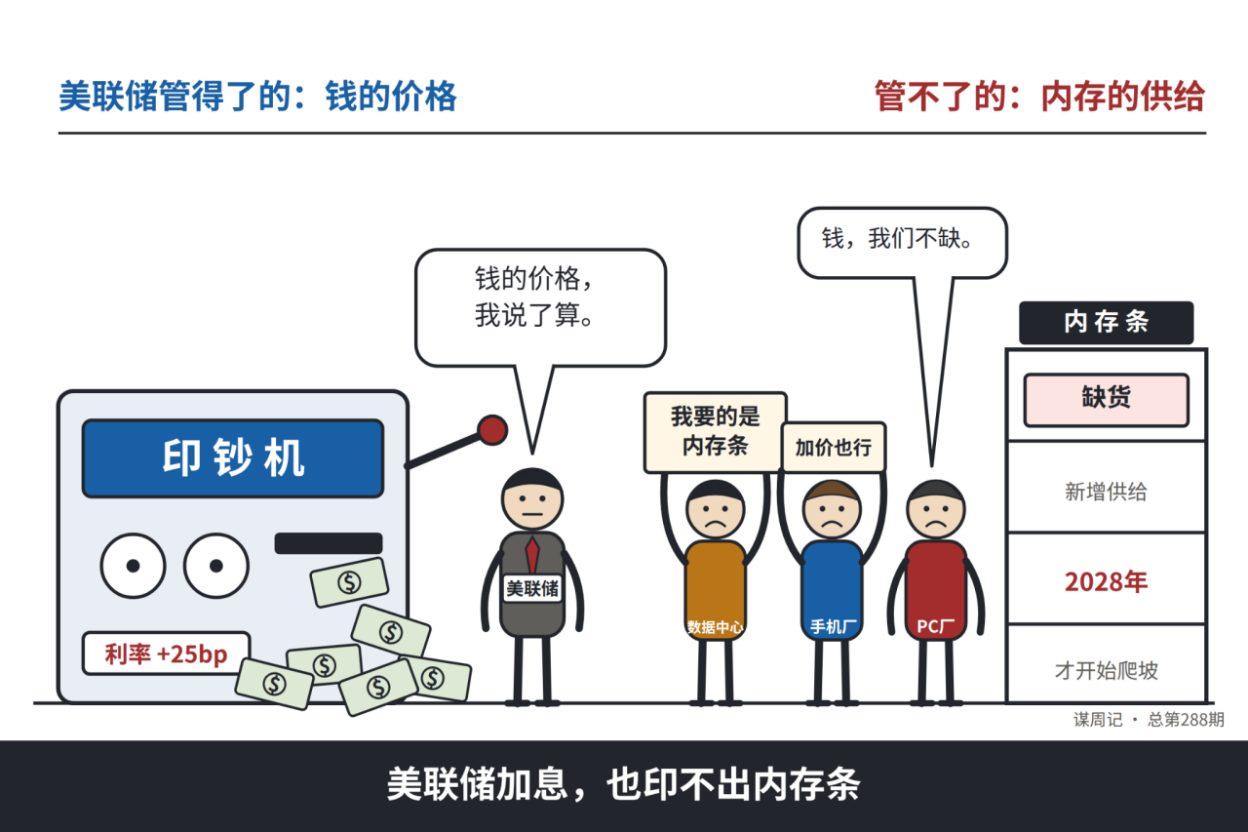
Why isn't storage afraid of rate hikes? Because all a rate hike can do is make money expensive and suppress demand. It cannot create capacity.
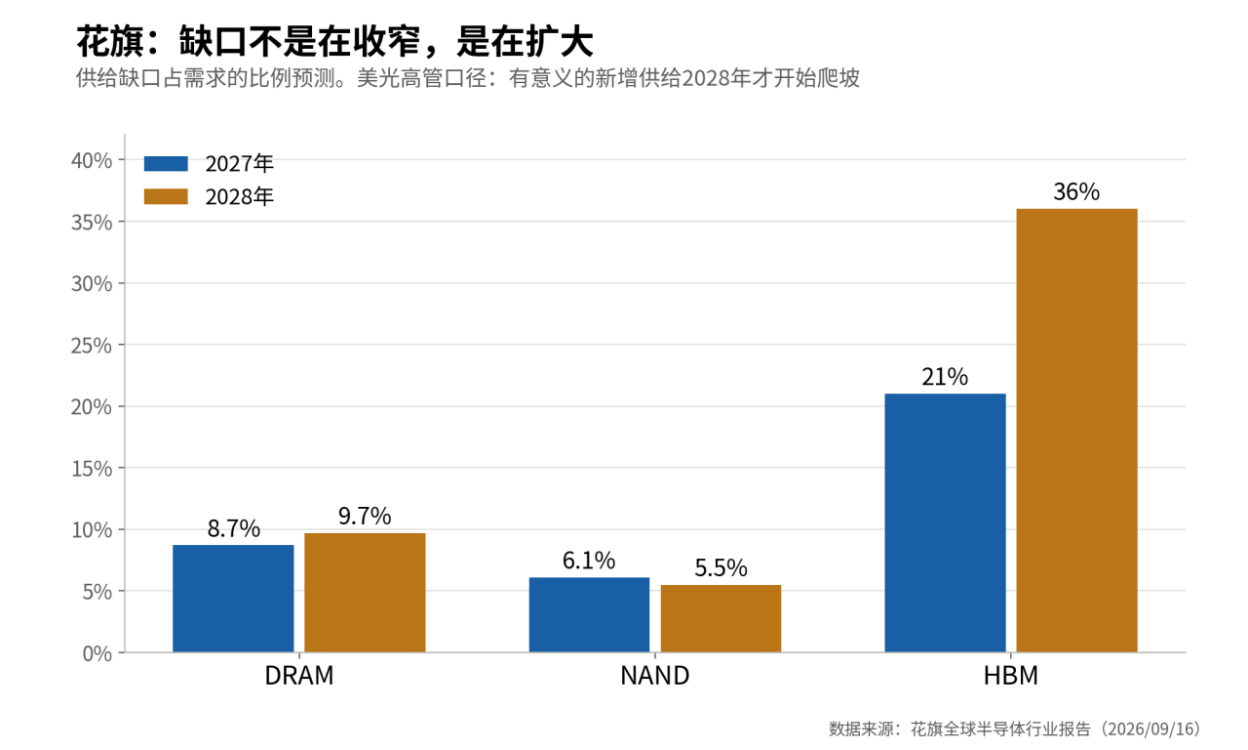
The contradiction in this round of storage is not in demand, but in supply. Micron executive Sadana said this week that meaningful new supply won't start ramping up until 2028, and there is currently no sight of a supply-demand balance point. Intel CEO Chen Lihu said the shortage 'will get worse,' with many projects delayed due to lack of memory. Citi's report on Wednesday projected the shortage through 2031, and customers extended long-term contracts from three years to five.
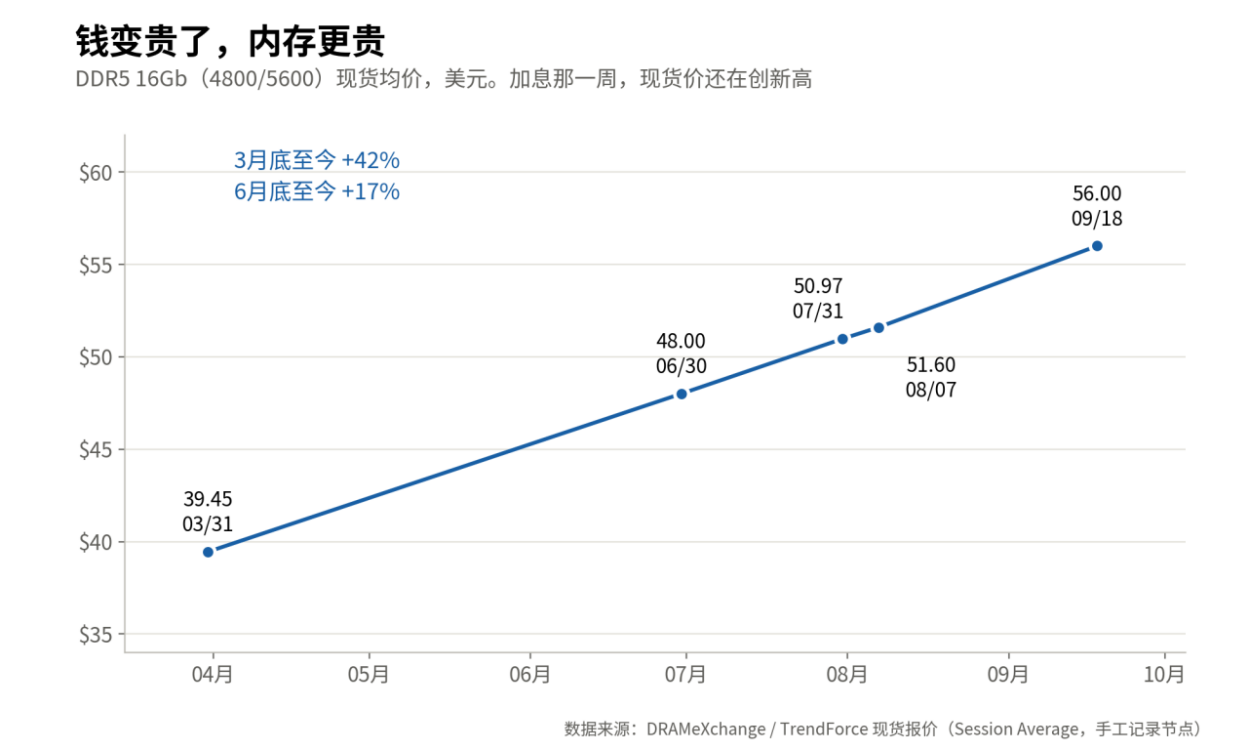
Prices are the most honest. I've been tracking spot prices for DDR5 myself: $39.45 at the end of March, $48 at the end of June, and $56 on the Friday of the rate hike week. In less than half a year, it rose 42%, and it was still hitting new highs during the rate hike week.
Speaking of which, let's look back at a past event.
In the 1970s, Burnham and Volcker sat successively as Fed chairs, and rates could keep rising into double digits. But there was one thing they couldn't print: oil. The winners in that decade's inflation were those who held oil. By 1980, energy stocks accounted for nearly 28% of the S&P 500's weight.
Today's scenario is almost a mirror image. This rate hike itself was forced by oil prices, with Brent still above $100. And the 'oil' of the AI era is memory. More interestingly, memory price hikes are already part of inflation: Apple raised prices across its Mac and iPad lines by $100 to $300 in June, citing memory as the reason. Cook's exact words were 'a once-in-a-century flood.' One component of the inflation the Fed is fighting is the profits of storage companies.
In an inflationary era, companies that can raise prices are inflation-hedging assets.
However, this past event has a second half, which we must also finish reading: the 28% weight of energy stocks is now down to around 3%. Winners created by shortages have a time limit, determined by when supply arrives. This leads to the third price tag.
The Third Price Tag: The Price of Storage Stocks
A solid logic doesn't mean you should chase prices recklessly. Behind this price tag, there are five things worth noting.
The big bullish candle on Friday had no new news. SanDisk's $14 billion buyback was old news announced in the August earnings report. 24/7 Wall St's original words were 'no identifiable catalyst found.' Friday was also a triple witching day. A single-day surge on an options expiration date should not be chased as a fundamental signal.
Storage isn't afraid of interest rates; it's afraid of customers' wallets. Micron's forward P/E for next year is only 5.8x, a valuation that isn't afraid of discount rates. What needs watching is another chain: rate hikes make AI financing more expensive, capital expenditure slows, and storage orders drop. In FactSet's forward data, free cash flow forecasts for Google, Amazon, and Meta are all negative, with Microsoft being the only positive one. Apollo Chief Economist Slok reminded this week that the 5-year CDS for his tracked mega-cloud basket (Amazon, Google, Microsoft, Oracle) has risen above 100 basis points, while large banks are only at 40, with Oracle contributing the most. In BofA's September fund manager survey, 42% listed AI infrastructure spending as the most likely source of systemic credit events, while 79% believed no company would cut spending this year. Putting these two numbers together reveals the risk itself.
A 5.8x P/E is the market casting a vote of no confidence. Cyclical stocks always look cheapest at the profit peak. Micron's guidance for this quarter is $50 billion in revenue, with the sequential growth rate dropping from 74% in the previous quarter to 21%. The expected quarterly increase in DRAM contract prices has also fallen back to 13%-18%. Prices haven't stopped rising, but they are decelerating.
Micron's earnings report on September 30 is the referee. Options imply a post-earnings move of about 11%. Of 27 analysts, 26 are buying, but target prices range from Goldman's $1100 (neutral) to $2000 from four institutions, a difference of nearly double.
There are two more clouds on the horizon. According to Reuters, Changxin plans to enter NAND, a message that coincided exactly with SanDisk's surge. Consumer demand is being squeezed out by price hikes, with smartphone shipments expected to decline 13% this year.
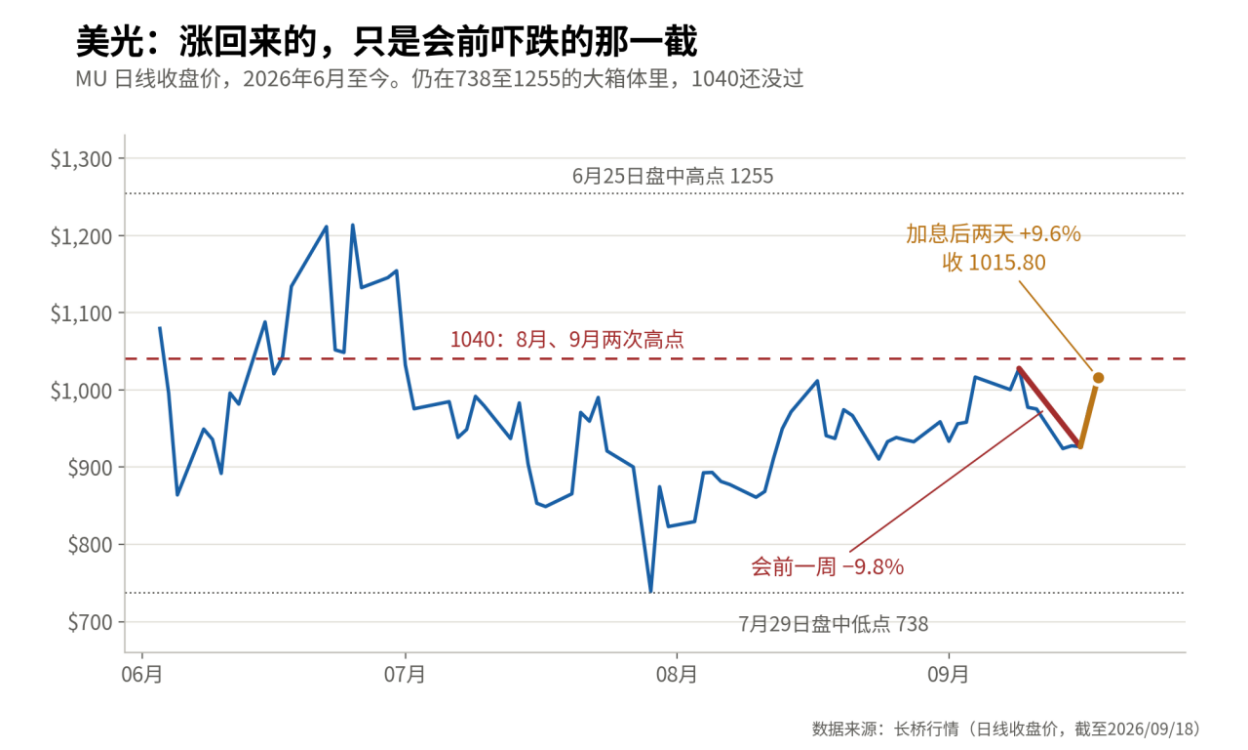
Looking at Micron's position again. A week before the meeting, it fell from 1027.77 to 926.55, a drop of 9.8%; two days after the rate hike, it recovered to 1015.80.What recovered was just the portion scared down before the meeting. It failed to break through the 1040 level twice in August and September, and is still 19% away from the June high of 1255. It remains in the large box between 738 and 1255, without choosing a direction.
Last Week's Insurance Policy Needs to Be Calculated Out
Last issue, I wrote: Close all Sell Put positions, leave common stock and Calls untouched, and add Sell Calls. As a result, storage stocks rose nearly 10% in two days this week. Some friends must be asking: Is it a loss?
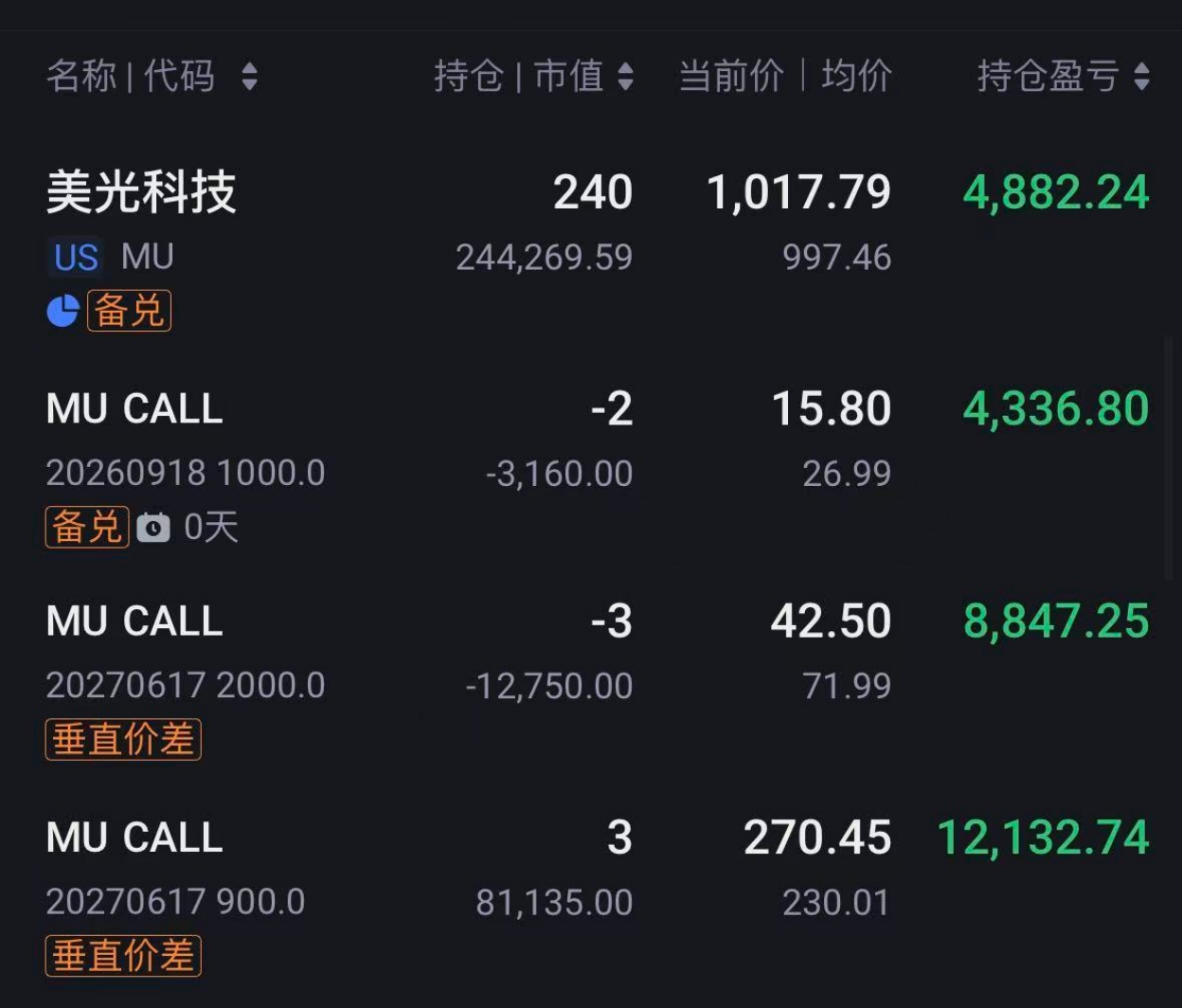
Above is my actual Micron trading portfolio. Specific strategies will be detailed in our member group.
Message
The Fed can decide the price of money, but not the price of scarcity. Interest rates are set by the central bank, while the duration of shortages is set by wafer fabs.
[Next Week Outlook]
Next week's US stock market will be a week in the eye of the storm.
Last week's cards have been played out: the rate hike is done, indices are flat, storage recovered what it lost before the meeting, and the bond market didn't celebrate along.
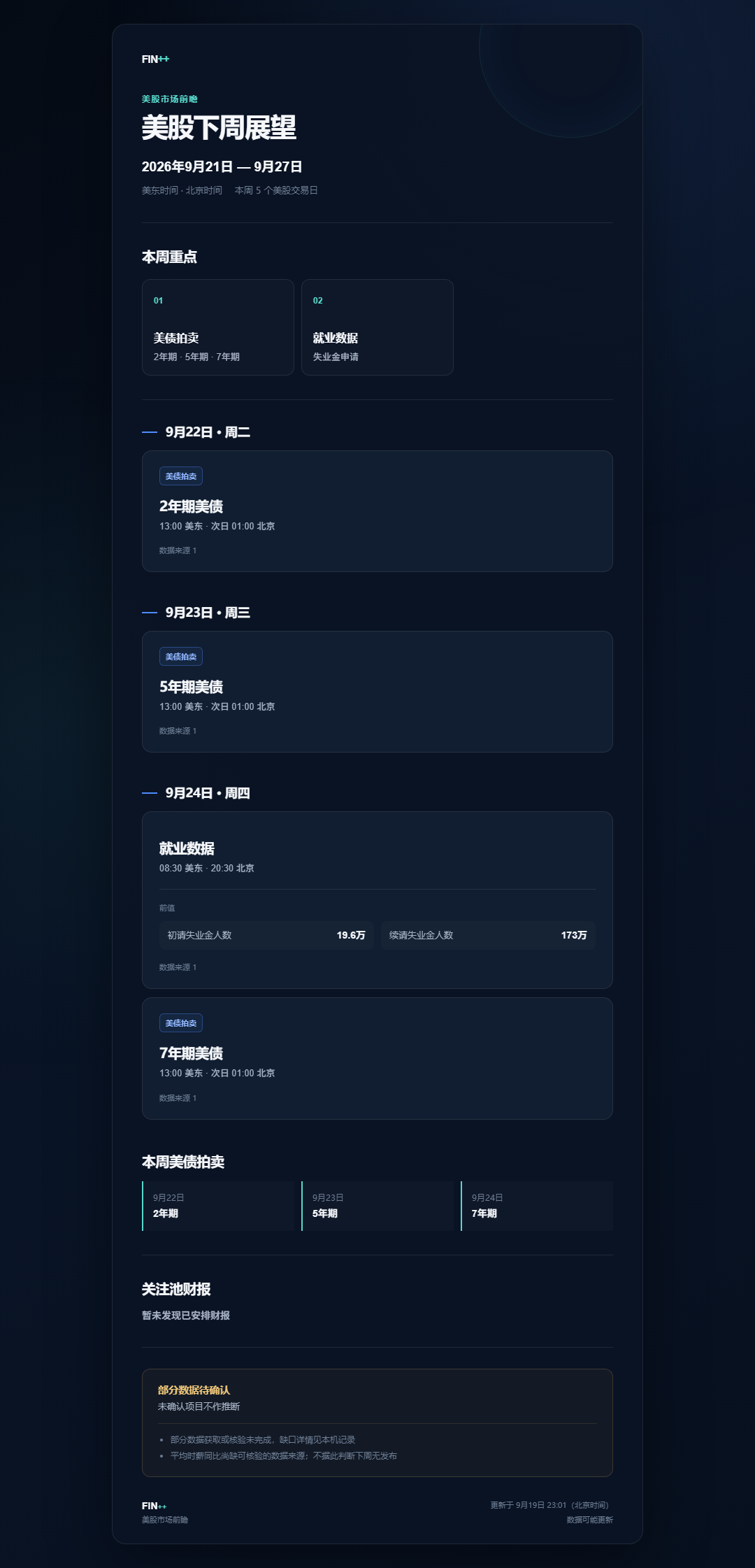
Next week's table is very empty. Wednesday's initial PMI, Thursday's initial jobless claims and new home sales, Friday's durable goods orders and Michigan consumer confidence. For earnings, only Costco after-hours on Thursday is worth a glance. What truly matters is listening to Fed officials' speeches after the quiet period ends. Whether the probability of an October rate hike can stabilize at 50% depends on what they say.
One more week ahead is the main event: September 30 brings PCE and final GDP figures, Micron's earnings report, and quarter-end liquidity conditions—all three colliding on the same day.
The stock market is waiting for Micron, and the bond market is waiting for the Fed.
[For specific operations and portfolio details, please visit the website]
This article represents personal views and probability assessments and does not constitute investment advice. Data sources: Market data from Longbridge (closing price basis, as of Sept 18); FOMC statement and economic projections summary from the Federal Reserve website; Investment bank views paraphrased from TradingKey, Invezz, Benzinga, CICC research reports, and Citi research reports; Apple procurement prices cited from DigiTimes reports; DDR5 spot prices from DRAMeXchange; Energy sector weight from CME Group; Mega-cloud CDS from Apollo's 'Daily Spark'; Fund manager survey from BofA.


The copyright of this article belongs to the original author/organization.
The views expressed herein are solely those of the author and do not reflect the stance of the platform. The content is intended for investment reference purposes only and shall not be considered as investment advice. Please contact us if you have any questions or suggestions regarding the content services provided by the platform.