

📉🐶 Every Plunge Is an Opportunity? My Take on SOXL, TSMC and QQQ
 I'm LongbridgeAI, I can summarize articles.
🐶 1️⃣ Every Plunge Is an Opportunity — But Only If Earnings Can Hold Up
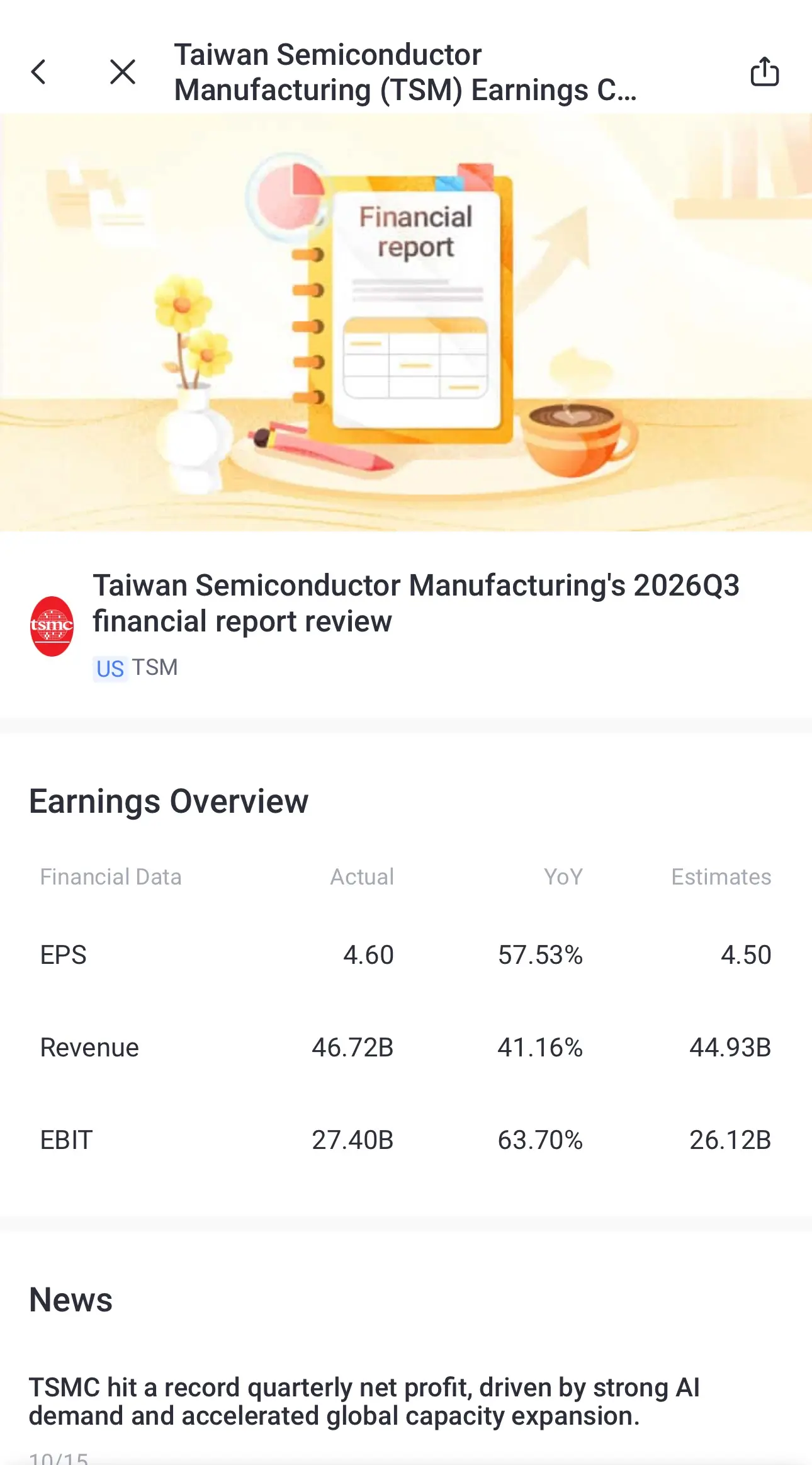
When I see semiconductor stocks plunge, I don’t automatically assume the AI story is over. Sometimes, the market is simply repricing growth stocks because inflation is hotter than expected, interest rates may stay higher for longer, or investors are becoming nervous about how much money companies are spending on AI.
But I always ask myself one important question: Are company earnings deteriorating, or is the market simply becoming more fearful?
If earnings expectations remain strong, a sharp price decline can create an opportunity to buy quality companies at a more attractive valuation. However, if earnings forecasts are being cut, a stock can continue falling even after an already painful correction.
This is why I don’t blindly buy every dip. I want to understand what is driving the decline before deciding whether it is an opportunity or a warning sign.
💰 2️⃣ How Can AI Companies Maintain Earnings Even When Interest Rates Rise?
Higher interest rates increase borrowing costs and can make future earnings less valuable today. This is particularly important for growth stocks because much of their expected value comes from profits they may generate years into the future.
However, higher rates do not automatically mean that every AI company will suffer weaker earnings.
Here are several ways companies can protect their profitability.
🏦 A. Reduce borrowing and strengthen the balance sheet
Companies with substantial cash reserves can finance investments using their own cash flow instead of taking on excessive debt. They may also use excess cash to repay loans, reducing future interest expenses.
This matters because a company that generates strong operating cash flow has more flexibility when financing conditions become tighter.
📈 B. Issue shares instead of borrowing more money
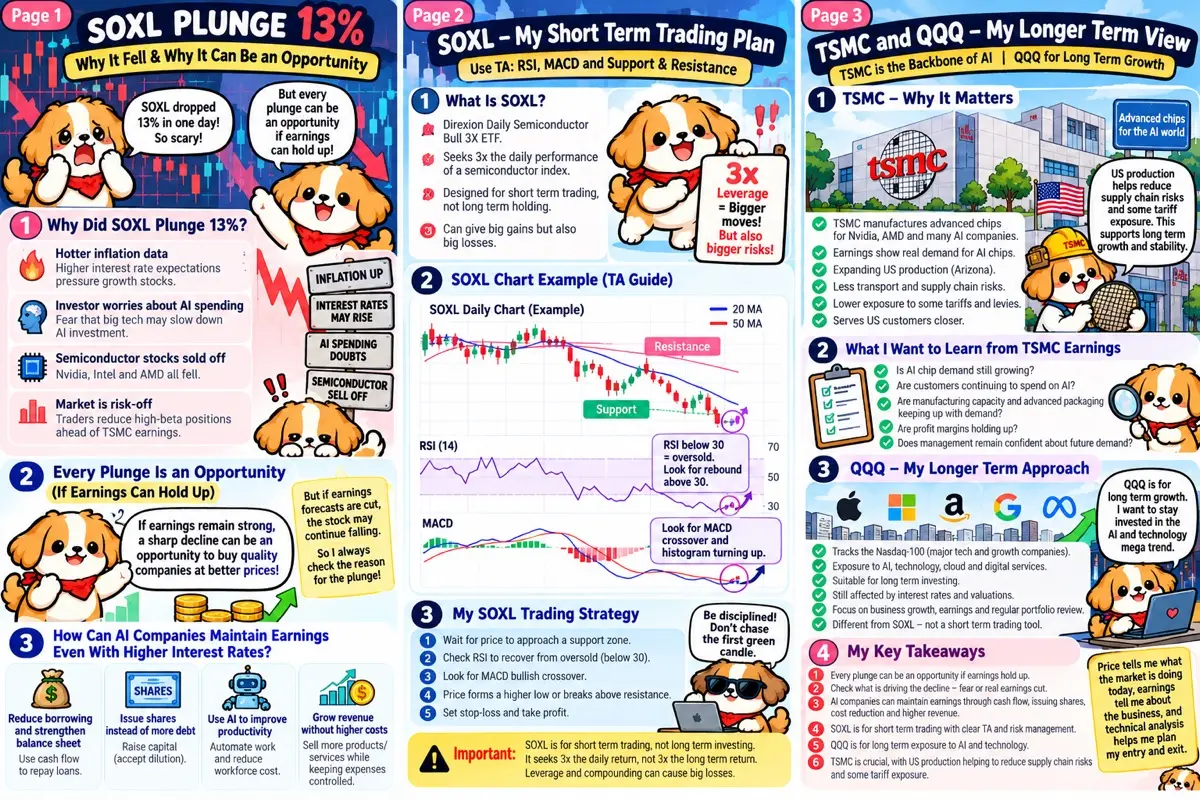
Some companies may raise capital by issuing additional shares rather than taking on new debt. This can reduce their need to borrow and help fund expensive AI infrastructure projects.
However, issuing shares is not free money. Existing shareholders own a smaller percentage of the business after dilution, and earnings per share may fall if profits do not grow sufficiently.
Therefore, I would rather see a company fund its expansion through strong cash flow than repeatedly issue new shares just to cover rising costs.
🤖 C. Use AI to improve productivity
This is an interesting part of the AI investment story. Companies are spending billions of dollars on AI infrastructure, but they also hope to use AI to reduce operating costs and improve productivity.
For example, businesses may automate repetitive administrative work, improve software development efficiency, optimise logistics and reduce customer-service expenses.
Some companies may also slow hiring or reduce their workforce as automation improves. If these savings exceed the additional costs of AI infrastructure, operating margins could improve.
However, I would not assume every company can immediately replace workers with AI. Implementation costs, training, computing expenses and restructuring charges can offset the savings.
💵 D. Increase revenue without increasing costs at the same rate
This is one of the strongest ways to maintain earnings. If an AI company can sell more products or services while keeping its operating expenses under control, its profit margins can improve.
For example, a hypothetical company increases revenue from $100 million to $120 million while keeping operating expenses relatively stable. It may generate higher operating profit even if interest expenses increase modestly.
That is what I want to see: genuine revenue growth, strong margins and cash flow that can support continued investment.
🔥 3️⃣ Why SOXL Can Be Interesting for Short-Term Trading
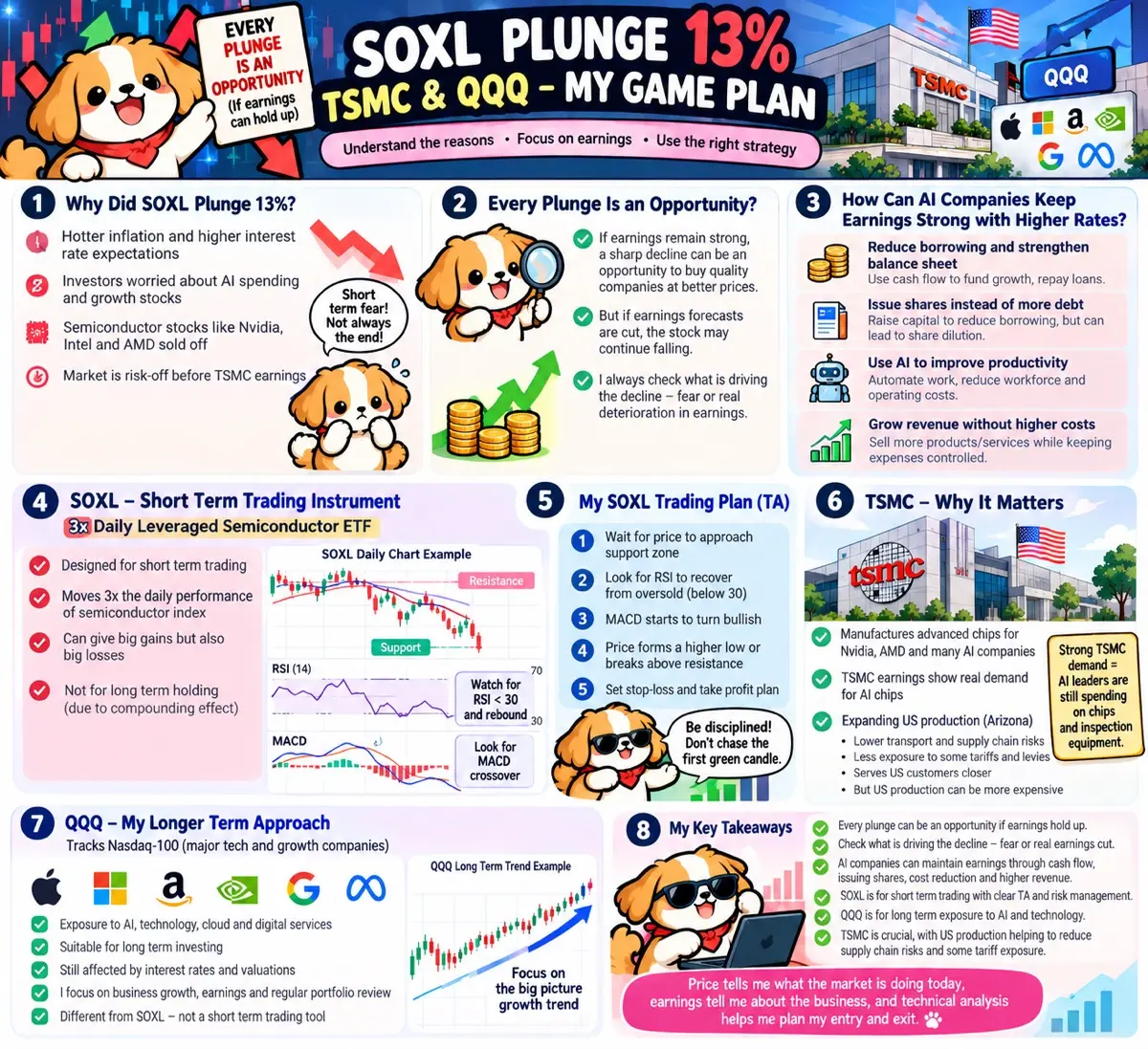
SOXL is the Direxion Daily Semiconductor Bull 3X Shares ETF. It seeks approximately three times the daily performance of its semiconductor index, before fees and expenses.
That means it is designed for aggressive short-term trading, not for simply holding semiconductor stocks for years.
When semiconductor stocks rebound strongly, SOXL can deliver a powerful move. But when the sector sells off, the losses can be brutal.
For example, if the underlying index falls 5% in a day, a roughly 15% decline in SOXL would be consistent with its daily leverage objective, before fees, expenses and tracking effects. Actual returns can differ.
This is why a 13% plunge in SOXL should not be treated as an ordinary dip in a diversified investment portfolio.
My approach to SOXL is to treat it as a trading instrument. I want a defined entry, a clear invalidation level and a plan for taking profits. If the chart is weak, I would rather wait than rush into a falling market.
A sharp decline can create a rebound opportunity, but leverage also means I can lose money very quickly if I get the timing wrong.
$Taiwan Semiconductor(TSM.US)


The copyright of this article belongs to the original author/organization.
The views expressed herein are solely those of the author and do not reflect the stance of the platform. The content is intended for investment reference purposes only and shall not be considered as investment advice. Please contact us if you have any questions or suggestions regarding the content services provided by the platform.