📢 𝐉𝐔𝐒𝐓 𝐈𝐍: Nvidia Says Expands Partnership With Toyota to Advance Physical AI Across Automotive, Robotics and Cities - $NVIDIA(NVDA.US) $Toyota Motor(TM.US)

Toyota Motor Corp.
7203----
Share your thoughts
Write something you'd like to share with our community...
- P
Just a quick summary on $Churchill Capital XI(CCXI.US) (Agility):
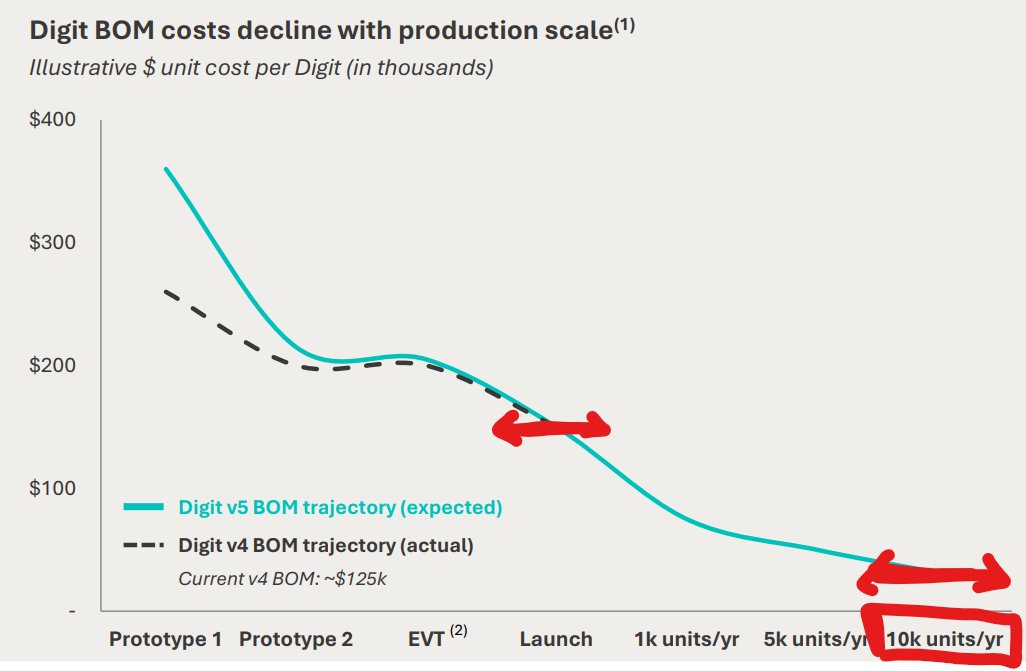
- Going public via $Churchill Capital XI(CCXI.US) SPAC -> $AGLT in around Q4.- Roughly $640M private funding including backers like $Amazon(AMZN.US), $NVIDIA(NVDA.US), SoftBank, DCVC.- Around 100 Digit humanoids deployed at $Amazon(AMZN.US), $GXO Logistics(GXO.US), Schaeffler, Toyota, $Mercadolibre(MELI.US) (just 9 facilities in total).- Around 98% accuracy at Schaeffler (8 deployments) and GXO (3 booked deployments).- Agility claims around 1.1 year payback period on owning a Digit humanoid.- Over $300M Digit v5 orders (release in 2026).- Pipeline includes 30+ customers.- First to adopt $NVIDIA(NVDA.US) Halos for full-stack robotics safety.- More safety means higher TAM for Agility in areas like elder care, retail, and last mile deliveries - i.e. areas where human interaction is needed.- 10,000+ units/yr capacity at RoboFab in Oregon.- Using ~75% US sourced parts.- As production ramps to 10k+ annually, BOM will drop from $125k to ~$15-20k.Imo, they're the furthest ahead out of any Western humanoid OEM when you combine tech + commercials:- Figure has some controversial deployments at BMW, no idea if their runtime data is correct or not.- $Tesla(TSLA.US) selling zero units externally rn.- Apptronik have no deployments rn (according to sources) despite $GXO Logistics(GXO.US) and Mercedes rumours.- Boston Dynamics have a genuinely great robot but v. slow to market w/ no customers yet until at least 2027.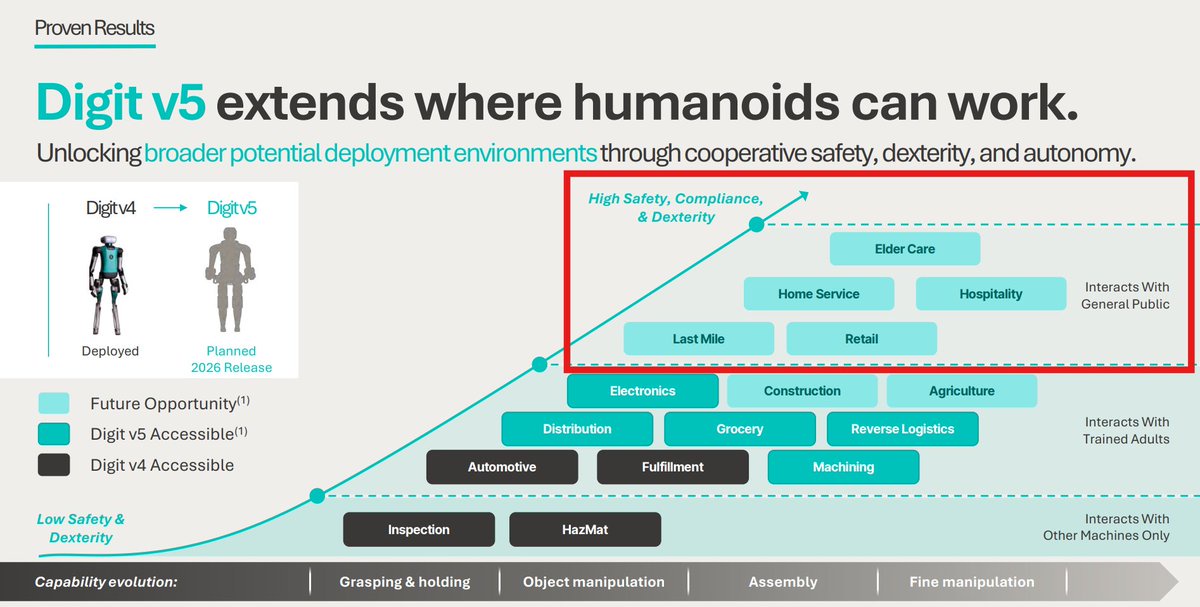
 +1
+1 - P
$Churchill Capital XI(CCXI.US) (Agility) have a huge lead in humanoid safety thanks to $NVIDIA(NVDA.US):
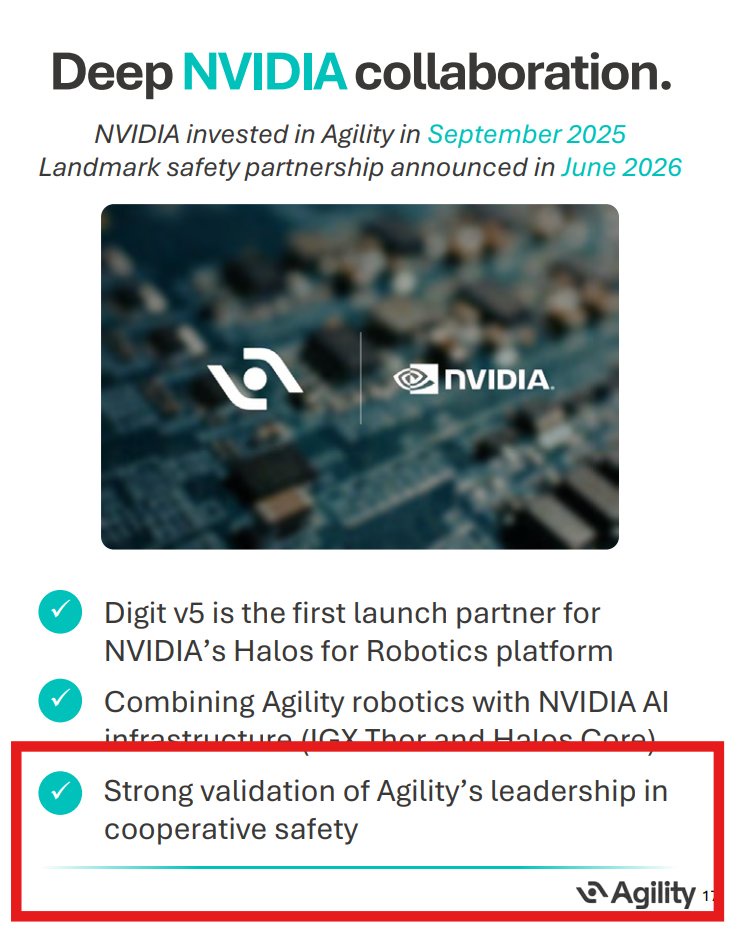
1. Humanoid safety is a critical barrier to mass adoption.2. $NVIDIA(NVDA.US)'s Thor and Halos for Robotics is the industry’s only full-stack robotics safety system.3. $Churchill Capital XI(CCXI.US) (Agility) are the first humanoid maker to use Halos.Agility has a very clear first-mover advantage over the other humanoid OEMs in bringing responsible automation to factories + warehouses.Agility CEO: “Partnering with NVIDIA to implement and optimize the Halos for Robotics system extends our leadership in responsible automation, which is a nonnegotiable requirement for bringing humanoids safely into industrial workflows.”For some of Agility's current customers like $Amazon(AMZN.US), $GXO Logistics(GXO.US) and Toyota.We're just at the start of the robotics/humanoid adoption curve.Which looks set to ramp up very soon given that safety hurdles are being overcome rapidly, as well as the actual humanoid itself improving with each iteration e.g. Agility's new Digit 5 humanoid.Looks like both the safety element and the immature tech element are simultaneously improving at the same time and rate.Which is probably why we'll start to see wider mass adoption in the coming years once the likes of Amazon/Toyota can prove the payback far outstrips that of an actual human worker.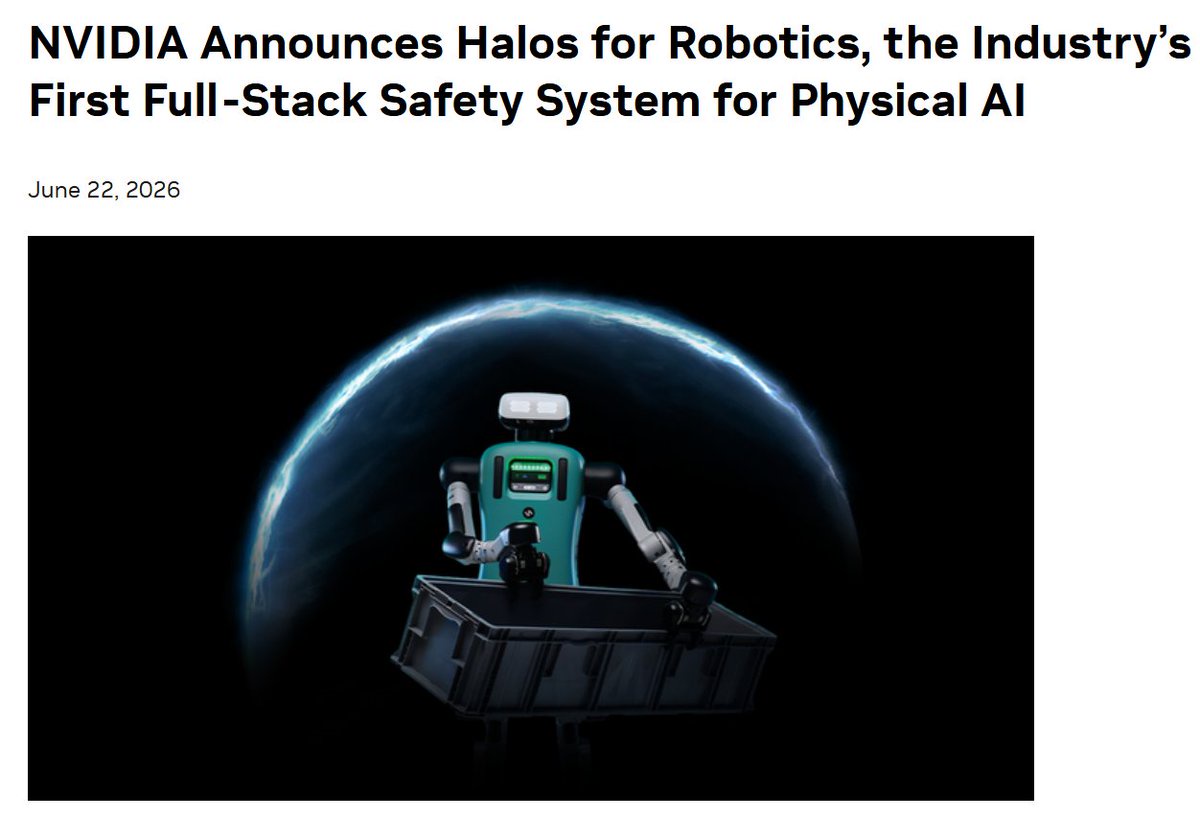
- H
📢 𝐉𝐔𝐒𝐓 𝐈𝐍: $Joby Aviation(JOBY.US) Joby Aviation and Toyota Launch Strategic Manufacturing Joint Venture
👉 𝐊𝐞𝐲 𝐇𝐢𝐠𝐡𝐥𝐢𝐠𝐡𝐭𝐬:➤ 𝐉𝐨𝐛𝐲 𝐀𝐯𝐢𝐚𝐭𝐢𝐨𝐧 and 𝐓𝐨𝐲𝐨𝐭𝐚 formed a strategic manufacturing joint venture.➤ Alliance aims to build 𝐜𝐨𝐦𝐦𝐞𝐫𝐜𝐢𝐚𝐥 production capability for Joby's eVTOL aircraft.➤ Partnership will enhance 𝐩𝐫𝐨𝐝𝐮𝐜𝐭𝐢𝐯𝐢𝐭𝐲, 𝐪𝐮𝐚𝐥𝐢𝐭𝐲, and 𝐜𝐨𝐬𝐭 efficiency.➤ Toyota will contribute its 𝐦𝐚𝐧𝐮𝐟𝐚𝐜𝐭𝐮𝐫𝐢𝐧𝐠 expertise and production systems.➤ Joint venture will support 𝐚𝐢𝐫𝐜𝐫𝐚𝐟𝐭 certification and future production scale-up.➤ Companies will leverage their respective strengths to expand 𝐚𝐢𝐫 𝐦𝐨𝐛𝐢𝐥𝐢𝐭𝐲 adoption.➤ Toyota has supported Joby's aircraft manufacturing efforts for 𝐧𝐞𝐚𝐫𝐥𝐲 𝟏𝟎 𝐲𝐞𝐚𝐫𝐬.👉 𝐖𝐡𝐲 𝐈𝐭 𝐌𝐚𝐭𝐭𝐞𝐫𝐬:➤ Manufacturing scale-up is critical for 𝐜𝐨𝐦𝐦𝐞𝐫𝐜𝐢𝐚𝐥 eVTOL deployment.➤ Toyota's production expertise could accelerate Joby's 𝐩𝐚𝐭𝐡 𝐭𝐨 𝐦𝐚𝐬𝐬 production.➤ Alliance strengthens Joby's position in the emerging 𝐚𝐢𝐫 𝐭𝐚𝐱𝐢 market.👉 𝐄𝐱𝐩𝐞𝐫𝐭 𝐒𝐭𝐚𝐭𝐞𝐦𝐞𝐧𝐭:➤ "Toyota has been by Joby's side for nearly a decade, providing invaluable guidance and support as we built the foundation for manufacturing our aircraft. Today's announcement reflects the strength of our relationship and our shared confidence in the opportunity ahead. Together, we share a vision of making aerial mobility an everyday reality, and we look forward to delivering on that promise together." — 𝐉𝐨𝐞𝐁𝐞𝐧 𝐁𝐞𝐯𝐢𝐫𝐭, Founder and CEO of Joby Aviation.➤ "Since our founding, we've been guided by the philosophy of providing mobility for all. Over time, we've continued to expand what mobility can mean. We see air mobility as a natural extension of that philosophy—from the ground into the sky—and as a way to bring new value to people's lives and to society. It's really meaningful for us to take on this challenge together with Joby, a partner that shares the same vision. We believe this strengthened relationship is an important step forward in realizing the future mobility society." — 𝐀𝐤𝐢𝐨 𝐓𝐨𝐲𝐨𝐝𝐚, Chairman of Toyota Motor Corporation.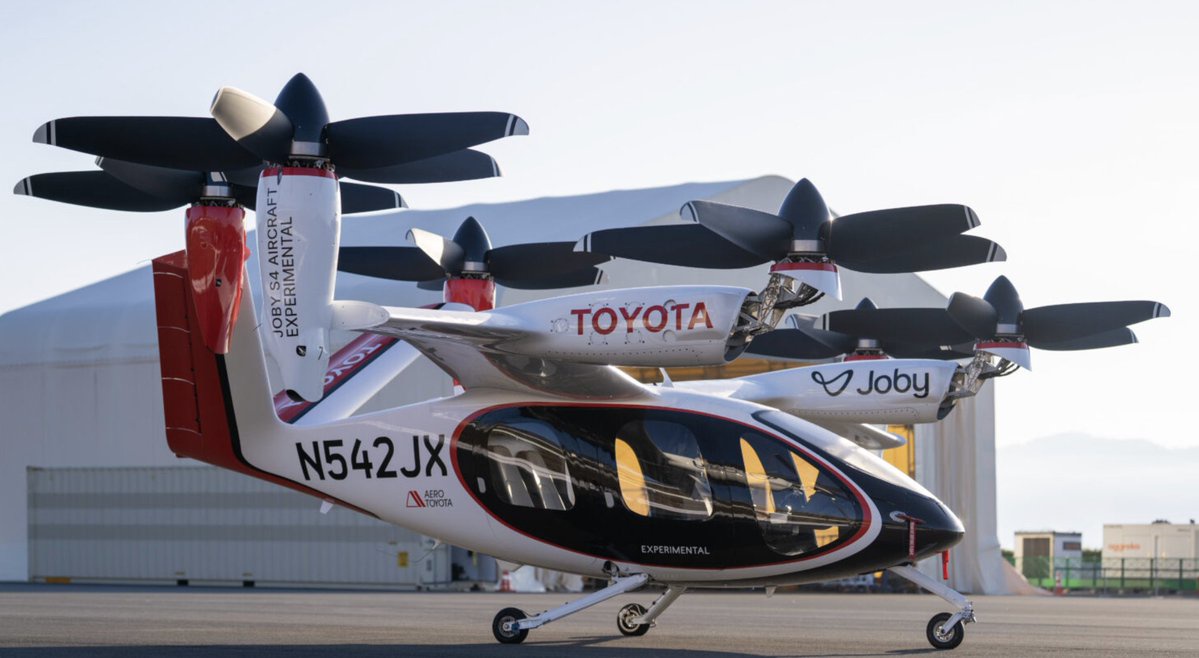
- H
📢 𝐉𝐔𝐒𝐓 𝐈𝐍: $NVIDIA(NVDA.US) NVIDIA Launches Halos for Robotics Safety Platform; Agility First Adopter
👉 𝐊𝐞𝐲 𝐇𝐢𝐠𝐡𝐥𝐢𝐠𝐡𝐭𝐬:➤ 𝐍𝐕𝐈𝐃𝐈𝐀 unveiled 𝐇𝐚𝐥𝐨𝐬 𝐟𝐨𝐫 𝐑𝐨𝐛𝐨𝐭𝐢𝐜𝐬, a full-stack robotics safety system.➤ Platform unifies 𝐀𝐈 𝐜𝐨𝐦𝐩𝐮𝐭𝐞, sensors, software, safety applications, and inspection.➤ Halos extends NVIDIA's 𝐚𝐮𝐭𝐨𝐧𝐨𝐦𝐨𝐮𝐬 𝐯𝐞𝐡𝐢𝐜𝐥𝐞 safety framework to robotics and physical AI.➤ 𝐀𝐠𝐢𝐥𝐢𝐭𝐲 becomes the first company to adopt Halos for its Digit humanoid robots.➤ Digit robots are deployed in industrial environments for customers including 𝐀𝐦𝐚𝐳𝐨𝐧, 𝐆𝐗𝐎, Schaeffler, and Toyota.➤ NVIDIA Halos leverages more than 𝟏𝟖,𝟔𝟎𝟎+ engineering years of AV safety development.➤ System includes 𝐈𝐆𝐗 𝐓𝐡𝐨𝐫, 𝐇𝐨𝐥𝐨𝐬𝐜𝐚𝐧 𝐒𝐞𝐧𝐬𝐨𝐫 𝐁𝐫𝐢𝐝𝐠𝐞, Halos OS, and inspection services.➤ NVIDIA's inspection lab is the world's first 𝐀𝐍𝐀𝐁-𝐚𝐜𝐜𝐫𝐞𝐝𝐢𝐭𝐞𝐝 program for AI and functional safety.➤ More than 𝟒𝟎 companies participate in the Halos safety ecosystem and certification framework.👉 𝐖𝐡𝐲 𝐈𝐭 𝐌𝐚𝐭𝐭𝐞𝐫𝐬:➤ Standardized safety frameworks could accelerate 𝐡𝐮𝐦𝐚𝐧𝐨𝐢𝐝 𝐫𝐨𝐛𝐨𝐭 adoption in industry.➤ Safety certification remains a key barrier to scaling 𝐩𝐡𝐲𝐬𝐢𝐜𝐚𝐥 𝐀𝐈 systems.➤ Expands NVIDIA's role beyond AI chips into 𝐫𝐨𝐛𝐨𝐭𝐢𝐜𝐬 𝐩𝐥𝐚𝐭𝐟𝐨𝐫𝐦 infrastructure.👉 𝐄𝐱𝐩𝐞𝐫𝐭 𝐒𝐭𝐚𝐭𝐞𝐦𝐞𝐧𝐭:➤ "Physical AI is transforming how factories, warehouses and logistics operations work, and robotics teams need a unified safety architecture to scale autonomous systems into these environments. With NVIDIA Halos for Robotics, developers and system builders can harness NVIDIA's proven autonomous vehicle safety foundation to develop safer robots faster and bring them into industrial operations alongside workers with greater confidence." — 𝐃𝐞𝐞𝐩𝐮 𝐓𝐚𝐥𝐥𝐚, Vice President of Robotics and Edge AI at NVIDIA.➤ "As AI-enabled robotics moves into industrial environments, the industry needs standardized, internationally recognized frameworks to assess safety across increasingly complex systems. ANAB's accreditation of the NVIDIA Halos AI Systems Inspection Lab confirms the program has the competence and impartiality to evaluate robotic AI systems against recognized safety requirements." — 𝐋𝐚𝐮𝐫𝐢𝐞 𝐄. 𝐋𝐨𝐜𝐚𝐬𝐜𝐢𝐨, President and CEO of ANSI.➤ "For humanoids to deliver value at scale, safety has to be built into the robot and validated across the entire system. Partnering with NVIDIA to implement and optimize the Halos for Robotics system extends our leadership in responsible automation." — 𝐏𝐞𝐠𝐠𝐲 𝐉𝐨𝐡𝐧𝐬𝐨𝐧, CEO of Agility. - 旧
Weekly Review: Tariffs and Crypto
This week, the market was originally in an adjustment phase, but a major news event broke over the weekend—the U.S. Supreme Court ruled 6:3 that the Trump administration's large-scale imposition of reciprocal tariffs under emergency economic powers lacked authorization and must be approved by Congress. This ruling weakens the existing tariff framework, with market estimates suggesting the effective tariff rate could drop from around 13% to about 6%.
Following the announcement, the stock market quickly rallied and closed higher after some volatility. However, it didn't surge all the way up because the market's concern isn't just the rejection of old tariffs, but whether a more aggressive alternative will be introduced. Uncertainty remains, so capital is naturally cautious.
In terms of sectors, companies highly reliant on global supply chains benefit the most. Retail giants like Walmart and Amazon see relief from import cost pressures, with profit improvements expected. The technology and hardware sectors also benefit, especially companies with complex supply chains and high tariff sensitivity, such as Apple and chipmakers. European and Japanese automakers, like Toyota, also benefit from lower cost expectations.
Industries previously protected by tariffs, such as steel and aluminum, face relative pressure and need to be wary of cheap imports returning. The financial sector is concerned that potential tariff refunds could widen the fiscal deficit and push up U.S. Treasury yields, causing turbulence for bank stocks.
In the short term, tech heavyweights remain the core directional force. Some leading stocks haven't stabilized above their 20-day moving average, and the overall index is still in a technical pressure zone. Two key variables in the latter half of the week are worth watching:
First is NVIDIA's earnings report, which directly impacts AI and chip sentiment;
Second is Trump's State of the Union address to Congress, which may touch on tariff alternatives, national security provisions, and tax refund stances, all of which could intensify sector divergence.
Roughly three scenarios are possible going forward:
If the speech is moderate and earnings are strong, the index may see a short-term surge;
If the policy stance is hawkish but not yet implemented, a period of consolidation is likely;
If a hawkish policy stance coincides with disappointing earnings, another decline is possible.
Overall, until the alternative policy is clarified, the sustainability of the rally is questionable. There's a short-term rebound, but the medium-term outlook leans towards consolidation, with the trend still awaiting confirmation.
On the crypto front, White House negotiations regarding stablecoin yields are still progressing. While no final agreement has been reached, constructive progress has been made. If a draft is formed by the end of February and legislation is advanced before April, it would constitute a phased positive. However, before it actually enters Senate voting, Bitcoin is likely to remain range-bound.
Currently, there's significant institutional cost pressure in the $75,000 to $80,000 range, and selling pressure from unwinding positions may emerge when approaching it. Short-term trading will likely focus on range-bound games, with exchange-related stocks potentially showing more elasticity than the coin price itself.
Summary: The market's main themes still revolve around the path for tariff alternatives and stablecoin legislative progress.
This is a stage of variable games, not a trend confirmation stage. Rhythm is more important than direction. 📊
$Circle(CRCL.US)
$Coinbase(COIN.US)
$Robinhood(HOOD.US)
美股投资组合crypto - B
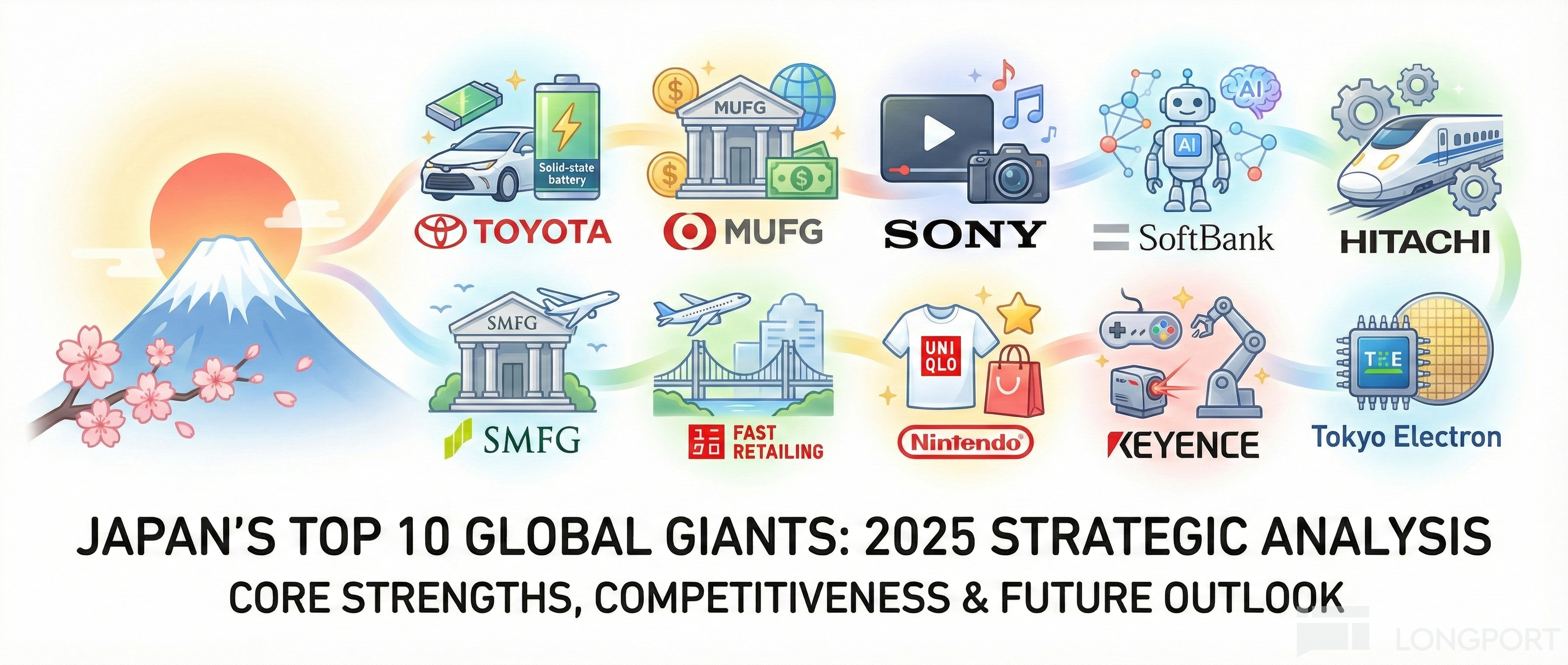
In-depth Strategic Analysis Report on Japan's Top 10 Business Giants: Core Competencies, Global Competitiveness, and Future Outlook (2025 Edition)
Written in front, unfortunately, Longbridge still cannot directly purchase Japanese stock market stocks. However, I currently hold some Hitachi-related assets through other channels. Making a little profit is not bad. Executive Summary: The Global Revival and Structural Transformation of Japanese Companies By November 2025, the business landscape in Japan and globally is undergoing profound restructuring. Once seen as stagnant in growth, "Japan Inc." is now making aggressive balance sheet restructuring, focusing on core businesses, and betting big on next-generation technologies (such as all-solid-state batteries, generative AI, advanced semiconductor packaging)...
- Y
$XPENG-W(09868.HK)$LI AUTO-W(02015.HK)$NIO-SW(09866.HK)
There weren't many exports to the other side to begin with, but the bigger fear is that other markets might follow suit.
The Biden administration is concerned about Chinese companies collecting data, posing national security risks.
The proposed ban includes critical communication and autonomous driving system software or hardware.
There is a 30-day public comment period before the rules are finalized.
Reuters Washington, September 21 - Two sources told Reuters that, citing national security concerns, the U.S. Department of Commerce is expected to propose a ban on the use of Chinese software and hardware in connected and autonomous vehicles on U.S. roads as early as Monday.
The Biden administration has expressed serious concerns about Chinese companies collecting data on American drivers and infrastructure, as well as the potential for foreign manipulation of vehicles connected to the internet and navigation systems.
The two sources said the proposed regulations would prohibit the import and sale of vehicles equipped with critical communication or autonomous driving system software or hardware from China. Since the decision has not been publicly disclosed, the sources requested anonymity.
This move marks a significant escalation in U.S. restrictions on Chinese automobiles, software, and components. Last week, the Biden administration finalized a substantial increase in tariffs on Chinese imports, including a 100% tariff on electric vehicles and new tariffs on EV batteries and critical minerals.
In February, President Biden ordered an investigation into whether imported Chinese vehicles pose national security risks to connected vehicle technology and whether the use of such software and hardware should be banned in all vehicles on U.S. roads.
In November last year, bipartisan U.S. lawmakers raised concerns about Chinese companies collecting and processing sensitive data during autonomous vehicle testing in the U.S.
The sources said the bans would be expanded to include other foreign adversaries of the U.S., such as Russia.
An industry group representing major automakers like General Motors (GM.N), Toyota (7203.T), Volkswagen (VOWG_p.DE), and Hyundai (005380.KS) warned that changing hardware and software would take time.
These automakers noted that their systems "undergo extensive pre-production engineering, testing, and validation processes and generally cannot be easily swapped with systems or components from other suppliers."
The Department of Commerce declined to comment on Saturday.