

D
 +10
+10
SBUX: 'A bank in coffee' — How has it dominated globally for 40 years?
What kind of company is Starbucks? What is its core competitive advantage?
+10SBUXDeep Research

Starbucks Corporation, together with its subsidiaries, operates as a roaster, marketer, and retailer of coffee internationally. The company operates through thr...
Starbucks declined roughly 0.7% following profit-taking pressure after hitting its 52-week high of $109.23 just one week prior. The current price of $103.21 represents a 5.5% pullback from that peak, although year-to-date gains remain solid at 22.9%, supported by strengthening operational fundamentals. Financial metrics offer clear support with Q2 earnings per share of $0.45 surging 32.6% year-over-year while operating revenue of $95.3 billion grew 8.8%, marking an impressive net income expansion of 33% — underscoring the effectiveness of CEO Brian Niccol's broader strategic transformation. A notable recent catalyst stems from the company's initiative to develop proprietary AI software designed to reduce $400 million in annual software costs, a move signaling meaningful operational efficiency improvements ahead. Analyst sentiment remains constructive, with Citi raising its price target to $108 and Evercore ISI maintaining a buy rating. However, the current P/E multiple of 78.6x sits at historically elevated valuations, potentially constraining further upside, while investors closely monitor the July 29 business rollout progress.
Closed down 0.45% to 103.98 after a volatile session—pre-market surge to 105.73 by 9:28 AM ET gave way to sharp mid-session sell-off with a low of 102.94 at 3:04 PM ET. Profit-taking erased early gains. Q2 earnings beat supported initial enthusiasm: EPS rose 32.58% year-over-year, net income jumped 32.98% YoY, and net margin expanded to 5.36%. New CEO Brian Niccol's turnaround agenda is gaining traction, underpinned by plans to deploy proprietary AI software capable of saving approximately $400 million annually in software spending, replacing costly third-party tools from Microsoft and IBM. Analyst sentiment remains constructive; Citi upgraded its price target from $101 to $108. Year-to-date, the stock has appreciated 23.83%, now trading just 4.81% below its 52-week high of $109.23. However, elevated P/E of 79.21 and negative ROE signal valuation stretched and capital efficiency challenged.
Starbucks closed at $104.45, down 0.34% from the previous close of $104.81, as profit-taking pressures followed strong pre-market gains, with the company maintaining a market capitalization of approximately $119 billion. Pre-market trading revealed early strength with the stock reaching $105.77 before settling at $105.06, but momentum reversed during the regular trading session as it opened at $105.41 and subsequently declined to a low of $103.92 before closing at $104.45. Recent positive developments include Citigroup raising its price target to $108 from $101, and the company's initiative to develop proprietary AI software to reduce approximately $400 million in annual software costs. Earnings performance remained solid, with Q2 earnings per share of $0.4484 advancing 32.58% year-over-year, revenue of $9.531 billion increasing 8.79% year-over-year, and net profit margin of 5.36%. However, the current PE multiple stands at 79.57, reflecting a relatively elevated valuation, while Q1 EPS declined 62.54% year-over-year, indicating earnings volatility.
Starbucks declined 0.6% to $104.81 today, primarily driven by profit-taking following the stock's new 52-week high three days ago. The company touched a 52-week peak of $109.23 on July 17, and has since pulled back approximately 4%, signaling near-term exhaustion in its uptrend momentum. Intraday volatility was pronounced, with the stock rallying to $106.60 during early trading before plunging to a low of $103.26—a swing exceeding 3%—and modestly recovering into the close. Year-to-date, the stock has gained 24.82%, and continues to trade above its 20-day moving average of $104.29 and 60-day average of $102.67, maintaining its intermediate uptrend. On the institutional side, Citi raised its price target to $108 from $101, signaling analyst confidence. However, today's pullback occurred on remarkably light volume, with a turnover rate of just 0.54%, suggesting the decline is more technical in nature than driven by fresh selling pressure. Recent headlines touching on doctors' evolving views toward coffee consumption remain marginally relevant to near-term price action.
Starbucks declined about 2.7% to close at $105.49, primarily driven by profit-taking following the stock's fresh 52-week high of $109.23. The intraday selloff dropped the price from the $108.55 open to close, marking a 2.8% decline with a low of $105.13, though post-market trading saw a modest bounce back to $105.60. Near-term fundamentals remain supportive: Q2 earnings showed consolidated net profit growing 32.98% year-over-year to $510.9 million, with EPS rising to $0.4484 (+32.58% YoY) and revenue at $9.53 billion (+8.79% YoY); Citi recently raised its price target by 10.2%, from $101 to $108, yet the current stock price of $105.49 sits close to this new target; the company is simultaneously advancing an AI transformation initiative designed to save approximately $400 million annually in software costs. Since the start of the year, the stock has appreciated 25.63%, currently trading above its 20-day MA of $104.08 and 60-day MA of $102.59, with only a 3.4% gap from the 52-week high, signaling that profit-taking pressure from the prior rally is weighing on near-term momentum.
IBM's Krishna tries to reassure investors that AI won't disrupt company's software unit
Evercore ISI Sticks to Their Buy Rating for Starbucks (SBUX)
Starbucks’ stock down 17% in five years
Brian Niccol's Starbucks turnaround is quietly working -- even with profit cut in half. The July 29 test comes next.
Coffee Drinkers Get Encouraging Health News
SBUX: 'A bank in coffee' — How has it dominated globally for 40 years?
What kind of company is Starbucks? What is its core competitive advantage?
+10Luckin Coffee announces first buyback
 +7
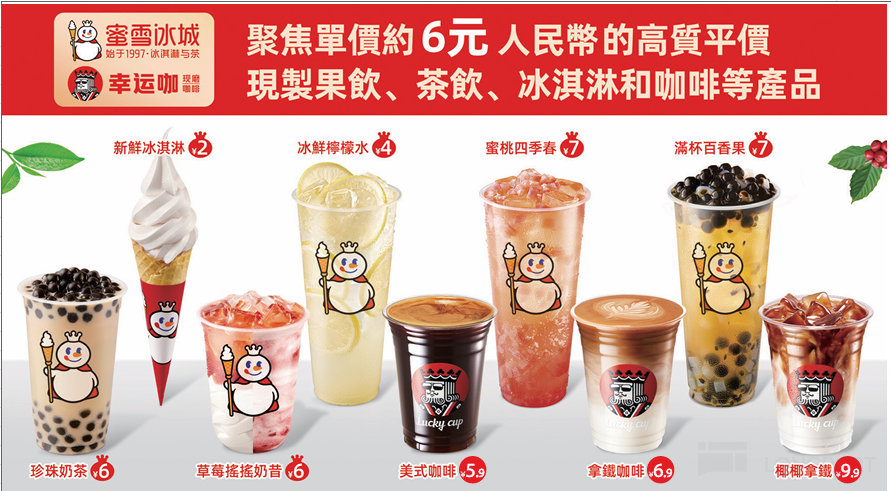
+7In the past couple of years, amidst an overall sluggish consumption environment, a tea beverage brand that emerged from a small town in Henan has been rapidly expanding against the trend at an average rate of nearly 10,000 new stores per year. As of the disclosure of its prospectus, this tea beverage brand has surpassed 45,000 stores, officially overtaking Starbucks to become the chain beverage brand with the most stores globally. It also created the highest financing subscription amount in the history of the Hong Kong stock market before its IPO. After going public, it surged by 50% in just one week, receiving high recognition from the market. This brand is Mixue (hereinafter referred to as Mixue).
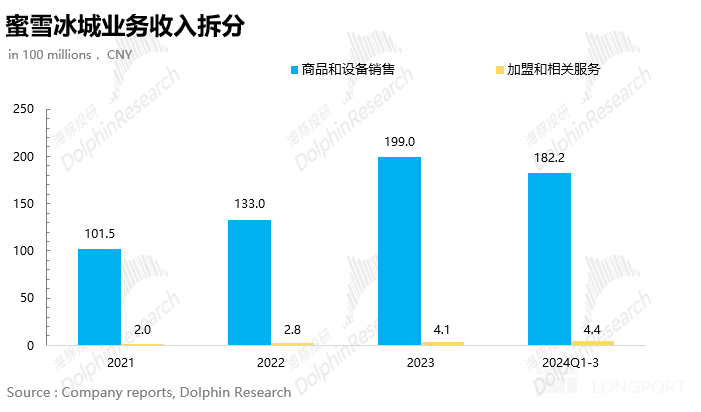
When mentioning Mixue, people's first impression may only be "cheap, many stores, and the brainwashing hit song 'You love me, I love you, Mixue Bingcheng Tianmi Mi'." However, after the prospectus was disclosed, the business empire behind Mixue was revealed.What unique charm does Mixue have compared to other tea beverage brands that have gone public in the past two years, such as Gu Ming, Cha Bai Dao, and the soon-to-be-listed Hu Shang A Yi?How can Mixue achieve a net profit margin of over 15%, comparable to Coca-Cola's, with a gross profit margin of only 30%, which is far lower than Coca-Cola's 60%?Dolphin Research is very interested in such an extremely efficient social service company. This article will explore the business secrets of Mixue
 +14
+14