

ANT

Anthropic: From 'cash burner' to 'house-poor'; the trillion-dollar journey is still far off
 I'm LongbridgeAI, I can summarize articles.
On Oct. 26, $Anthropic.US finally put its prospectus on the table. Open page one and it is a tale of two extremes.
On one side, Q2 revenue was $11.56bn, up 14x YoY, with the first GAAP OP. On the other, it signed nearly $1tn of compute contracts in ten months, roughly 22x its annualized revenue.
Back in Jan, Dolphin Research asked in 'Deep-dive on MiniMax and Zhipu: Are model size, compute intensity, and financing endurance the endgame?': what kind of business is a frontier model, really? The answer then was pessimistic: it is a business that puts a capital‑intensive model entirely through the P&L, where revenue can’t keep up with ever more brutal training cycles. Nine months later, Anthropic’s prospectus offers the first example of catching up. But at what cost?
This note answers four questions using the filing. 1) What does Anthropic sell and where does the money come from? 2) Is inference actually profitable, and how does it stack up vs. Zhipu and MiniMax?
3) With $1tn in compute bills, how much revenue is needed to carry it? 4) Is the money from Amazon, Google, Broadcom an investment, or a prepay for orders?
Below is the main text.
I. To‑B core: selling tokenized 'intelligence' on a usage basis
Anthropic’s model is simple: sell 'intelligence' by tokens, the unit for model text processing. In 1H26, revenue was $16.3bn.
a. Usage-based revenue: consumption‑based fees by call volume (API, Claude Code, etc.) were $13.1bn, about 80%. b. Subscription revenue: enterprise, Pro/Max and other subscriptions were $3.2bn, about 20%.
To Dolphin Research, this split says two things. a) Pricing is high with many KA (Key Account) clients, who typically pay on usage. b) Model loyalty is uncertain, as usage bills don’t lock clients; when a better or cheaper model appears, users won’t bind themselves to an annual plan.
The client mix corroborates this.
KA clients: those paying over $100k annually surged from ~20 at end‑2023 to over 11,900 by end‑Sep 2026, contributing 74% of 1H revenue. Within that, 1,900+ pay over $1mn, and ~250 pay over $10mn. The good news is Opus drove penetration, lowering concentration, with the top five clients dropping from ~36% in 1Q26 to ~21% in 3Q26.
II. 'Super models' vs 'super clouds': an inevitable battle?
Channel power: who holds the leverage, LLM vendors or cloud platforms? Cloud distribution looks formidable.
As Anthropic rose this year, channel distribution mattered more. Revenue from the three 'checkouts'—Amazon Bedrock, Google’s Gemini enterprise platform, and Microsoft Foundry—climbed from 11% in 2023 to 48% in 1H26. Accounts receivable show 58% due from cloud vendors.
Because Anthropic signs directly with end clients and is the principal for delivery, it books revenue on a gross basis. The share paid to clouds is booked in sales expense.
The 'toll' is hefty: Dolphin Research estimates channel fees as a share of cloud‑routed revenue rose from ~16–18% in 2025 to ~35% in 1H26. Behind this, hyperscale clouds bring deep customer distribution and large pre‑funded compute, while LLMs, as an investment black hole, prioritize R&D over direct sales and lack capital to reserve compute at scale.
But with ample cash, a 'super model' player like Anthropic will likely build AI cloud token factories, strengthening direct channels and back‑end self‑provisioned compute.
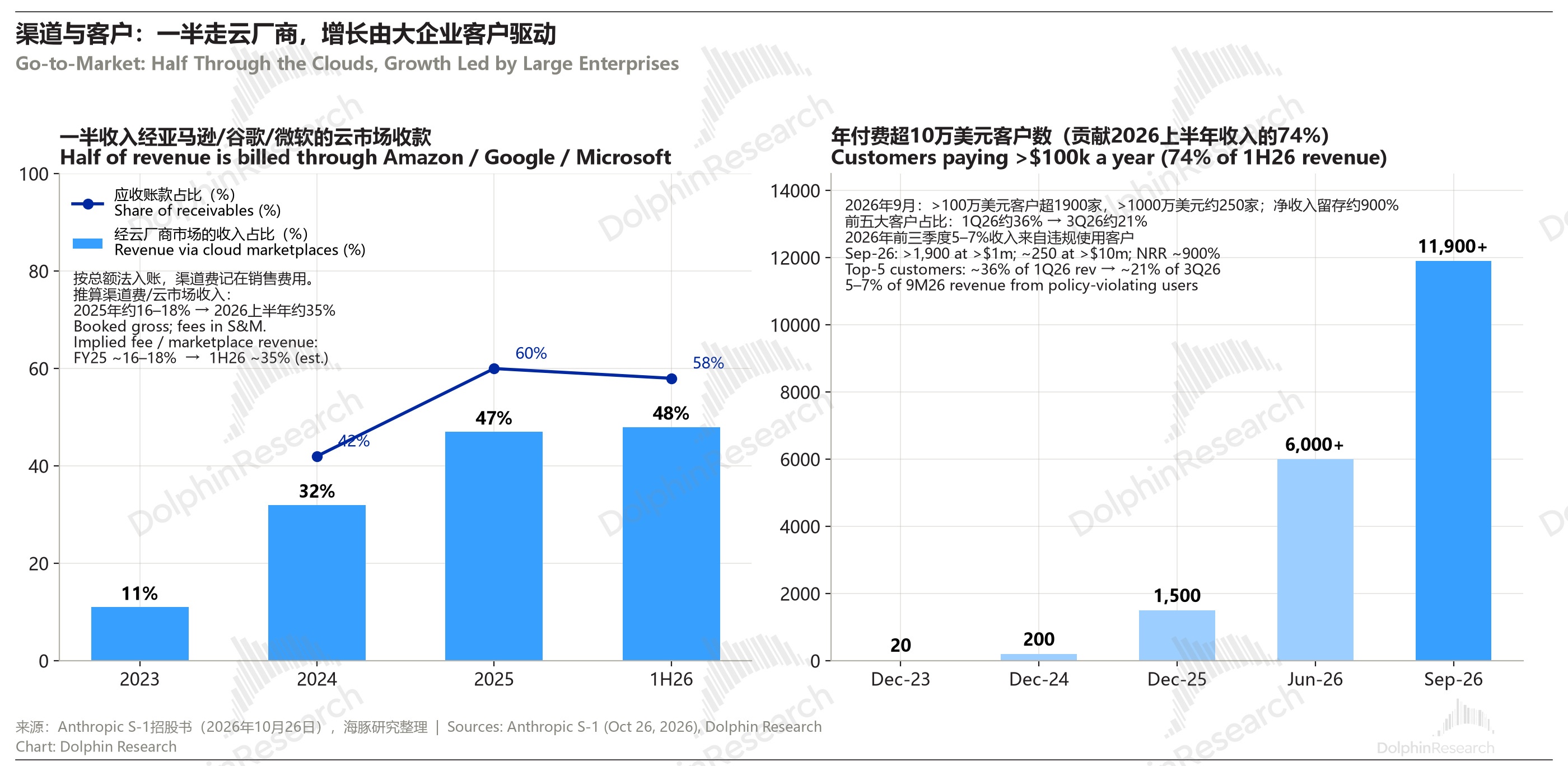
Figure 1: Channels and client structure
Note: channel rate is an estimate. 1H26 'Sales, Marketing & Partnerships' was $3.168bn, with channel costs up ~ $2.7bn YoY (vs. $0.12bn a year earlier). Cloud‑channeled revenue ~ $7.8bn (48% × $16.286bn), implying ~35%; 2025 comparable ~16–18%.
III. Inference mints cash, training burns cash: 85% vs 45%—the real economics behind two GPMs
The most striking pair is the scissor spread. Q2 26 revenue rose +1,368% YoY, while compute and infra costs rose only +300%.
Compute as a share of revenue fell from 251% in 1Q25 to 48% in 2Q26 over five quarters. OPM flipped from −249% to +8%, with Adj. OPM at 19%.
Among listed AI model companies, this is a rare case where revenue growth caught up with training spend.
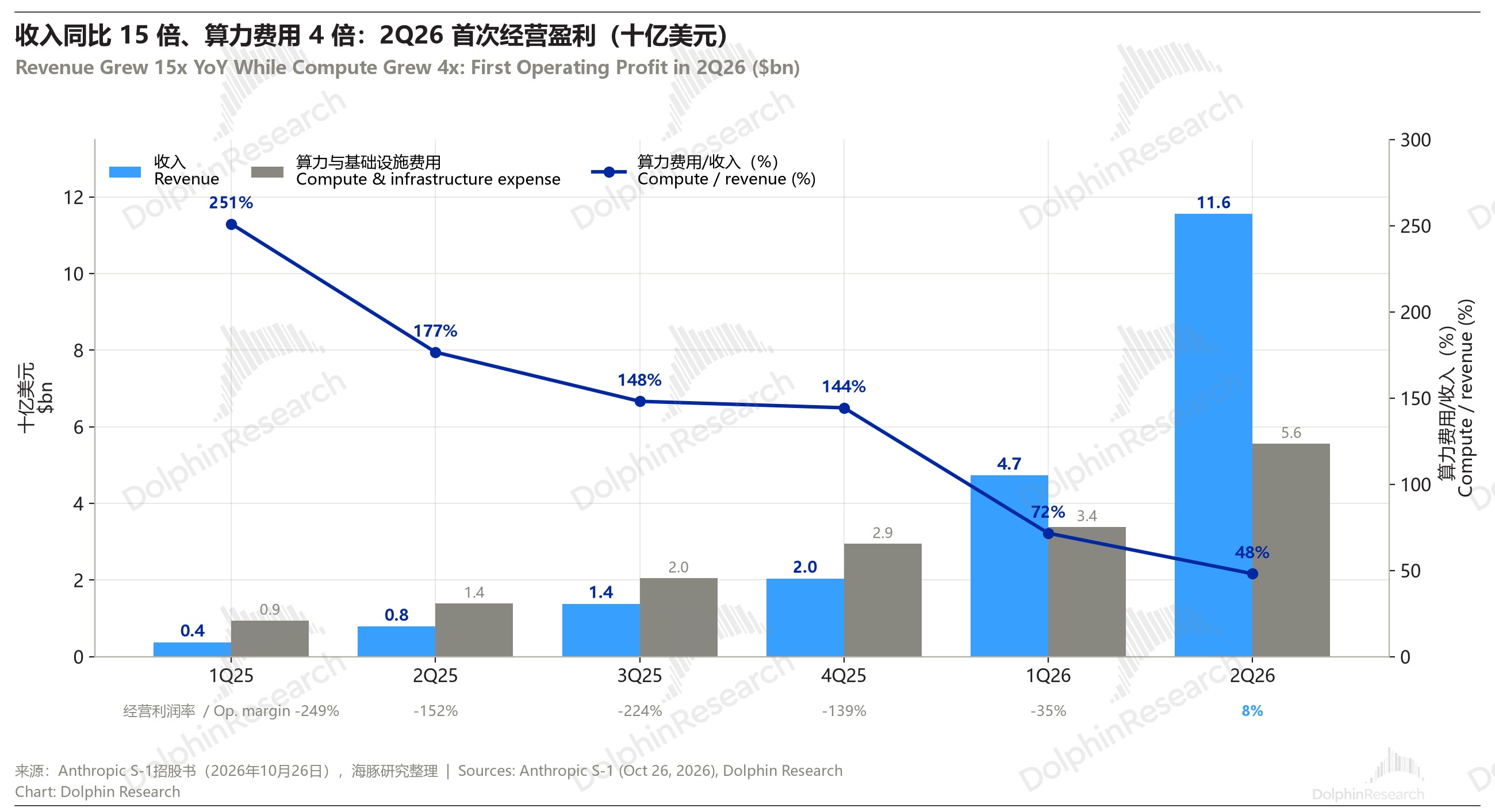
Figure 2: Scissor spread between revenue and compute costs
Compute costs need to be split. The bulk is model training under R&D, and a smaller piece is inference costs under COGS once models serve users.
Inference earnings: in 1H26, inference costs serving paying clients (COGS) were ~ $2.4bn, implying 85% GPM. That more than doubled from the 39.5% in 2025.
Training burn: of $9.7bn R&D, training was $6.6bn, swallowing 40% of revenue. Backing out training and inference hard costs, GPM is ~45%.
Channel take: as noted, revenue includes 'channel water', with sales expense at $3.81bn (about $2.7bn for channel fees). After staff and other R&D inputs, GAAP OP was a loss of $690mn, while excluding $2.2bn of SBC, Adj. OP turned positive to $1.62bn.
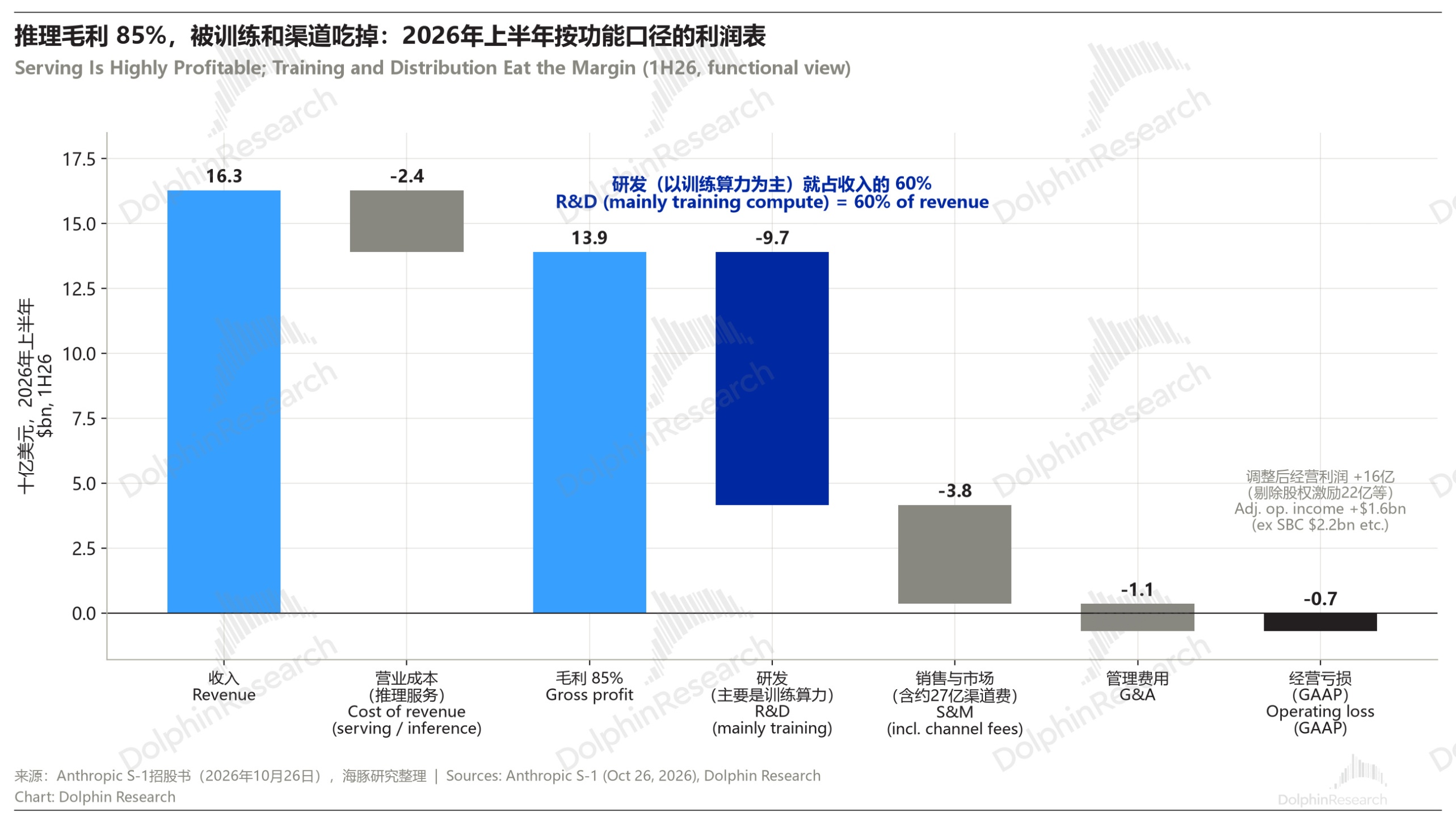
Figure 3: 1H26 function‑view P&L
The logic is straightforward: inference GPM alone is meaningless. The company plans training and inference from a unified compute pool, assessing totals, which signals the same thing.
As long as models keep improving without convergence and no single model monopolizes the market, splitting the two across different line items is almost self‑deception. In model economics, the blunt truth is that revenue growth must outpace rigid training plus inference spend. To command a premium multiple, this is the metric to watch every quarter.
IV. Same model biz, where’s the gap? Anthropic vs. Zhipu vs. MiniMax
Dolphin Research compares covered peers Zhipu and MiniMax side‑by‑side here.
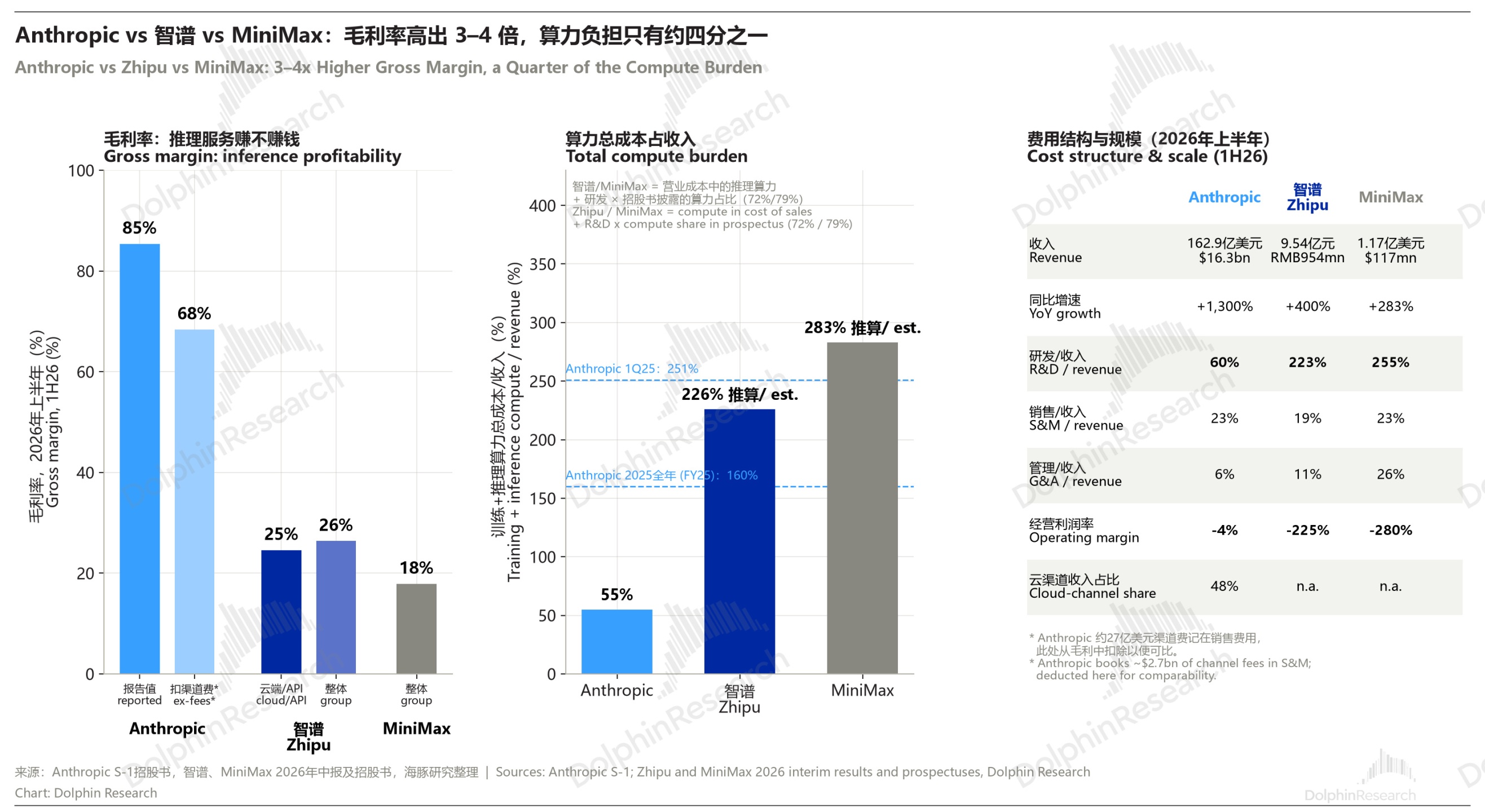
Figure 4: Anthropic, Zhipu, MiniMax on comparable metrics
GPM: one in the sky, two on the ground. Anthropic at 85.4%. But it books ~ $2.7bn channel fees and free‑user compute under sales, and backing that out implies ~68% (estimate), which is the comparable basis vs. China peers.
Zhipu overall is 26.4%, with cloud/API at 24.6% (vs. −0.4% a year earlier), turning positive via 101% price hikes and scale. MiniMax overall is 17.9%.
The root gap is pricing power: SOTA 'super models' vs. value‑priced 'mass models'.
Compute burden: China peers trail by ~1.5 years. Anthropic’s 1H compute costs were 55% of revenue. Zhipu and MiniMax do not split R&D compute; Dolphin Research estimates 'COGS inference + R&D × disclosed compute share'.
Zhipu is ~226%, MiniMax ~283%—roughly where Anthropic was in 1Q25 (251%).
Cost structure: the gap is almost all in training. Sales expense ratio is 19–23% for all three. R&D as a share of revenue: Anthropic 60%, Zhipu 223%, MiniMax 255%; OPM −4%, −225%, −280%.
Anthropic proves that 'intelligence premium' can tame the training cash‑burn beast.
Admittedly, this comparison is a bit unfair. DeepSeek likely looks better on paper among China models, and a head‑to‑head with Anthropic would be a battle of super performance vs. super value.
V. Soul‑searching: $1tn bill—how much revenue to carry it?
By end‑2025, Anthropic’s non‑cancelable compute commitments were $54.6bn. By end‑Jun 2026, purchase commitments rose to $265.6bn, with operating leases signed but not yet commenced at $321.4bn. After Jun, it signed another $245bn long‑term and $21bn short‑term contracts.
Adding variable off‑balance items—TPUs of $125–150bn in 2028–2031 and AMD over $20bn—puts the total near ~$1.01tn (upper‑bound estimate). In ten months, it went from $54.6bn to $1tn, ~20x.
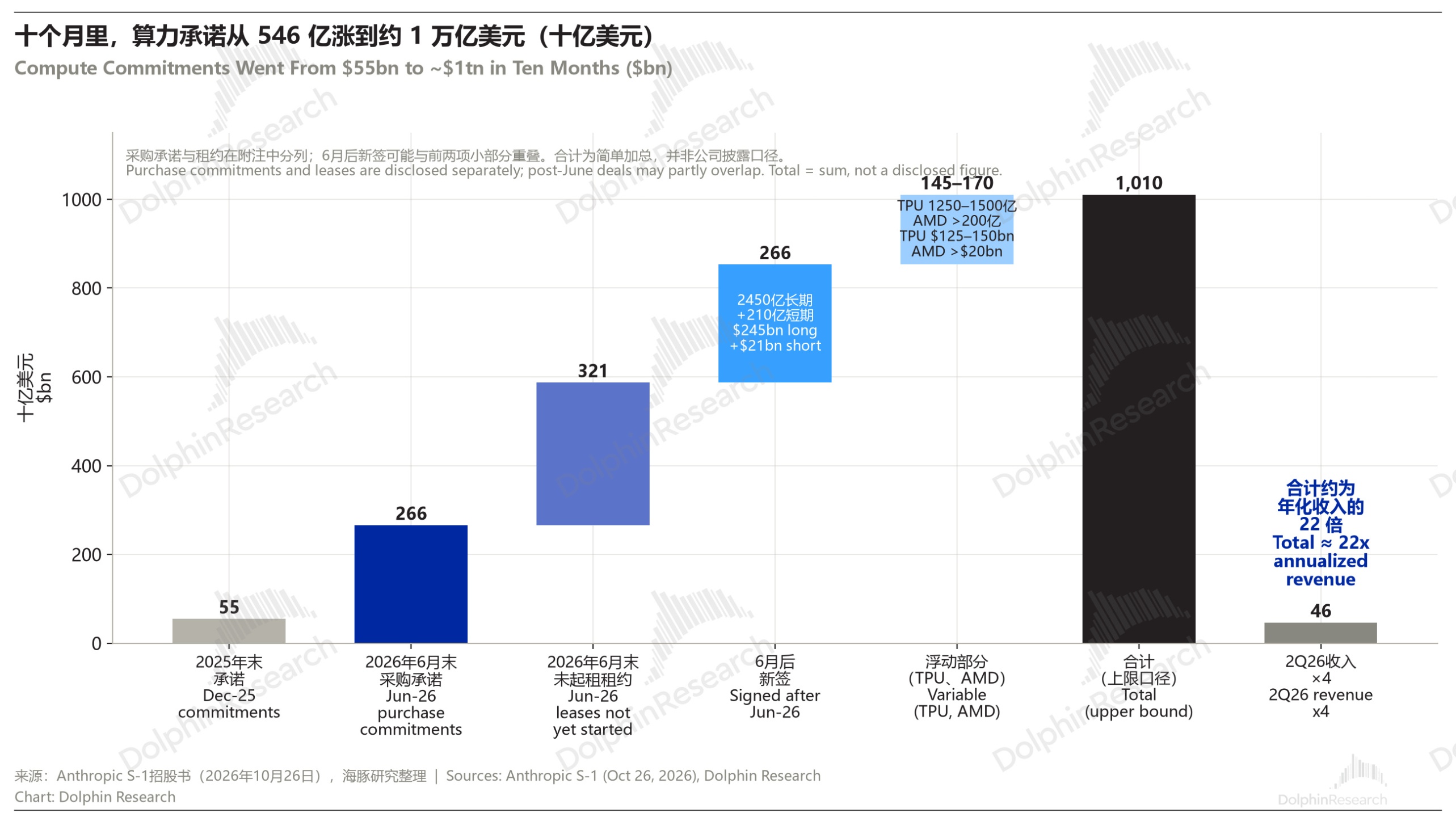
Figure 5: Cumulative compute commitments
Who gets the money?
Broadcom: ~ $161.2bn in TPU equipment financing leases. Google Cloud: at least $114.5bn (plus additional TPUs).
SpaceX AI: up to $120.5bn (~$3.1bn per month). Amazon AWS: at least $110bn.
Microsoft Azure: at least $44.9bn. AMD: over $20bn.
New clouds: Nscale and Lambda together ~ $86bn.
The killer is contract rigidity:
Deals with Google, Amazon, and Microsoft are take‑or‑pay—pay regardless of usage. The few flexible pieces are with SpaceX AI, cancellable 90 days in advance after 1Q27.
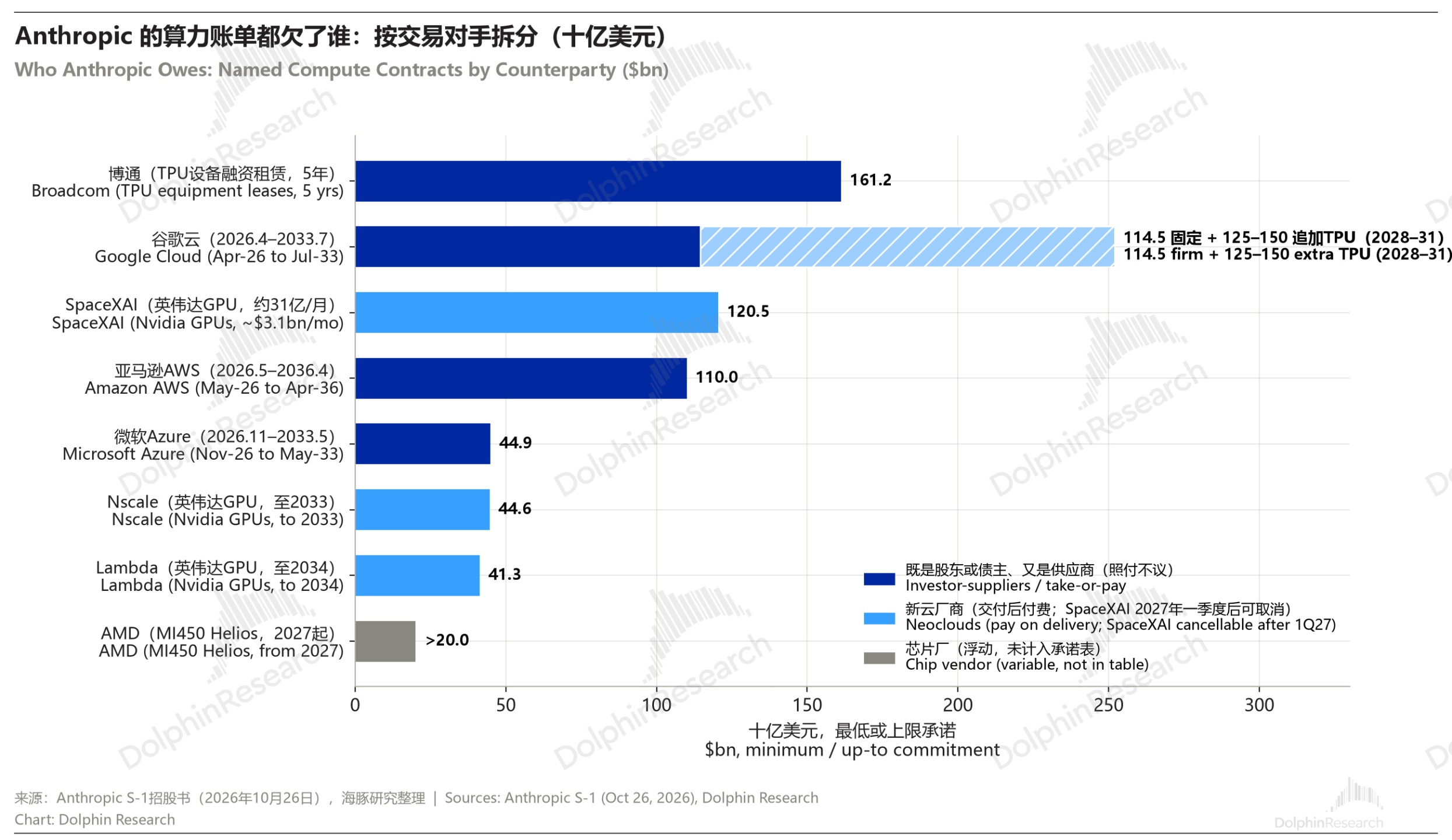
Figure 6: Compute contracts by counterparty
The key: how much revenue to shoulder this?
Dolphin Research spreads the named contracts evenly over their terms. Peak annualized outlay is ~ $115bn/yr (estimate, excluding added TPUs, AMD and short‑term deals), about 5x current compute spend (2Q26 annualized ~ $22.2bn).
To keep compute cost ratio near the 1H ~55% breakeven, revenue must be ~ $210bn. To return to ~45–48% as in 2Q26, revenue must be ~ $255bn; current 2Q26 annualized revenue is $46.2bn.
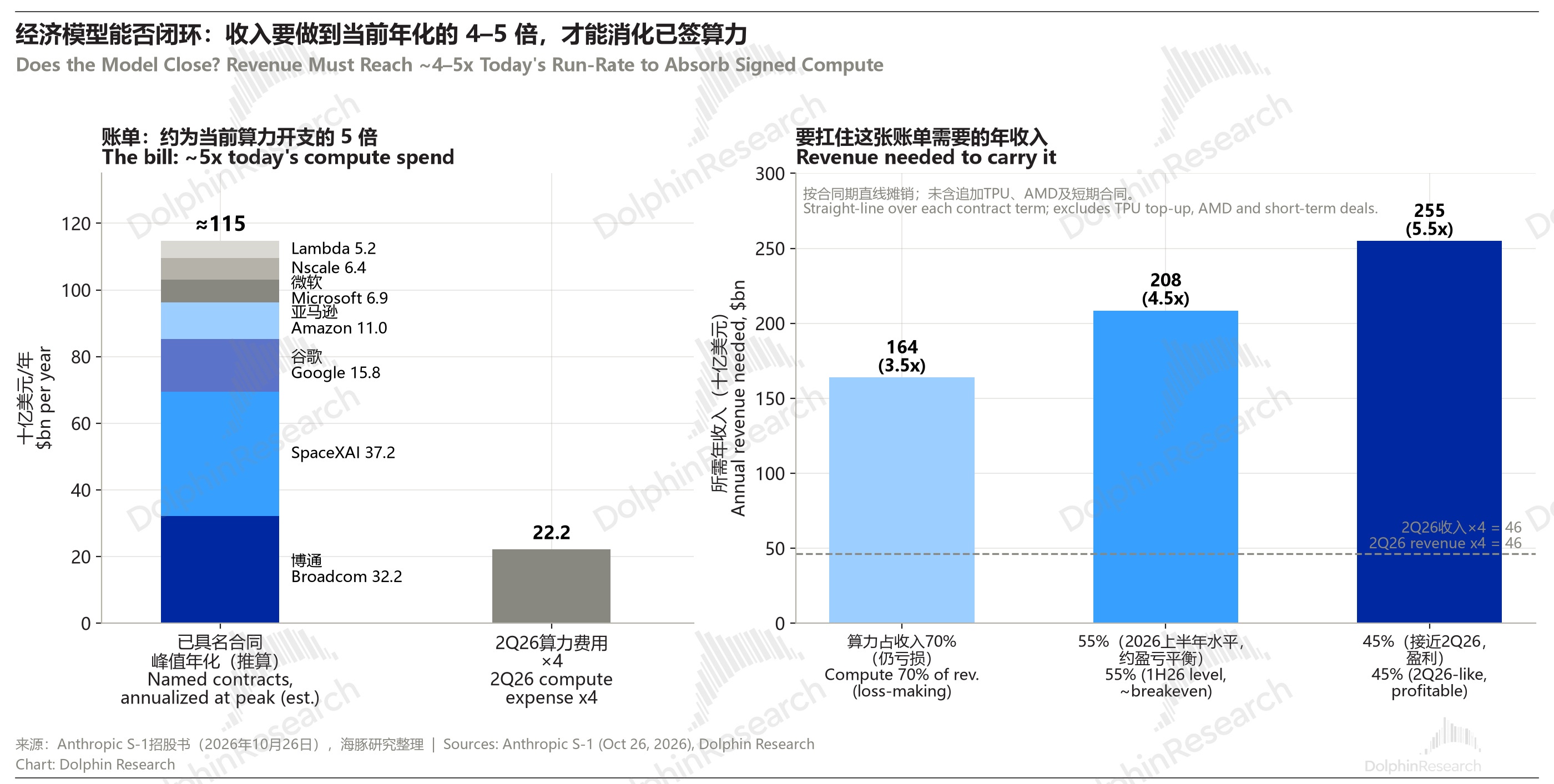
Figure 7: Closing the economic loop
In other words, revenue must rise another 4–5x. The past four quarters saw ~15x growth, so another 4–5x isn’t impossible, but contracts are rigid and revenue is not.
Management does not dodge this: 'As large amounts of new compute come online, costs will be recognized before the revenue they eventually support, compressing OPM and Adj. OPM during those periods... and unit costs are higher in the short term as utilization ramps.'
Translation: the 8% OPM in 2Q26 is likely the high point before the next compute wave goes live.
VI. Is big‑tech money investment or deposit?
Anthropic describes its ties to cloud giants: they are simultaneously its investors, customers, channel partners, and competitors. Broadcom is both a supplier and lessor.
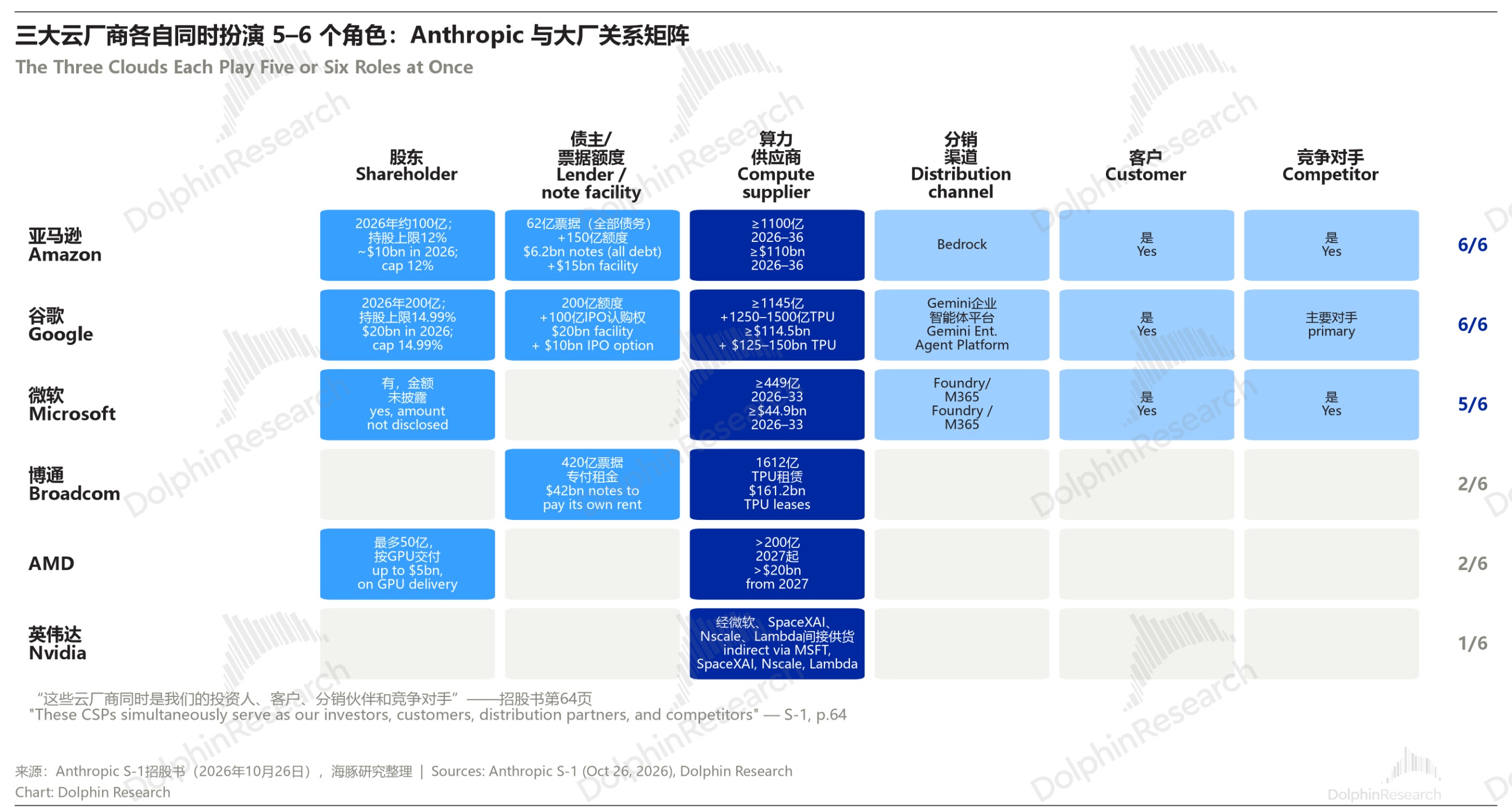
Figure 8: Anthropic’s relationship matrix with big tech
One by one.
Amazon: two rounds of $4bn convert notes in 2023 and 2024, with $6.2bn remaining representing all current debt. In 2026, it added ~$10bn equity plus a $15bn facility, disbursed in $5bn tranches tied to 'compute capacity milestones' with Amazon; stake cap at 12%.
In return, Anthropic committed to buy at least $110bn of compute from AWS from May 2026 to Apr 2036. Amazon can offset its lending on the notes with 'amounts owed to Anthropic'.
Google: an early ~$3.3bn convert fully flipped to equity. In 2026, it invested $20bn equity plus another $20bn facility (draws tied to Anthropic’s third‑party compute deals and revenue targets), and up to $10bn IPO subscription rights; stake cap at 14.99%.
In return, the Google Cloud contract is at least $114.5bn, with an added $125–150bn TPU supply from Google and others in 2028–2031.
Microsoft: undisclosed equity investment. Azure contract at least $44.9bn, while Claude is distributed via Foundry and Microsoft 365.
Broadcom: the most 'elegant'. A 5‑year TPU equipment finance lease has Broadcom collecting ~$161.2bn in rent. Meanwhile, Broadcom lends up to $42bn via converts 'dedicated to paying quarterly lease rents', with 9% PIK and post‑listing conversion at a 10% discount to the 30‑day VWAP.
Use Broadcom’s money to pay Broadcom’s rent, then swap the debt into Anthropic stock.
AMD: supplies MI450 Helios starting 2027, with the initial batch over $20bn. AMD will subscribe up to $5bn of non‑voting shares as GPUs are delivered.
NVIDIA: no direct deal, but its GPUs come via Microsoft, SpaceX AI, Nscale, and Lambda, with the latter three totaling ~ $206bn.
Summing the books: Amazon, Google, Broadcom, and AMD together provided or committed ~$133.3bn in funding. In return, they secured roughly ~$405.7bn in compute orders—each $1 invested buys about $3 of orders.
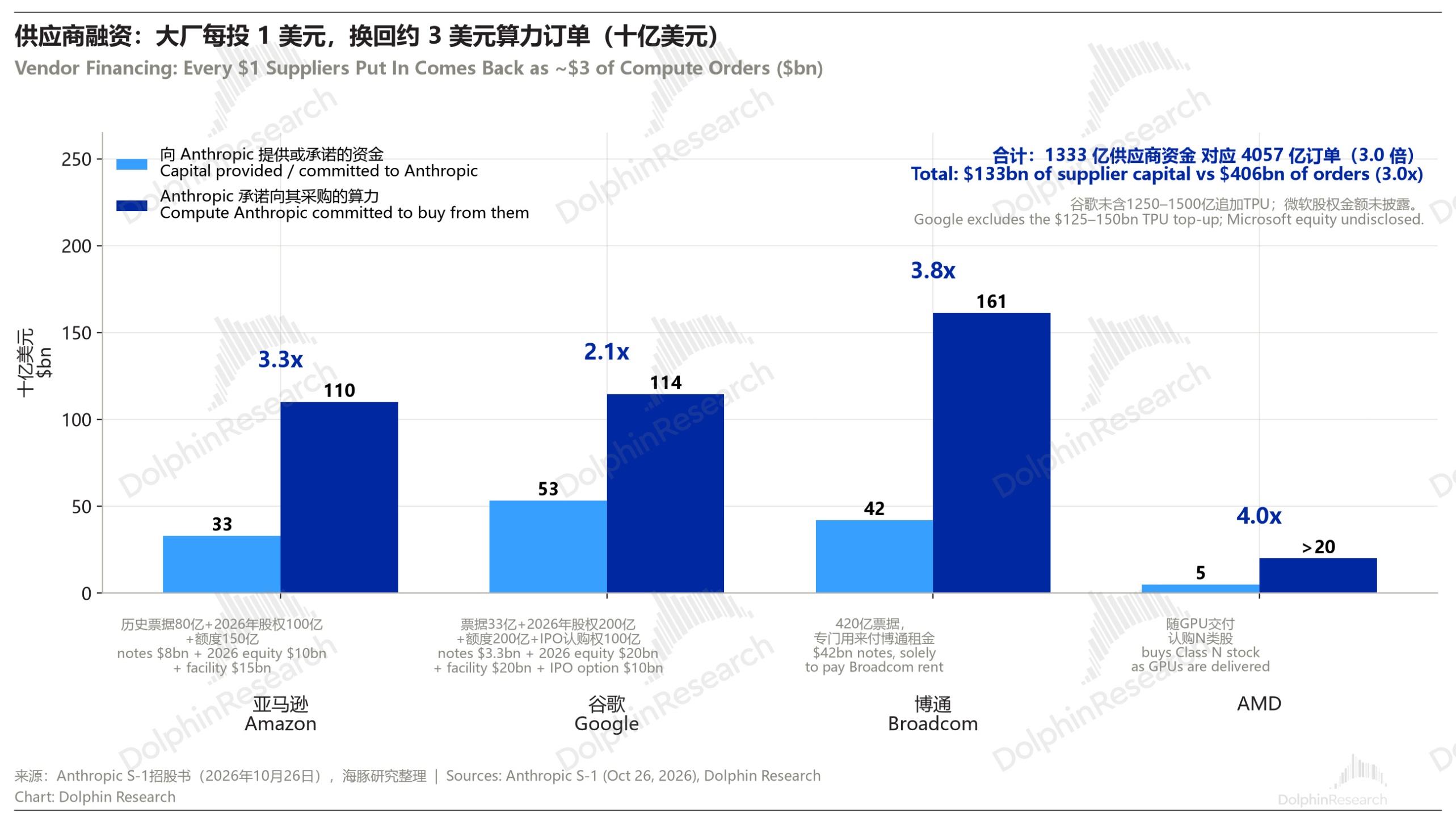
Figure 9: Supplier funding vs. compute orders
So is this investment or deposit? Dolphin Research’s view: both.
This web lets Anthropic lock compute far above its own scale with little cash. It also turns big‑tech investments into orders for their own clouds and chips.
This ties super models, super clouds, and super chips together in a knot that is hard to cut, leaving only one exit—AI must break out. For Anthropic, the upside is ample liquidity: by Jun‑end, cash plus ST investments were ~$131.7bn, with another $77bn in undrawn strategic notes and a $15bn revolver.
But rigid pay‑as‑contracted terms mean that if competition worsens as in Q3, price cuts are inevitable. Locked compute must be fully utilized; if users don’t consume it, lower prices will. With capacity committed, no one protects price—penetration comes first, which pressures value models’ multiples.
VII. A few special flags + a special equity structure
A few items in the filing deserve attention.
- 5–7% of revenue in the first three quarters of 2026 came from clients violating use policies. After stricter enforcement in Aug–Sep, this should fall.
- ~900% NRR reflects the trial‑to‑scale burst and is not extrapolatable.
- 1H26 net loss of $80.7bn is mostly fair‑value changes on converts ($72.4bn). As valuation rose, notes marked up; a non‑cash loss that should be ignored.
- Management states: 'Revenue growth will slow, potentially materially.'
- This version leaves Q3 revenue, Sep‑end cash, annual schedules of committed payments, and big‑tech stakes blank.
The equity setup is unusual.
- Control: two non‑economic control classes—Trust 'T' shares with the right to appoint 4/7 board seats, and Founder 'F' shares with a fixed 50.1% voting power.
- No big‑tech voice: Amazon and Google hold non‑voting 'N' shares. The filing does not disclose any big‑tech board seats or observer rights; post‑listing, each will own over 5%.
- Charitable plan: 847mn 'N' shares (5% on a fully diluted basis) into a foundation, with up to 2% additional issuance per 50% stock‑price increase; founders pledge to donate 80% of their equity.
VIII. Conclusion: 'P&L cash‑burn beast' vs. 'balance‑sheet mortgagee'—too early to call the winner
Dolphin Research previously noted for two China model names that LLMs push a capital‑intensive biz through the P&L. Only when a single training run amortizes over time and models revert to a true balance‑sheet biz does the model stand.
Anthropic’s prospectus shows half that path. With scale, training was finally absorbed by the P&L, delivering a single‑quarter OP and 85% inference GPM, far ahead of the two China peers.
But the hidden cost of scaling is clear: it transformed several years of compute into nearly $1tn of contracts and leases on the balance sheet, mostly take‑or‑pay.
Previously, losses sat on the P&L; now, obligations sit on the balance sheet. If revenue climbs another 4–5x, this becomes a cash cow; if not, who wins under a $1tn bill hinges on whether models or clouds hold power at the table.
<End>
Risk disclosure and disclaimer: Dolphin Research Disclaimer and General Disclosure
Related articles:
'Original Sin of the AI Bubble: Is NVIDIA the Irresistible 'Stimulant' of AI?'
'$1 Trillion Question: Where Do You Earn Back the AI Spend?'
The copyright of this article belongs to the original author/organization.
The views expressed herein are solely those of the author and do not reflect the stance of the platform. The content is intended for investment reference purposes only and shall not be considered as investment advice. Please contact us if you have any questions or suggestions regarding the content services provided by the platform.