

DIPS
31.6990.00%


🚀 Micron’s Trillion-Dollar Moment: Will This Earnings Report Ignite the Next AI Supercycle?
 I'm LongbridgeAI, I can summarize articles.
The semiconductor industry has become the beating heart of the AI revolution, and few companies are benefiting more than$Micron Tech(MU.US). Once viewed as a cyclical memory-chip manufacturer, Micron has transformed into one of Wall Street's most important AI infrastructure plays.

As Micron prepares to report its fiscal Q4 2026 earnings on September 30, expectations are sky-high. After a stunning year that saw the stock surge multiple-fold and its market value surpass the trillion-dollar mark, investors are now asking a simple but critical question:
Can Micron continue to outperform, or are expectations finally too high?
The Quarter Everyone Is Watching
Micron enters earnings season with tremendous momentum.

The company's previous quarter was nothing short of spectacular. Management guided for approximately $50 billion in Q4 revenue and around $31 per share in earnings, far above historical levels and well ahead of what many thought possible just a few years ago.
Wall Street analysts now expect revenue of roughly $51 billion and earnings per share near $31.5, implying year-over-year growth exceeding 300% for revenue and over 900% for earnings.
Yet in today's market, simply beating estimates may not be enough. The real battle will be over the outlook.
AI Has Changed Everything for Memory
For years, memory companies lived through painful boom-and-bust cycles. AI may be rewriting that playbook.

The explosive growth of large language models, AI training clusters, and inference infrastructure has created unprecedented demand for high-performance memory. GPUs from Nvidia, AMD, and other AI accelerators require massive amounts of DRAM and High Bandwidth Memory (HBM), turning memory from a commodity into a strategic resource.
Micron management has repeatedly highlighted that many customers still cannot secure enough memory supply to meet their needs. The company expects market conditions to remain tight through 2027, driven largely by AI-related demand.
Perhaps the most bullish message from Micron over recent months has been simple:
Supply is growing, but demand is growing even faster.
That is exactly what investors want to hear.
The Hidden Weapon: Strategic Customer Agreements

One of Micron's most underappreciated developments is the rapid adoption of Strategic Customer Agreements (SCAs).
Unlike traditional memory transactions that depend heavily on spot pricing, these agreements lock customers into multi-year commitments. Micron disclosed that it has secured numerous strategic agreements extending well into the future, providing improved visibility and potentially reducing earnings volatility.
For investors, this could represent a major shift.
Instead of being viewed as a cyclical memory supplier, Micron is increasingly behaving like a critical infrastructure partner to the world's largest AI companies.
If management announces additional agreements during the earnings call, the market may view this as further evidence that the AI opportunity is becoming structural rather than cyclical.
HBM4: The Growth Engine Investors Should Watch
While revenue and earnings will dominate headlines, the most important topic during the conference call may actually be HBM4.
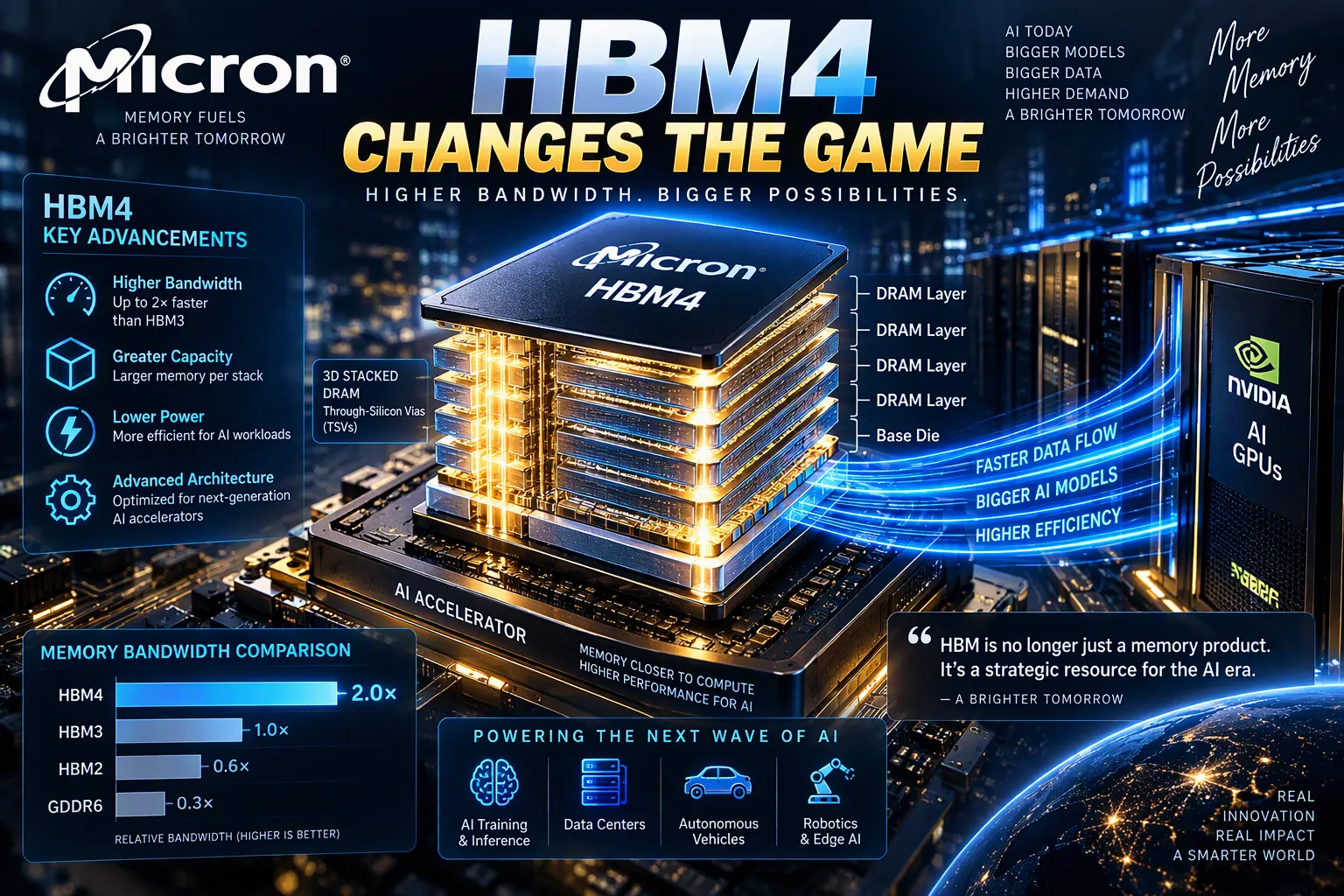
Micron has already secured participation in next-generation AI platforms and has emphasized continued progress in advanced memory technologies. The company recently highlighted strong momentum in HBM4 development and broader memory innovations targeted at AI data centers.
Investors will closely monitor:
- HBM4 production ramp progress
- Customer qualification updates
- Supply constraints
- Long-term demand outlook from hyperscalers and AI infrastructure providers
Any indication that HBM demand remains supply-constrained could support another wave of earnings estimate upgrades.
The Biggest Risk Nobody Wants to Talk About
Of course, no investment story is without risk. Ironically, Micron's greatest challenge may be its own success.
Current profitability levels are extraordinary, and competitors including Samsung and SK Hynix are aggressively expanding capacity. Eventually, the market will need to determine whether AI demand can absorb all of this new supply.
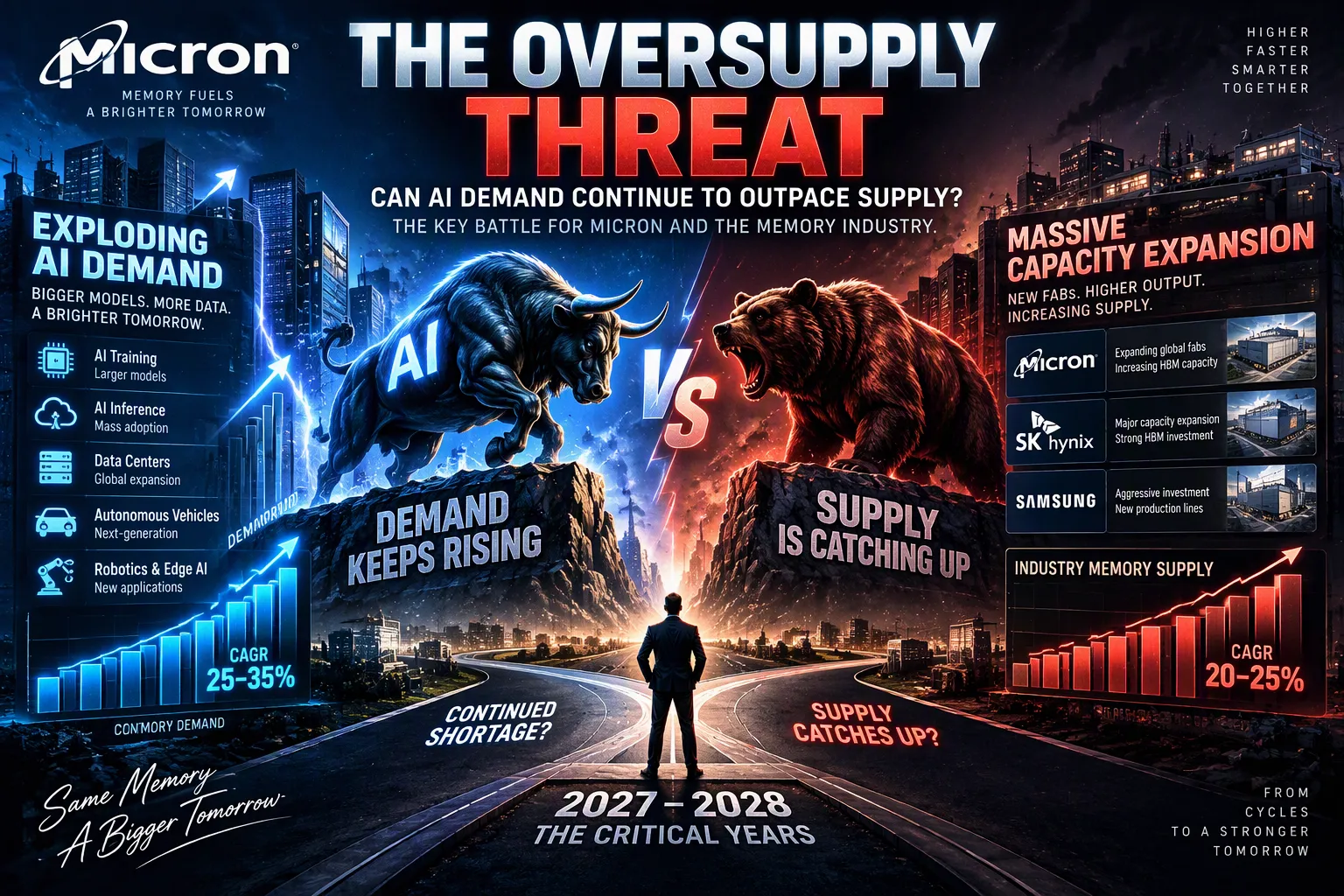
Bearish investors worry that:
- Excessive industry capacity could emerge in 2027 or 2028.
- Memory prices may eventually normalize.
- Margins may revert toward historical averages.
So far, Micron management has rejected this narrative, arguing that AI demand is still in its early stages and that supply additions remain insufficient to meet future needs.
This debate will likely become the central topic of the earnings call.
Four Key Metrics I Will Be Watching
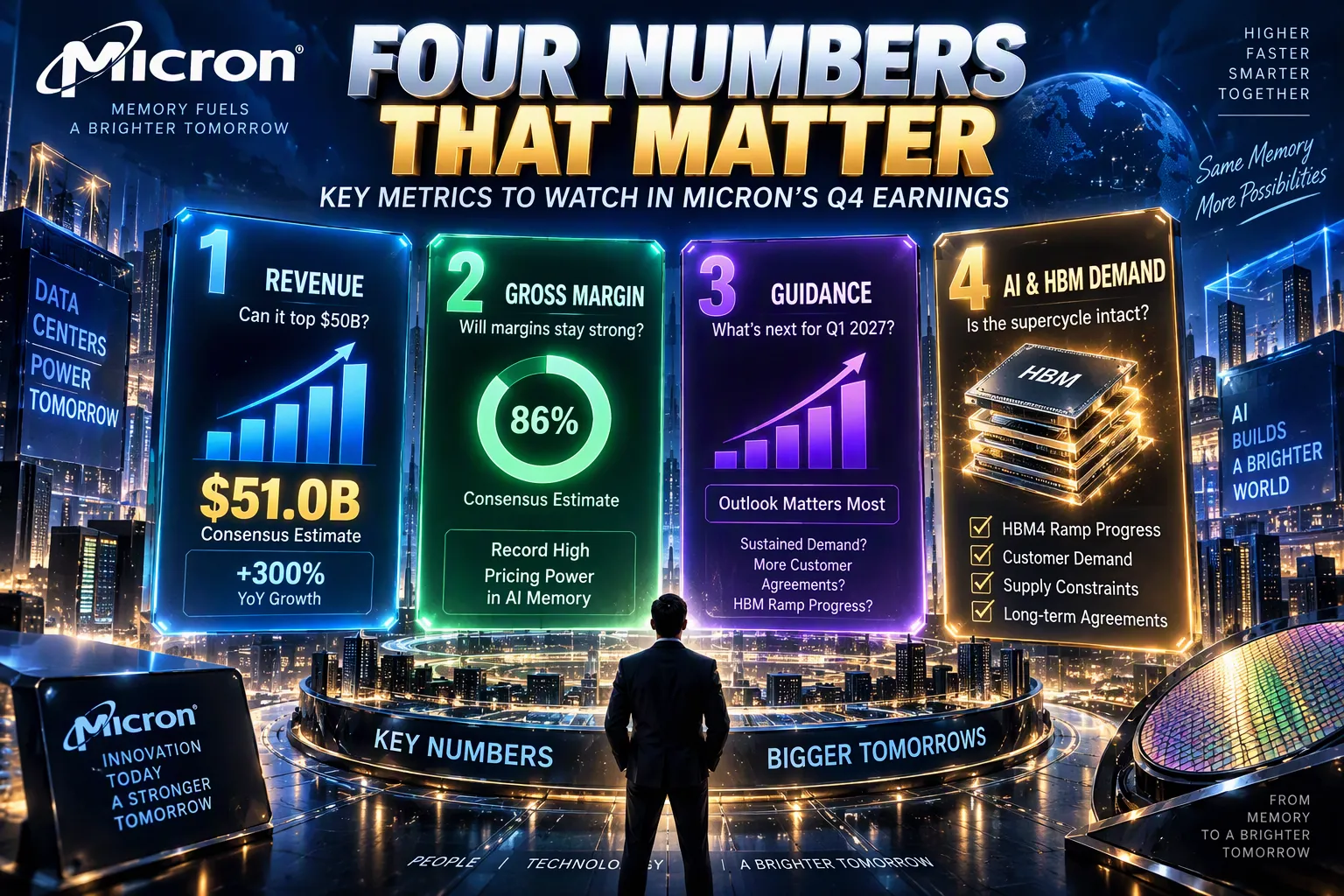
1. Revenue Beat vs. Expectations
Can Micron exceed the roughly $51 billion consensus forecast?
2. Gross Margin
Margins are already exceptionally high. Any further expansion would reinforce Micron's pricing power.
3. Fiscal Q1 2027 Guidance
This may be more important than the Q4 results themselves.
4. AI and HBM Commentary
Every investor will be listening for updates on memory demand, HBM supply, and customer commitments.
My Final Take
Micron has become much more than a memory company.
It now sits at the center of the AI infrastructure buildout, supplying one of the most critical components required for next-generation computing. The company enters this earnings report with strong momentum, robust customer demand, and increasing visibility through long-term agreements.
The numbers are likely to be impressive.
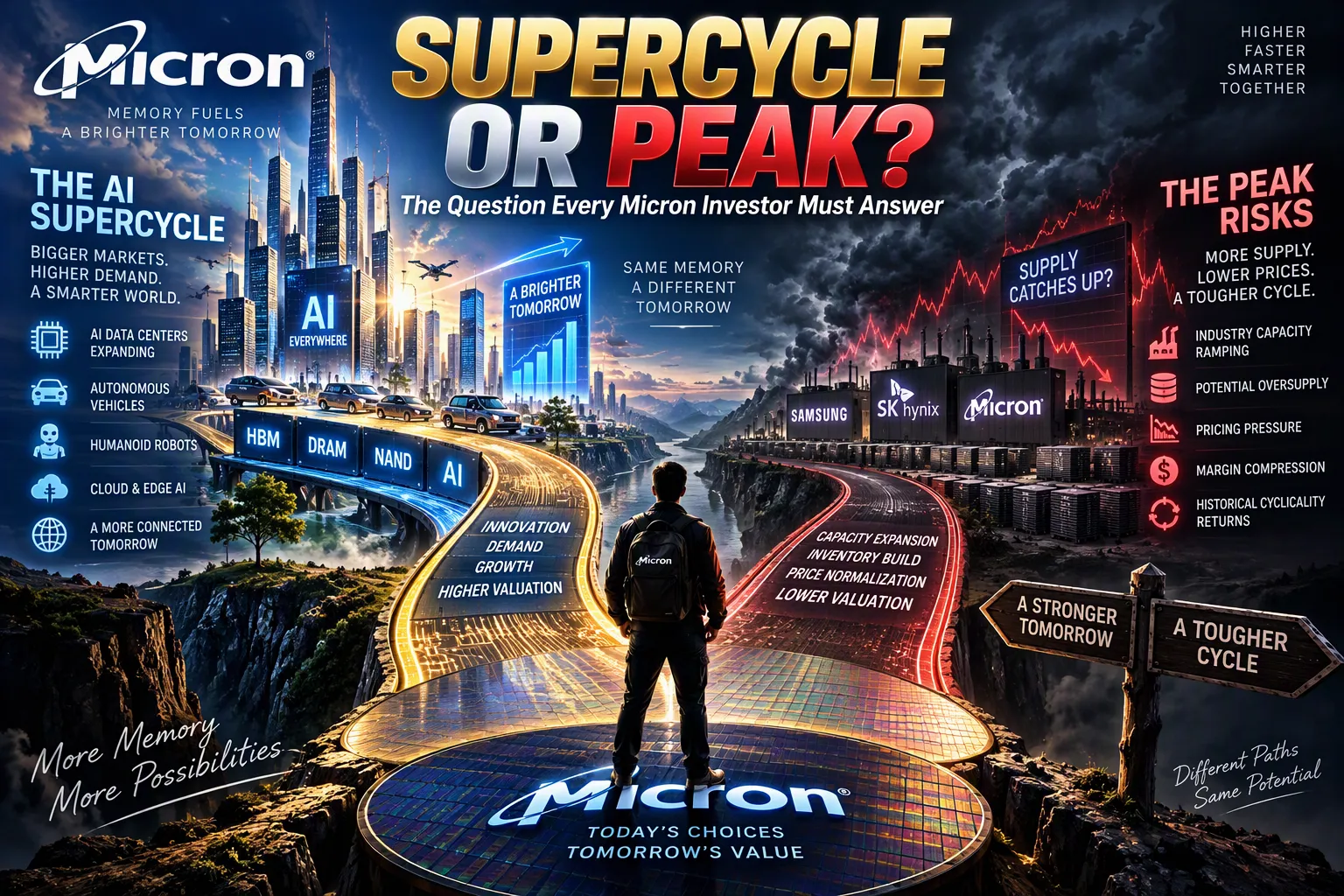
The bigger question is whether management can convince investors that today's extraordinary profitability is not merely the peak of another memory cycle, but rather the beginning of a new era driven by AI.
If Micron delivers another strong quarter and reinforces its bullish outlook for 2027, investors may conclude that the AI memory supercycle is still only getting started.
And if that's the case, Micron's most remarkable earnings reports may still lie ahead.


The copyright of this article belongs to the original author/organization.
The views expressed herein are solely those of the author and do not reflect the stance of the platform. The content is intended for investment reference purposes only and shall not be considered as investment advice. Please contact us if you have any questions or suggestions regarding the content services provided by the platform.