

US October ADP Preview: Job Growth May Continue to Slow, How Will US Stocks, Dollar, and Gold React?
 I'm LongbridgeAI, I can summarize articles.
TradingKey - The U.S. will release the October ADP employment report this Wednesday. Markets generally expect U.S. private-sector job growth to slow from September, with current expectations predicting an addition of 67,000 to 69,000 jobs, down from 90,000 in September. With the U.S. also scheduled to release the October nonfarm payrolls report this Friday, this ADP report will serve as an important leading indicator for the market to assess the latest conditions of the labor market. Especially after the Federal Reserve chose to pause rate hikes at its October meeting, whether employment data remains resilient will impact market expectations on whether another rate hike will take place in December.
October ADP May Fall to Around 70,000
Based on current market expectations, October ADP private employment is expected to increase by approximately 67,000 to 69,000, lower than September's 90,000 and noticeably below the gains of over 100,000 seen in certain months during the first half of the year. Continuum Economics forecasts an increase of about 65,000 in October ADP payrolls, noting that job growth remains modest, though overall hiring momentum has weakened compared with previous periods.
However, other recent labor market indicators suggest that U.S. employment has not deteriorated significantly. The latest JOLTS data showed that job openings in September increased by 333,000 to 7.523 million, exceeding market expectations, while layoffs fell to 1.641 million, the lowest level since March 2025. The ratio of job openings to unemployed workers also rose from 1.02 to 1.06, indicating that corporate labor demand retains a degree of resilience.
Therefore, the U.S. labor market is currently in a state where hiring is sluggish, but businesses are not in a rush to lay off workers. High-frequency employment data released by ADP also indicates that the four-week average private job growth through late October remained positive, which is largely consistent with market forecasts of a modest increase in October ADP payrolls.
For the Federal Reserve, if October ADP comes in significantly higher than expected—for example, breaking above 100,000 again—coupled with the previous rebound in JOLTS job openings, the market may view the labor market as remaining tight, thereby raising the likelihood of another Fed rate hike in December. Conversely, if ADP falls below 30,000 or even shows negative growth, it would reinforce signals of a cooling labor market, and the market could lower expectations for a December rate hike.
If the figure comes in around 60,000 to 70,000, it would align more closely with the current baseline scenario of a modest cooling. Such an outcome would neither signal a rapid deterioration in the U.S. economy nor add significant wage and inflationary pressures, and market focus would quickly shift to Friday's nonfarm payrolls report.
How Will October ADP Impact US Stocks, Dollar, and Gold?
For U.S. equities, a moderate slowdown may be a relatively favorable outcome. If ADP figures hover around 60,000 to 70,000, it would signal that the labor market is still growing without labor demand reigniting significantly. This could prevent pressure for a December Fed rate hike from expanding further, proving relatively beneficial for rate-sensitive sectors such as the Nasdaq, AI, and semiconductors. If ADP exceeds 100,000, the market could raise rate-hike expectations, and rising Treasury yields might weigh on high-valuation tech stocks; however, if ADP falls significantly below expectations or even turns negative, while U.S. stocks might benefit in the short term from falling rate expectations, they would subsequently face concerns over slowing economic growth and corporate earnings.
For the U.S. dollar, if ADP comes in significantly above market expectations of around 67,000 to 69,000, the dollar could find support. Strong job growth would further demonstrate that the U.S. economy remains resilient and boost market bets on another Fed rate hike in December, driving short-term Treasury yields and the dollar higher. Conversely, if ADP falls well short of expectations, particularly dropping below 30,000, the market could pare back rate-hike expectations, putting downside pressure on the dollar. However, with the even more critical nonfarm payrolls report due on Friday, whether dollar volatility induced by ADP can persist will still require confirmation from the nonfarm data.
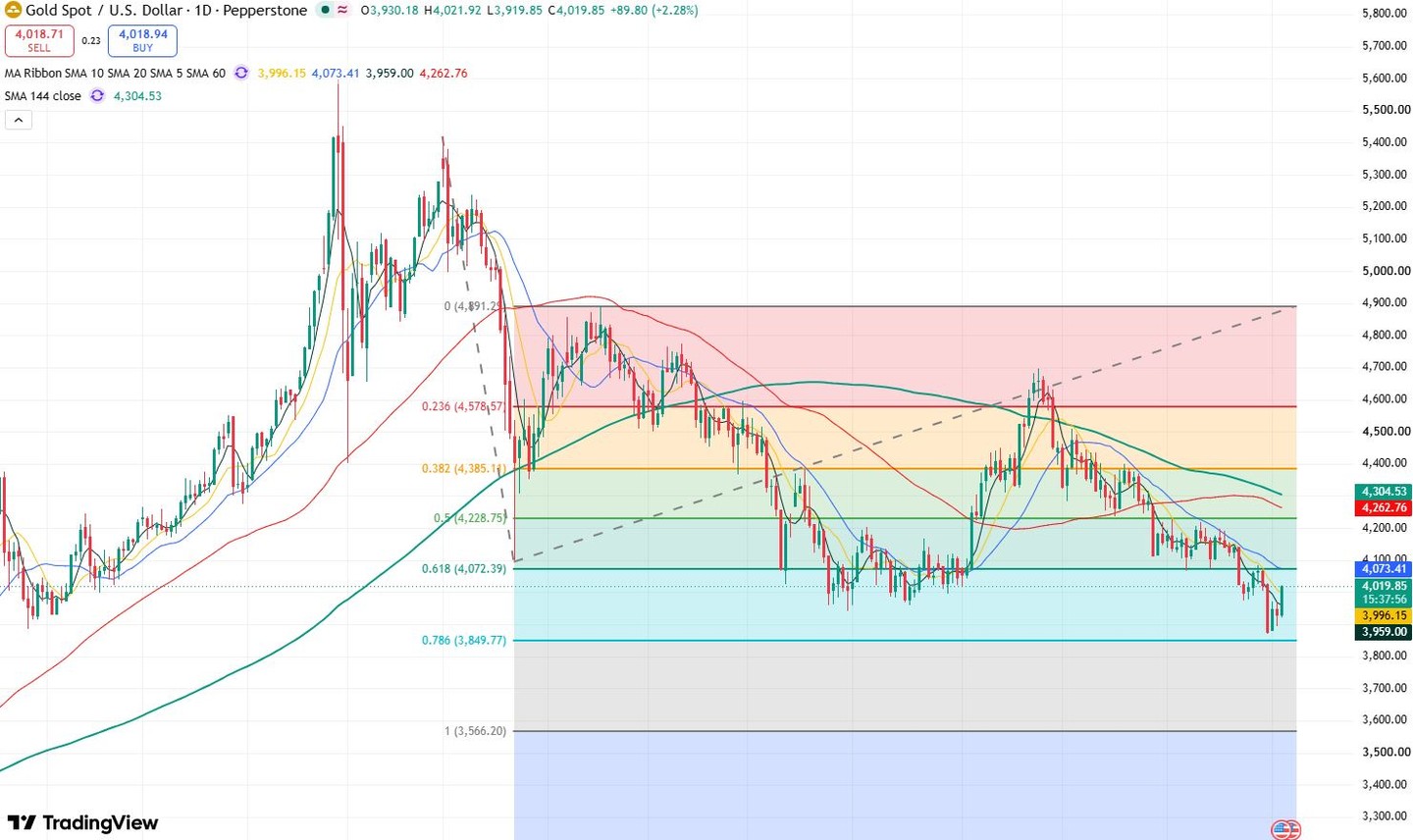
Gold price daily chart, Source: TradingView
As for gold, if ADP is significantly stronger than expected, rising expectations for a December rate hike could push the dollar and Treasury yields higher, weighing on gold and potentially causing prices to continue testing support near $3,870; if job growth is significantly weaker than expected, diminishing the need for further Fed tightening, it would favor a retreat in the dollar and yields, creating conditions for a gold rebound to further test resistance near $4,080. If ADP comes in largely in line with expectations, the gold market is more likely to remain range-bound while awaiting clearer employment signals from Friday's nonfarm payrolls.