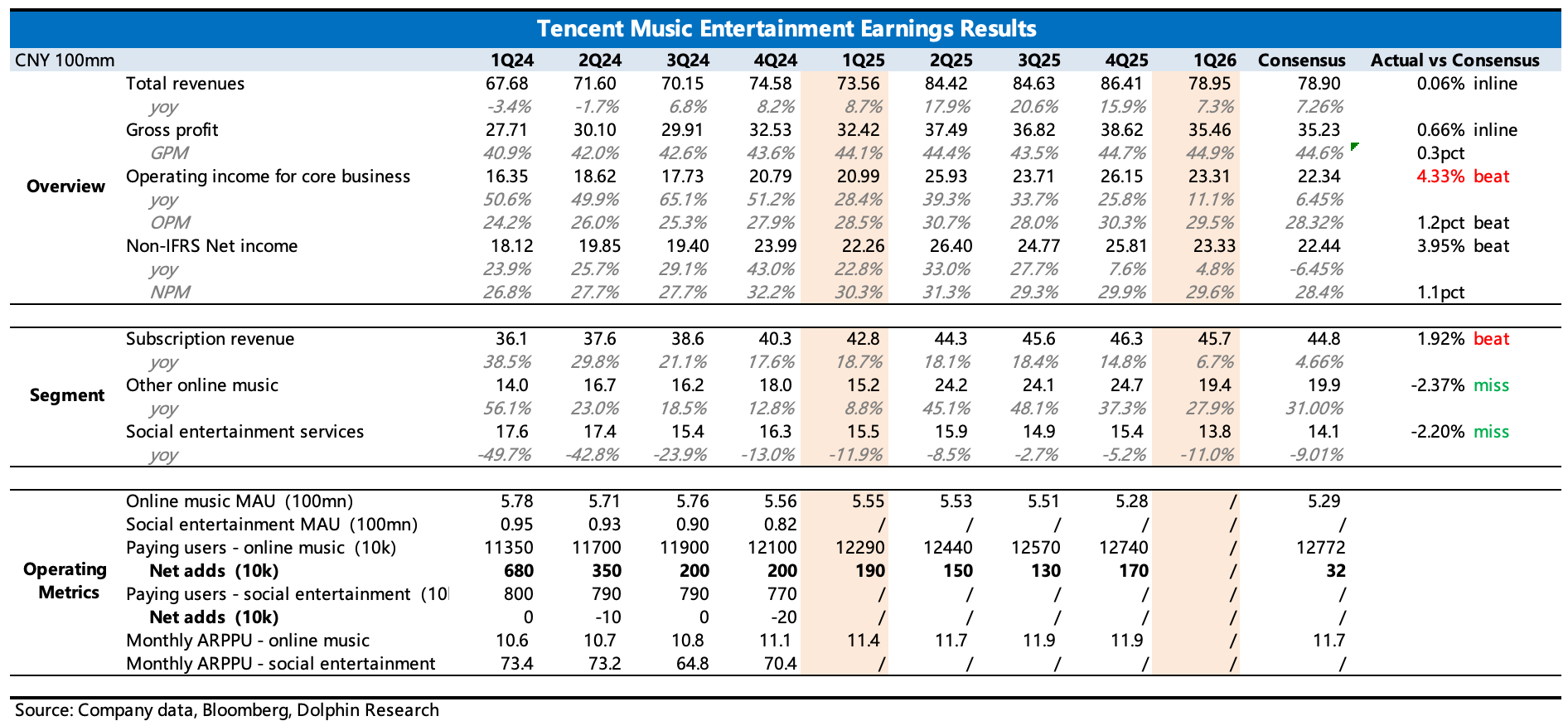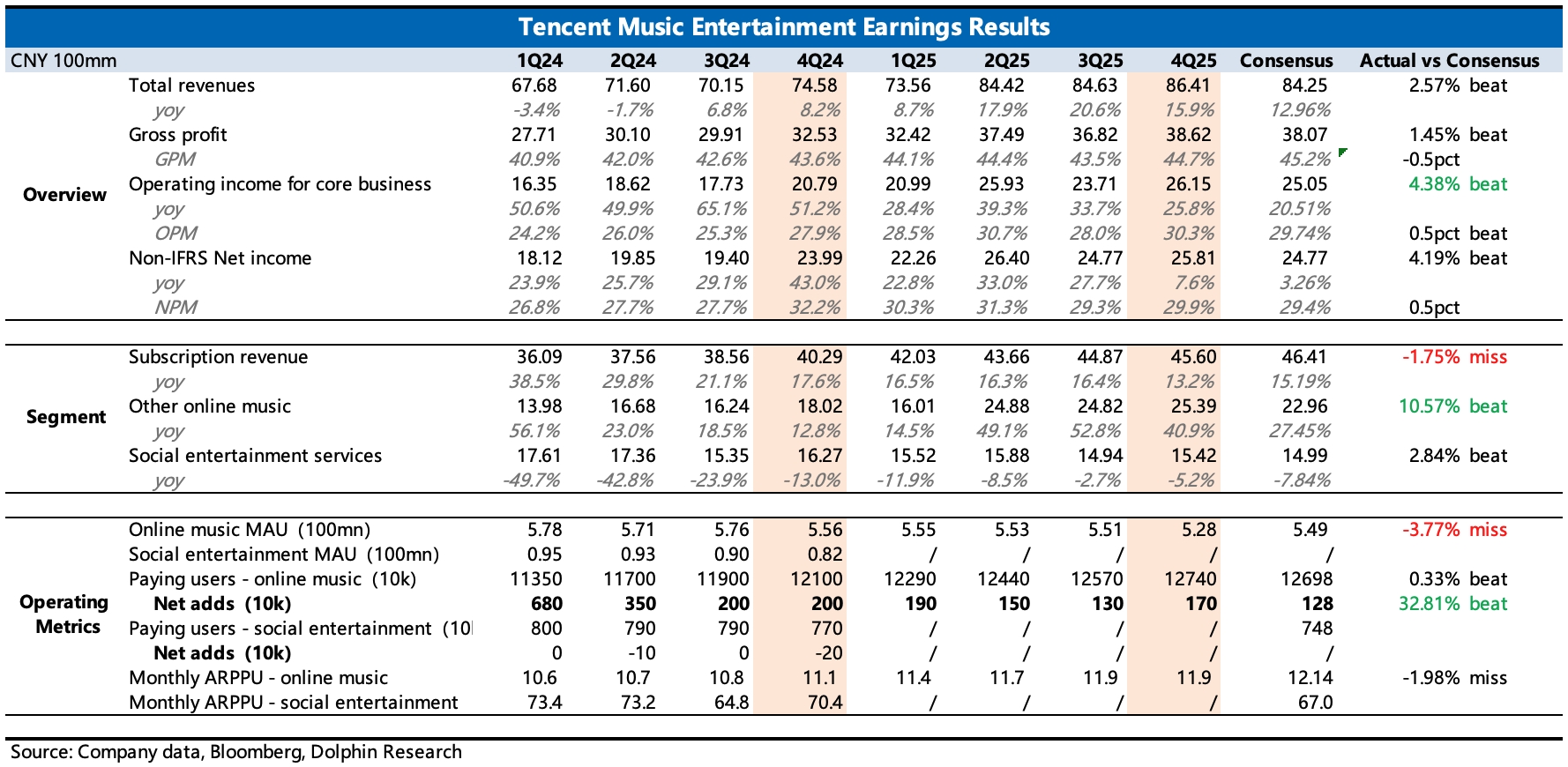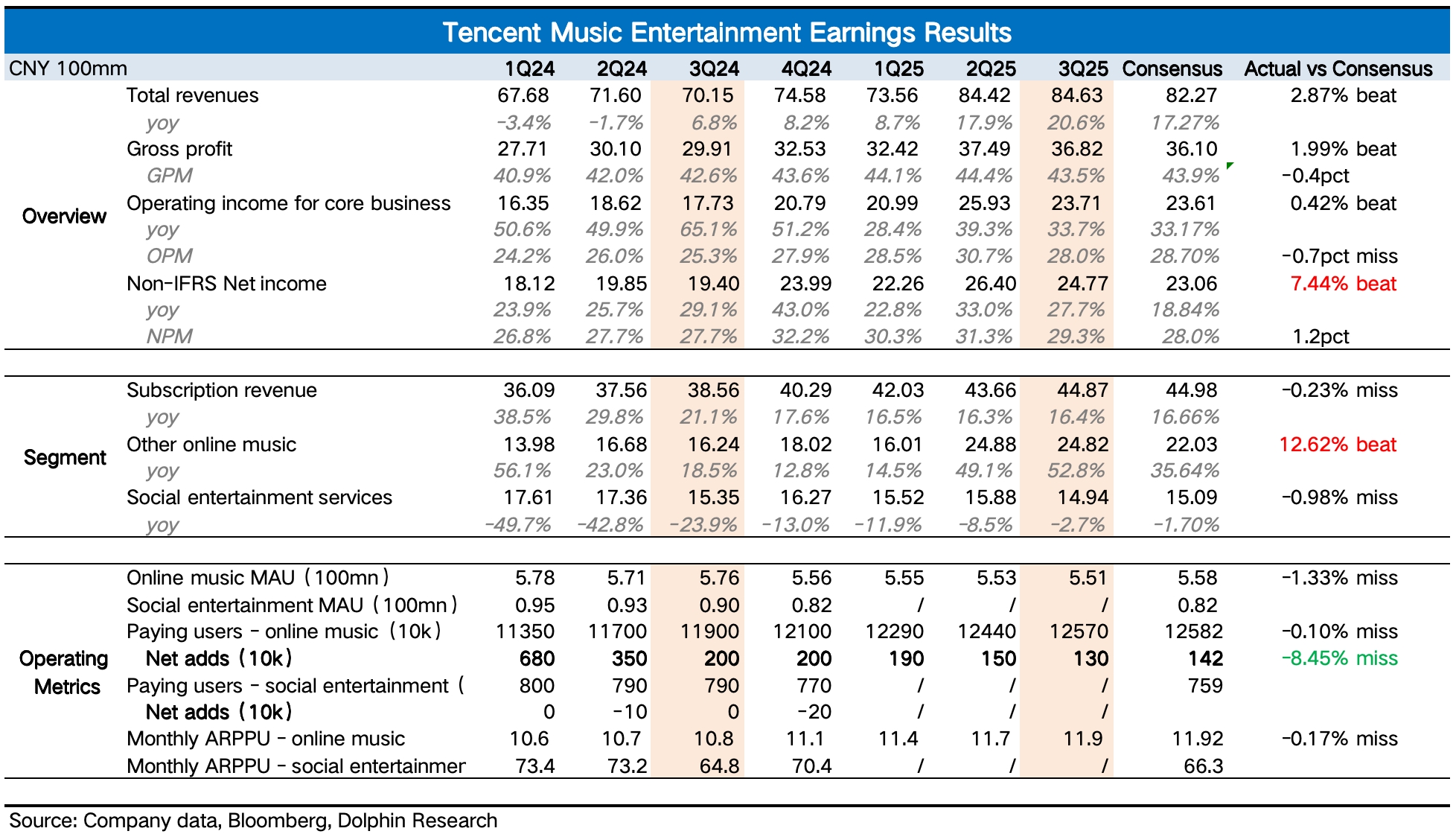



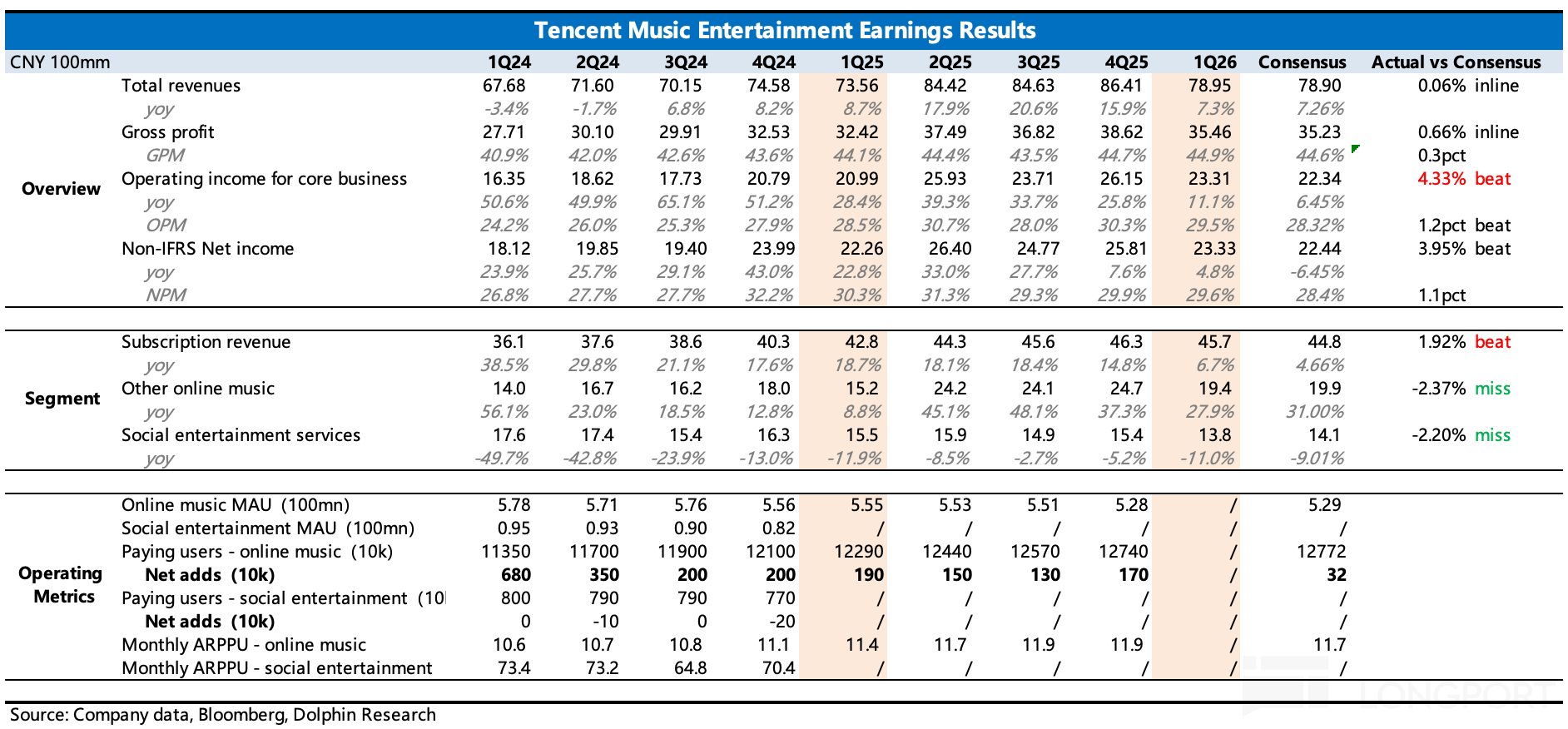
TME 1Q26 First Take: Q1 results were largely in line with prior guidance, with slightly lower-than-expected opex driving a modest earnings beat. Core music subs growth slowed under intensifying competition, while management pushed into non-subscription adjacencies.
More notable than the print, pre-mkt approval of the Ximalaya acquisition paves the way for faster integration and access to audiobook users. It also clears the path to resume buybacks; with healthy cash generation, a largely unused two-year RMB 1bn repurchase authorization, and a RMB 370mn dividend, the implied total shareholder return is ~6.2% on a RMB 14bn market cap if executed as planned.
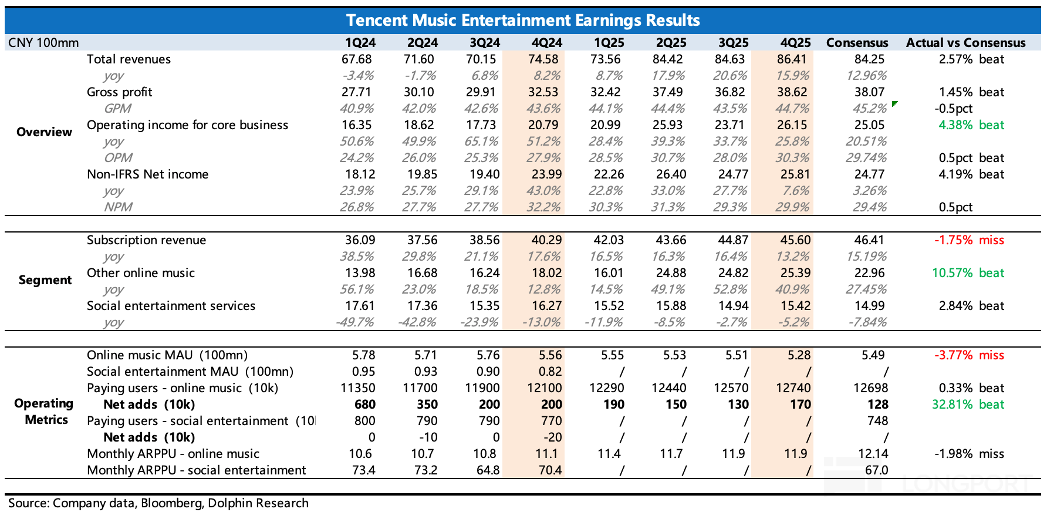
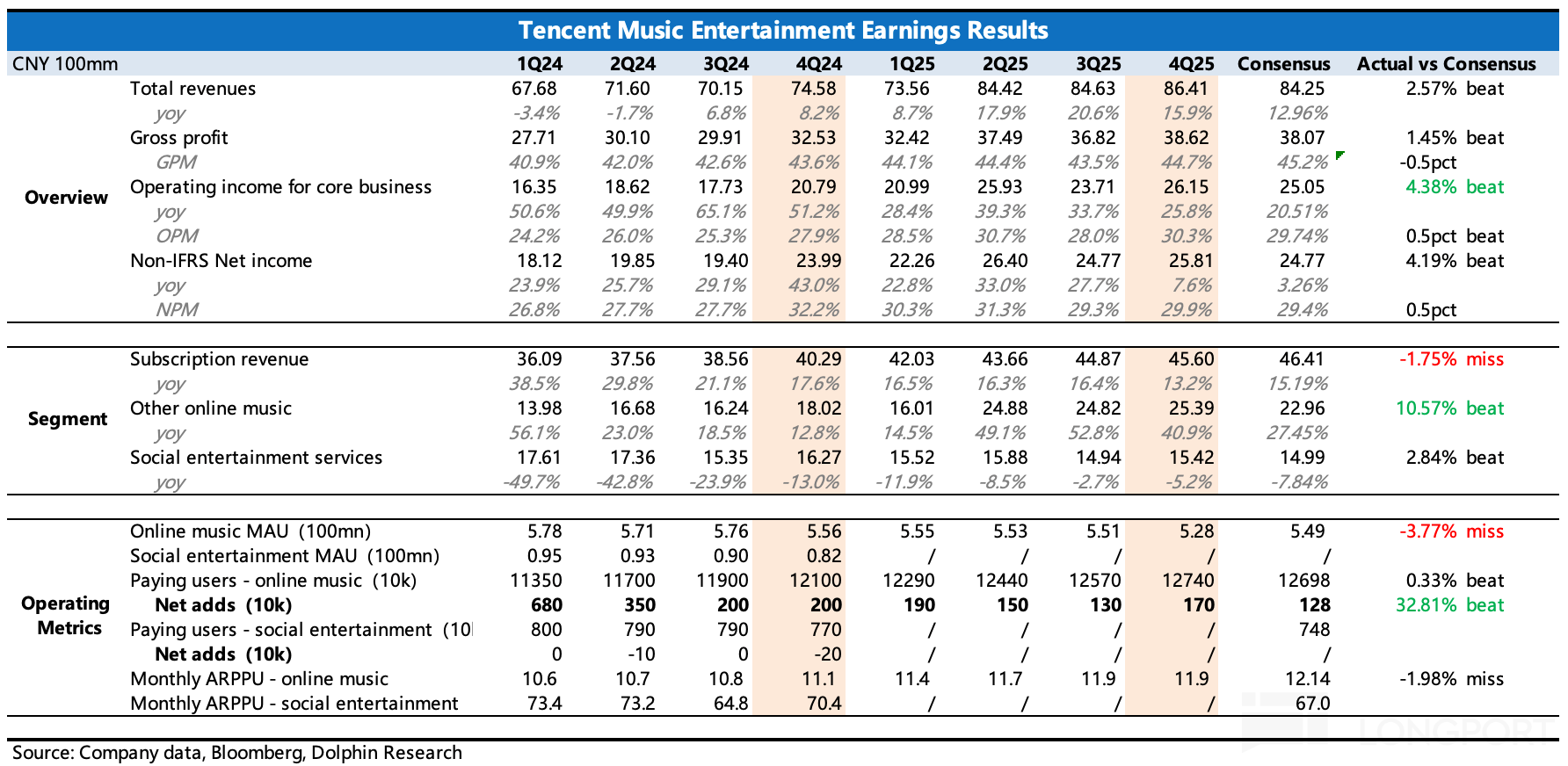
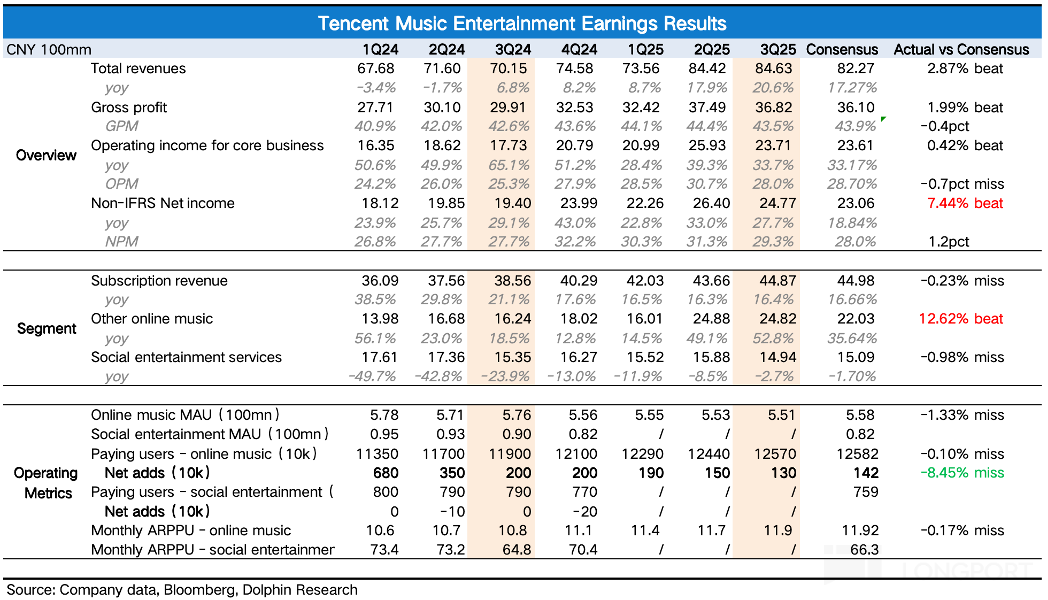
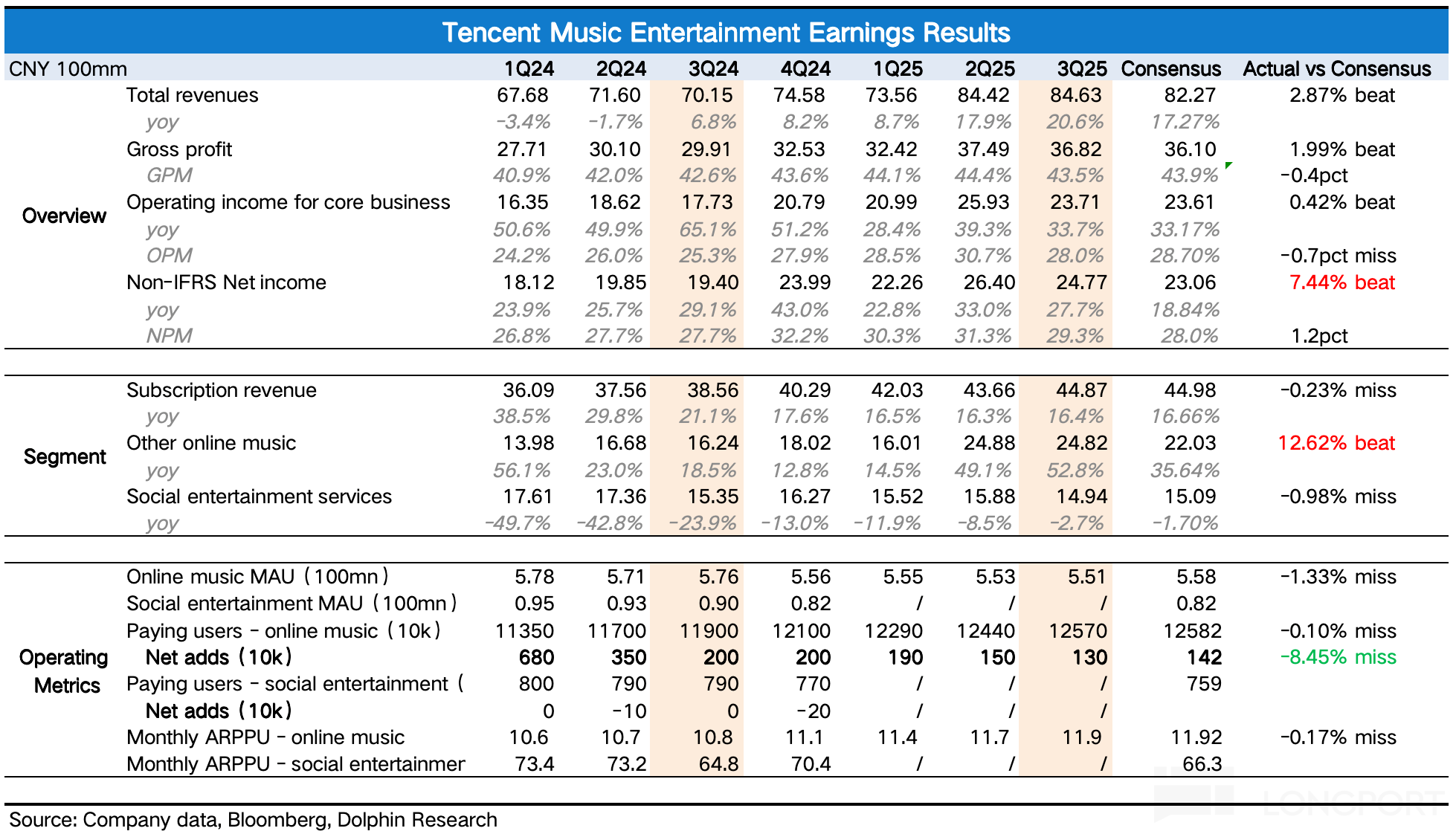
(1) Total revenue grew 7%, with subscription revenue up 6.6%. Management stopped disclosing paying-user metrics from this quarter. Based on last quarter's strategy to lower the paywall to improve stickiness, we estimate Q1 net adds of ~1mn subs, with ARPPU down QoQ to RMB 11.7 (for reference).
(2) Non-subscription revenue (ads, offline concerts, digital albums, etc.) rose 28%, with growth decelerating QoQ. The slowdown likely reflects a late Chinese New Year amplifying concerts' off-season effects, yet growth remains robust.
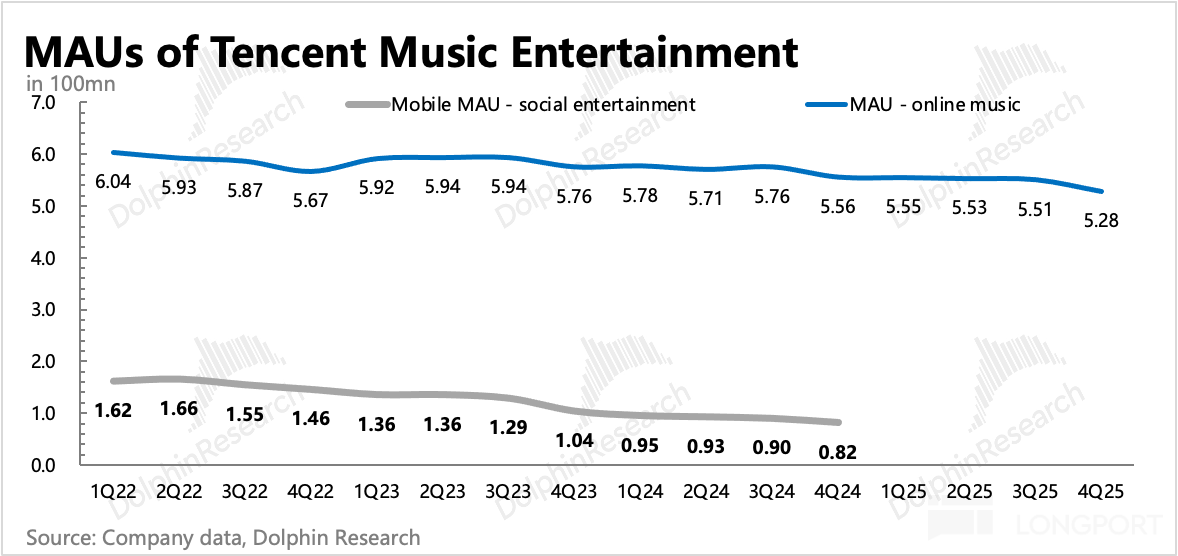
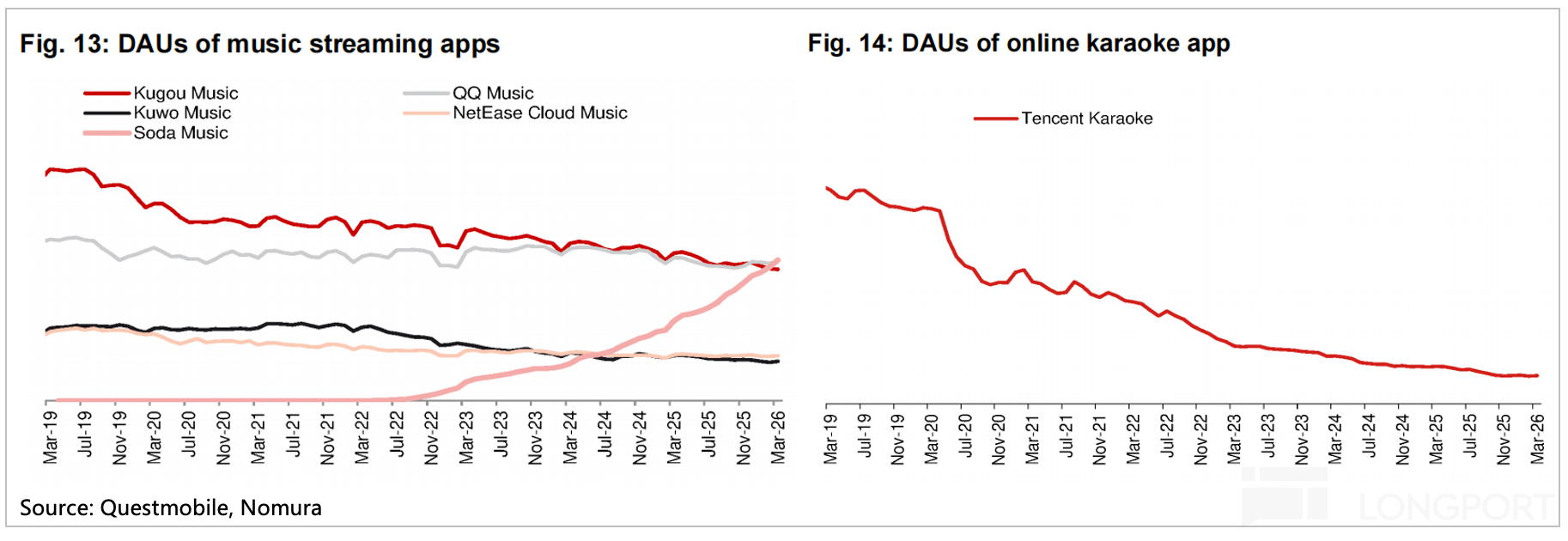
(3) Social entertainment revenue fell 11%, worsening further. Beyond ongoing pressure on live streaming, QM data suggest the karaoke business is being hit by traditional peers and AI, as one of AI's main C-end use cases is song covers that overlap with the K-song experience. As a result, WeSing MAUs continue to decline.
(4) GPM was 44.9%, up 30bps QoQ, helped by mix shift toward higher-margin non-sub businesses (e.g., ads) and scaled content-cost optimization. On opex, S&M stayed elevated, reflecting sustained user acquisition and marketing efforts, while G&A was flat YoY and down QoQ, likely due to headcount optimization.$Tencent Music(TME.US) $TME-SW(01698.HK)