
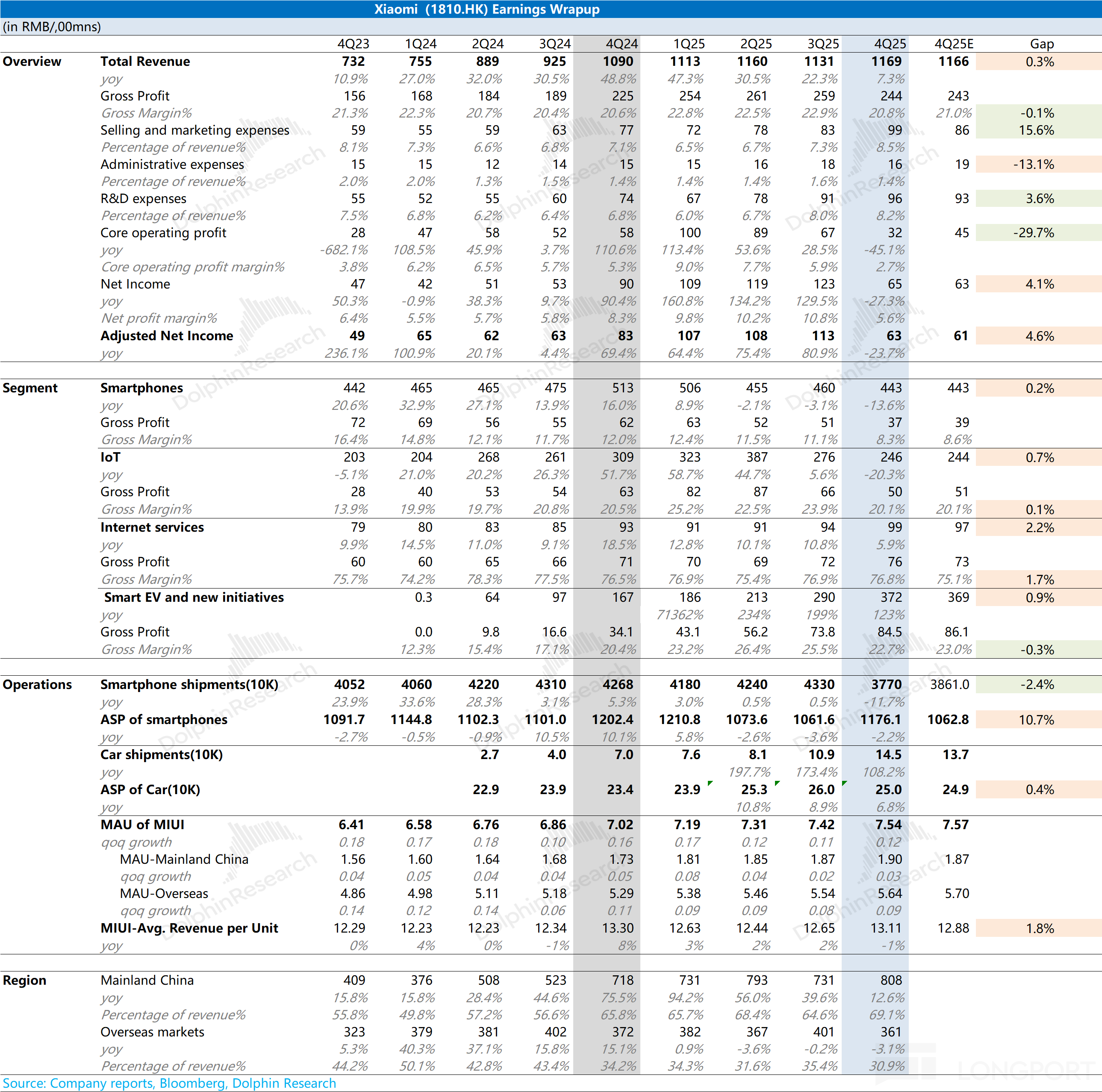

From the perspective of AI investment, Xiaomi's current AI efforts are more like "burning money to buy the future" rather than an immediately profitable business. The pressure from a 600 billion yuan level investment is real for them—mobile phone profits are being squeezed, the car business is still in the investment phase, and pouring more into AI at this time naturally makes short-term profits look less attractive.
The problem is, not investing is not an option either. This wave of AI is essentially redefining the "operating system" and the "entry point." If Xiaomi doesn't keep up, hardware like phones, cars, and IoT devices could become "carriers for others' AI" in the future, which would put them in a very passive position.
The key lies in Xiaomi's different approach:
It doesn't aim to make money by selling models, but rather wants to embed AI into its own hardware ecosystem—making phones smarter, cars more user-friendly, and home appliances more interconnected. As long as the user experience genuinely improves, there is a chance to raise prices a bit (this is crucial for countering the current decline in mobile phone gross margins).
But the risks are also very real:
If AI remains just PowerPoint material in launch events, or if users don't perceive a significant improvement, then this 600 billion yuan will essentially become pure cost, dragging down overall profits.
Short-term: It will definitely drag down profits; this is unavoidable.
Medium-term: It depends on whether the products deliver "genuine improvement" to determine if it's worth it.
Long-term: If it truly succeeds in connecting "people, cars, and homes" with AI, the money might be very well spent.