
BofA: TSMC
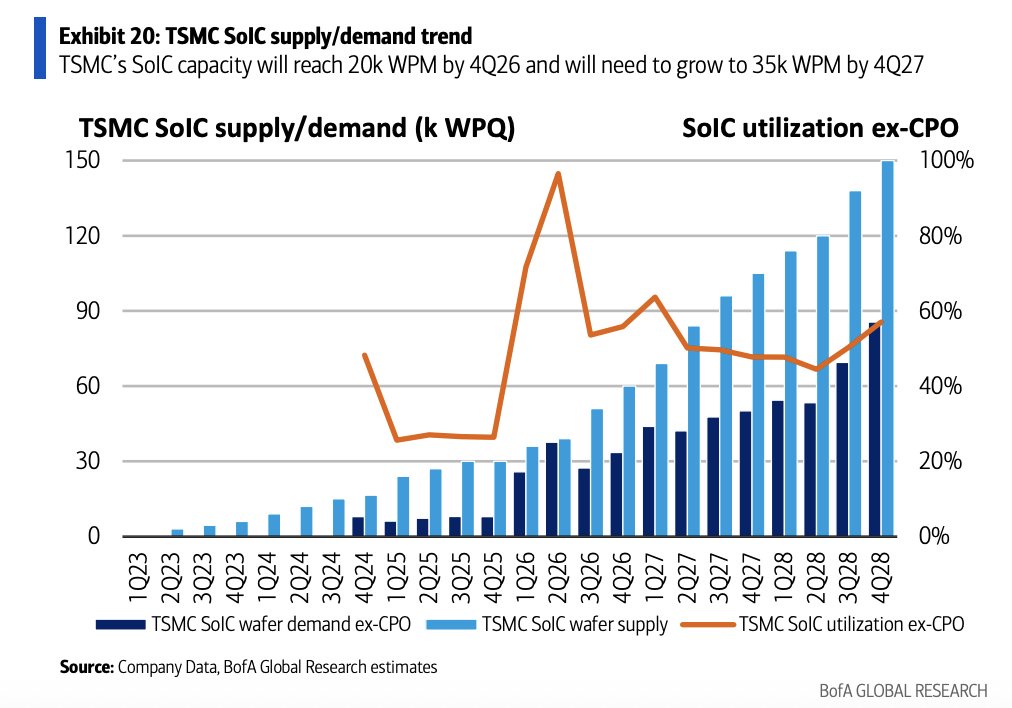
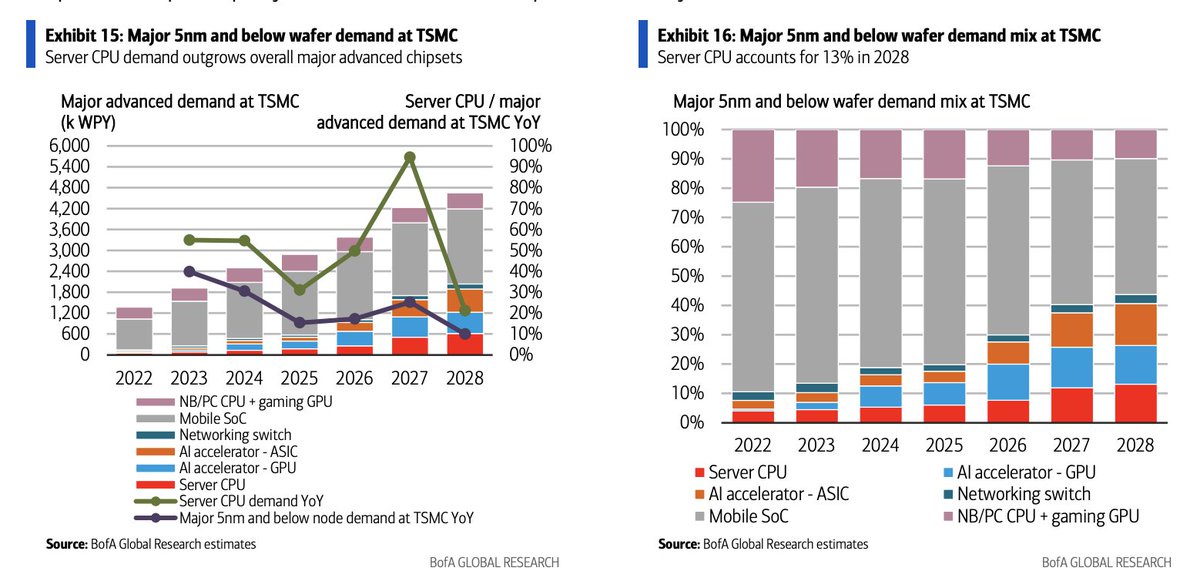
2Q26 & 3Q26 Financial Expectations> 2Q26 Performance: Sales are tracking to +12% QoQ (the top end of guidance), supported by robust high-performance computing (HPC) and AI demand. A Vanguard (VIS) disposal gain is expected to boost 2Q26 EPS by NT$1.95.> 3Q26 Growth: Sales are projected to increase by 11–15% QoQ due to upcoming Apple chipset builds and full implementation of early-2026 price hikes.> Gross Margins (GMs): Expected to remain stable at 67–68% in 3Q26. While strong utilization and pricing help, they are temporarily offset by higher summer electricity costs and a 2–3% margin dilution from the 2nm node ramp.Capital Expenditure (Capex) Strategy> 2026 Capex: Expected to reach US$58bn (outperforming TSMC's official US$56bn guidance) due to tight equipment supply and advanced packaging needs.> Future Capex Expansion: Projected to swell further to US$78bn in 2027 and US$83bn in 2028 to fund advanced clean room installations and international expansions (e.g., Arizona and Kumamoto).> Depreciation Management: Despite aggressive capex, depreciation is estimated to grow at a manageable 17% CAGR from 2026–28, allowing GMs to expand toward 68% by 2028.Technology Leadership & Market Position> Node Superiority: TSMC continues to widen its specs gap against rivals. Its transistor density outperforms Intel 3/18A nodes by ~30%, and the gap is projected to expand to 50–60% with the upcoming A16/A12 nodes compared to Intel 18A-P/14A.> The 2nm Profile: The N2 (2nm) node has reached target defect density levels two quarters ahead of the 3nm timeline. It is expected to yield a better long-term margin profile than 3nm.> Advanced Packaging (CoWoS & SoIC): Industry CoWoS supply is expected to grow at a 52% CAGR (2026–28). TSMC is expanding CoWoS capacity from 120k WPM (4Q26) to 180k WPM (4Q27). Concurrently, its SoIC capacity is projected to grow from 20k WPM (4Q26) to 50k WPM by 4Q28, potentially contributing 1% of total corporate sales by 2028.CoWoS Advanced Packaging Supply & Demand> High Utilization Sustained: Industry CoWoS-R/L wafer demand and capacity are projected to scale dramatically from under 100k wafers per quarter (WPQ) in late 2024 to over 850k WPQ by 4Q28. Utilization is expected to remain tightly constrained at high levels, hovering near or above 90% through 2028.> Nvidia & Hyper-scalers Dominate: Total CoWoS demand is structurally anchored by Nvidia (both CoWoS-R/L and CoWoS-S variants), followed by major growth from Google (CoWoS-R/L and CoWoS-S) and AMD.> Growth Velocity: While YoY demand growth peaked dramatically in 2022 and 2024 (at 180% and over 200% respectively), absolute volume growth is accelerating rapidly through 2028, even as the YoY growth percentage decelerates toward 30-40%.TSMC SoIC Supply/Demand Trends> Capacity Multi-Year Roadmap: TSMC's SoIC capacity is projected to hit 20k wafers per month (WPM) by 4Q26 and scale up to 35k WPM by 4Q27. The chart forecasts wafer supply capacity eventually topping 150k WPQ by late 2028.> Utilization Profile (Ex-CPO): Excluding Co-Packaged Optics (CPO), SoIC utilization saw a major spike in mid-2026 (approaching 100%). Moving forward, utilization is expected to stabilize in a healthy 40% to 60% range through 2028 as aggressive new capacity comes online to meet structural demand.Advanced Node Structural Demand Mix> Server CPU Outperformance: Wafer demand for Server CPUs is outgrowing overall major advanced chipsets. By 2028, Server CPUs are projected to account for 13% of TSMC’s major 5nm and below wafer demand mix.> Shifting Allocation: While Mobile SoCs remain the single largest chunk of 5nm and below demand, their structural share is gradually compressing as AI Accelerators (both GPU and ASIC formats) and Server CPUs command a significantly larger portion of the advanced wafer mix starting in 2026.3nm Customer Consumption & The 2nm Transition> Apple's Horizon Shift: Apple dominates the lion's share of 3nm wafer consumption from late 2023 through mid-2026. However, its 3nm consumption is modeled to shrink drastically starting in late 2026/2027 as Apple migrates its high-volume product lines to the 2nm node.> Next-Wave 3nm Anchors: Following Apple’s migration, MediaTek and Qualcomm are projected to step in and remain the largest individual consumers of TSMC's 3nm capacity, supplemented by substantial data center blocks from Nvidia, AMD, and Broadcom ASICs through late 2027.$TSMCE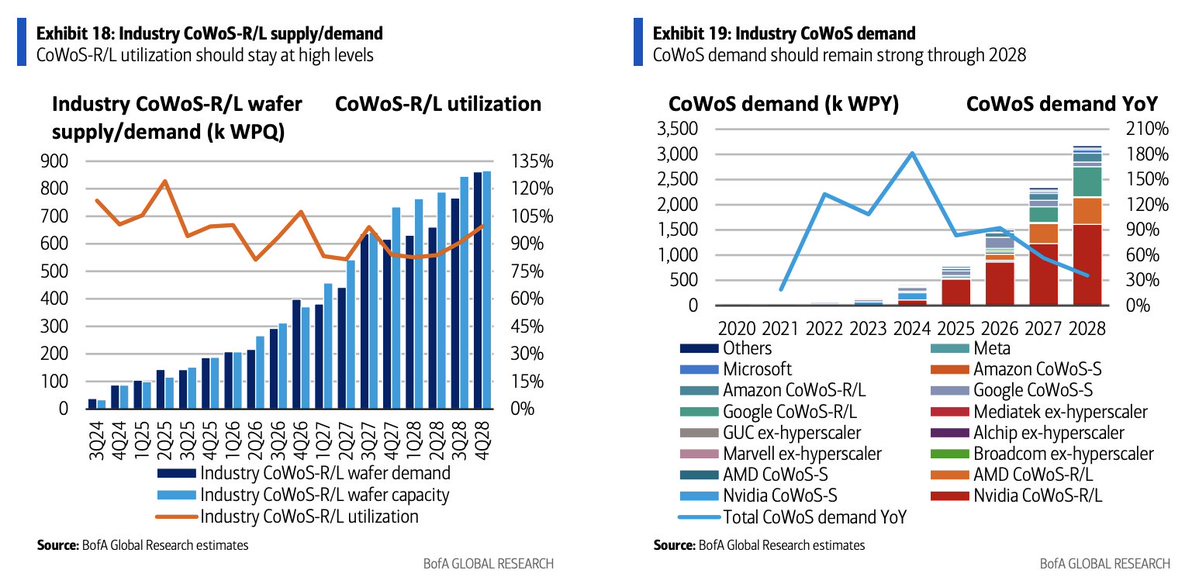
 +1
+1
+1