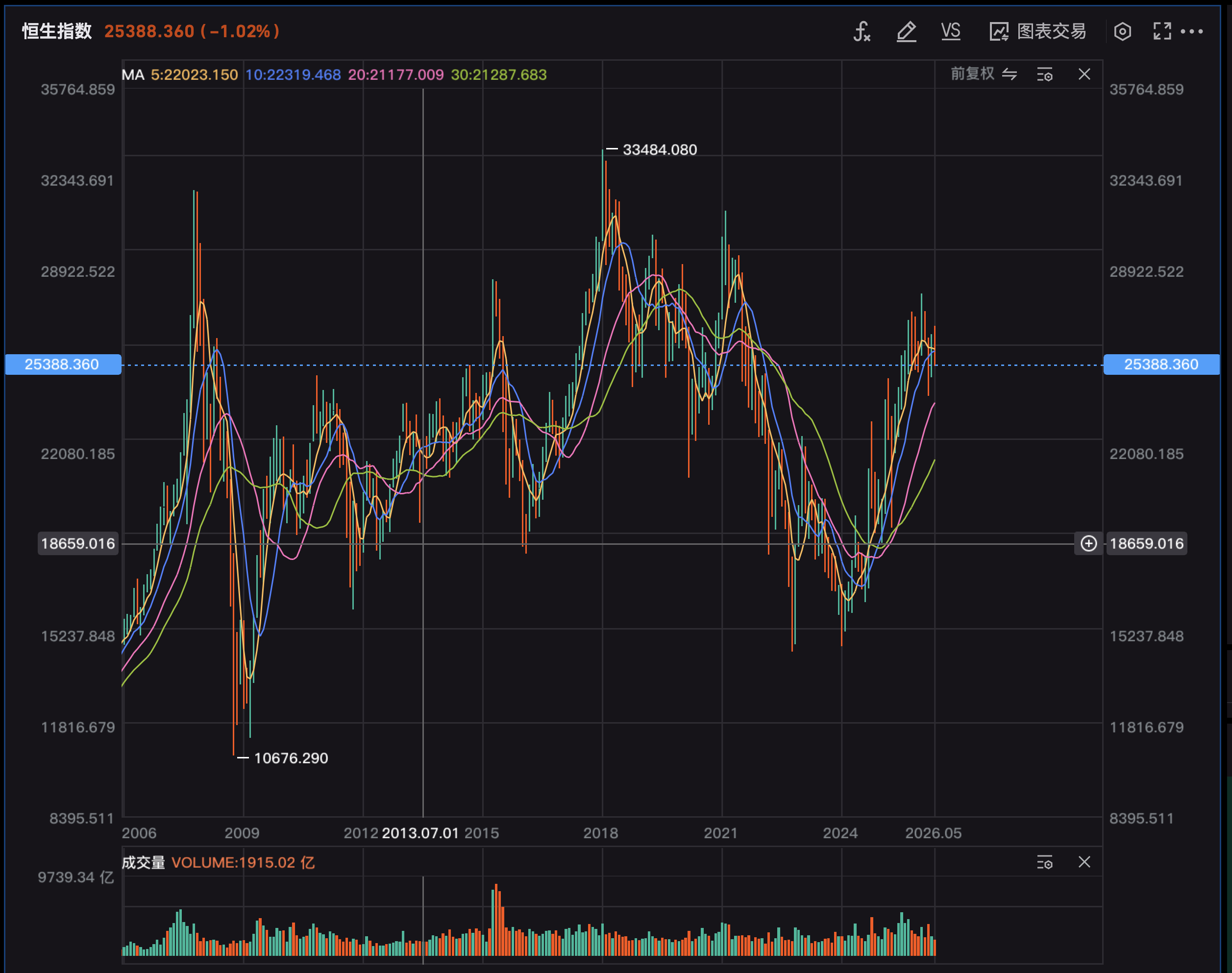
$Hang Seng Index(00HSI.HK) The Hang Seng Index has been fluctuating within a 20-year range. Can you believe it? It's really no different from A-shares; from this perspective


SSE Index
0000013,809.660.59% ( -22.60 )
Share your thoughts
Write something you'd like to share with our community...
- D

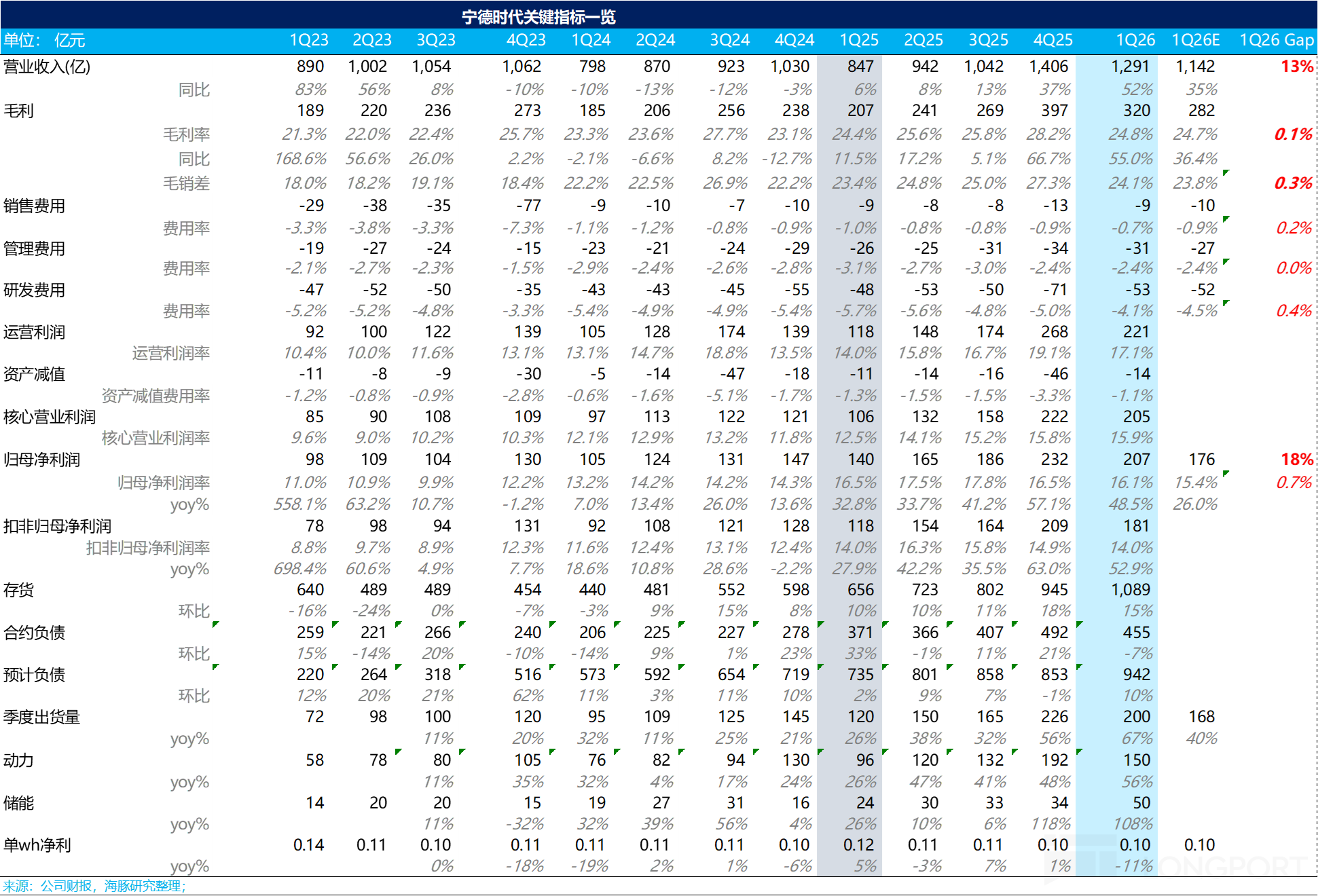
CATL (1Q26 Trans): Q2 builds remain fully booked; capacity utilization holds at 85%-90%.
By 2030, the combined market for power batteries and energy storage could exceed 4 TWh.
Over the next few years, CAGR may surpass 25%-30%.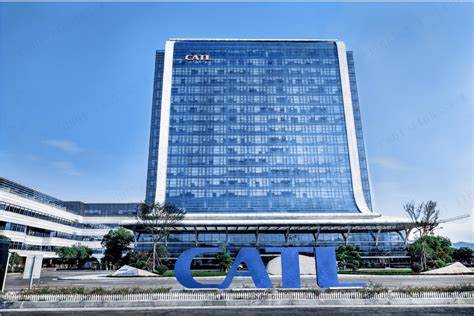 CATLConference Minutes
 - X
Make a rough calculation
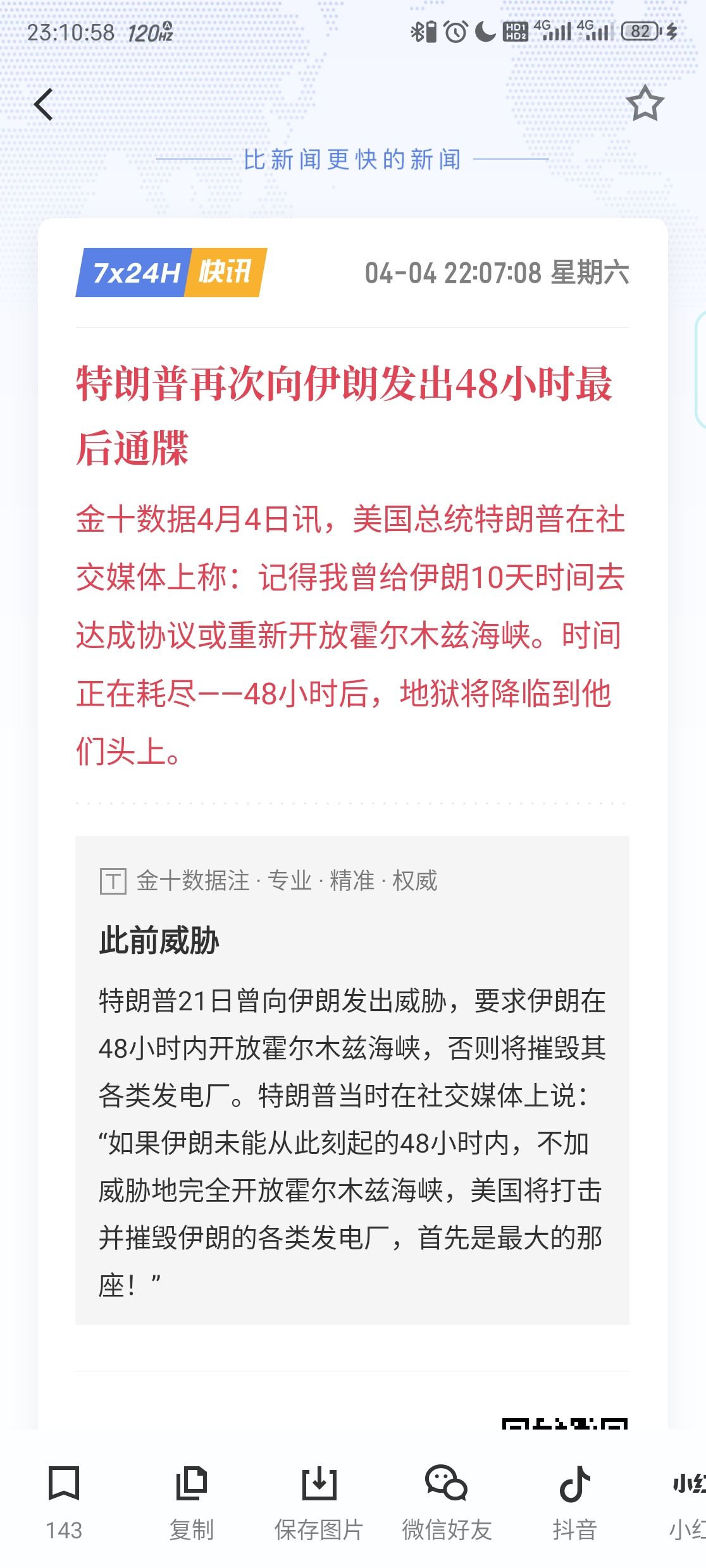
Is this preparing to recreate the April 7 stock market crash? Waiting for the A-share market to open.
- P


Man, you are awesome!!!
What should we start buying in the US stock market next week?
The US and Iran are at war, what to buy when the market opens next week? Almost everyone is saying: buy oil, buy gold, buy defense stocks. But no one tells you: hedge funds' net long positions in crude oil are at a 22-month high, gold has risen for 7 consecutive months, reaching a historical high of $5,278, and the defense sector has already risen 17% to 34% year-to-date. Smart money had already positioned itself before Friday. The price you can buy at Monday's open is the price they are willing to sell to you. In 2020, when the US killed Soleimani, oil prices jumped 4% on the first day, only to give back all gains within a week. In June 2025, when Israel struck Iran's nuclear facilities, oil prices rose over 12%...
- G
What should we start buying in the US stock market next week?
The US and Iran are at war, what to buy when the market opens next week? Almost everyone is saying: buy oil, buy gold, buy defense stocks. But no one tells you: hedge funds' net long positions in crude oil are at a 22-month high, gold has risen for 7 consecutive months, reaching a historical high of $5,278, and the defense sector has already risen 17% to 34% year-to-date. Smart money had already positioned itself before Friday. The price you can buy at Monday's open is the price they are willing to sell to you. In 2020, when the US killed Soleimani, oil prices jumped 4% on the first day, only to give back all gains within a week. In June 2025, when Israel struck Iran's nuclear facilities, oil prices rose over 12%...
- V
So many friends asked, why invest in A-shares? Let me share my thoughts:
1. I don't want to convert RMB to USD. For asset allocation, it's good to have both domestic and foreign investments.
2. The main goal is to make RMB grow, otherwise it will depreciate. So investing in A-shares is just an experiment. Currently, RMB is in Yu'ebao and various bank products, and I also regularly invest in S&P.
3. Ultimately, I want to explore a path for RMB investment, just aiming to beat inflation.
- G
In today’s pre-mkt summary for Subscribers: Equities slipped in front of today’s almost certain 25bp Fed rate cut and new dot plot showing 2 additional rate cuts in 2026; $Warner Bros. Discovery(WBD.US) continues to move higher as investors expect bidding to go above the current $30/share cash offer by $Paramount Skydance Corporation - CL B(PSKY.US); $NVIDIA(NVDA.US) wavered as the Chinese govt considered whether to allow its tech companies to buy Nvidia's H200 chips after President Trump's decision to resume their export to the country; $Aerovironment(AVAV.US) fell after the 43-day U.S. govt shutdown shifted order activity until later in 2026 even as demand remained strong; $Tesla(TSLA.US) rose after Elon Musk said Tesla had "pretty much solved" unsupervised full-self-driving and reiterated that driverless Robotaxis would be available in Austin in three weeks.
- R
$Unitedhealth(UNH.US) I've been keeping an eye on UNH lately. While A-share pharmaceutical stocks have plummeted, this U.S. stock has quietly climbed during this period, steadily maintaining a market cap around $300 billion.
- D
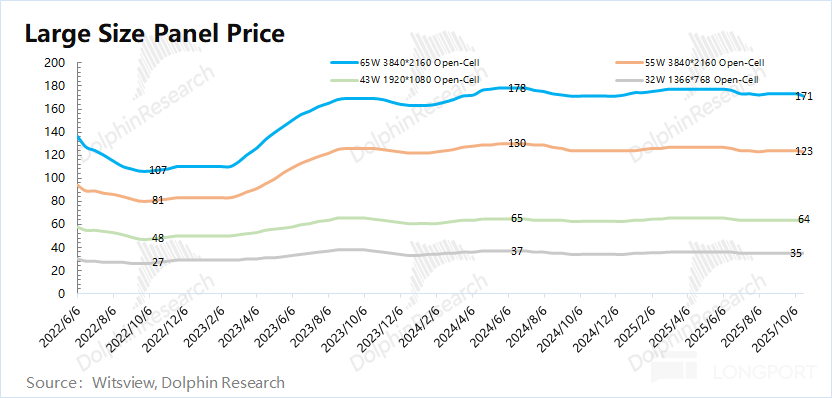
BOE: Panel prices drop again, can a 1% slim profit margin hold up?
BOE Technology Group Co., Ltd. (000725.SZ) released its financial report for the third quarter of 2025 (as of September 2025) after the A-share market closed on the evening of October 30, 2025, Beijing time. The key points are as follows: 1. Overall performance: BOE achieved a revenue of 53.3 billion yuan in the third quarter of 2025, an increase of 5.8% year-on-year. The significant rebound in the company's revenue was mainly driven by the recovery in panel prices. Due to relatively weak downstream demand, prices have started to stabilize, and the company's quarterly revenue remains around 50 billion yuan. BOE's net profit attributable to shareholders for the third quarter of 2025 was 1.36 billion yuan...

 +6BOEFinancial Analysis
 - D
The US-China meeting ends with market volatility; Google and Meta experience 'two different worlds' after hours | Today's Important News Recap
1030 |Dolphin Research Focus: 🐬 Macro/Industry 1. On October 29th, Eastern Time, the Federal Reserve announced its second rate cut of the year by 25 basis points, lowering the interest rate range to 3.75%-4%, and scheduled to end the balance sheet reduction on December 1st. However, the decision saw rare dissent, with one vote advocating for a 50 basis point cut and one vote opposing the rate cut. Powell stated that a rate cut in December is 'far from certain.' U.S. stocks rose first and then fell, with increased uncertainty in December's policy, coupled with high valuations in U.S. stocks, sector rotation may intensify. It is necessary to closely monitor subsequent employment and inflation data...
 Today’s Key News Recap
 - D
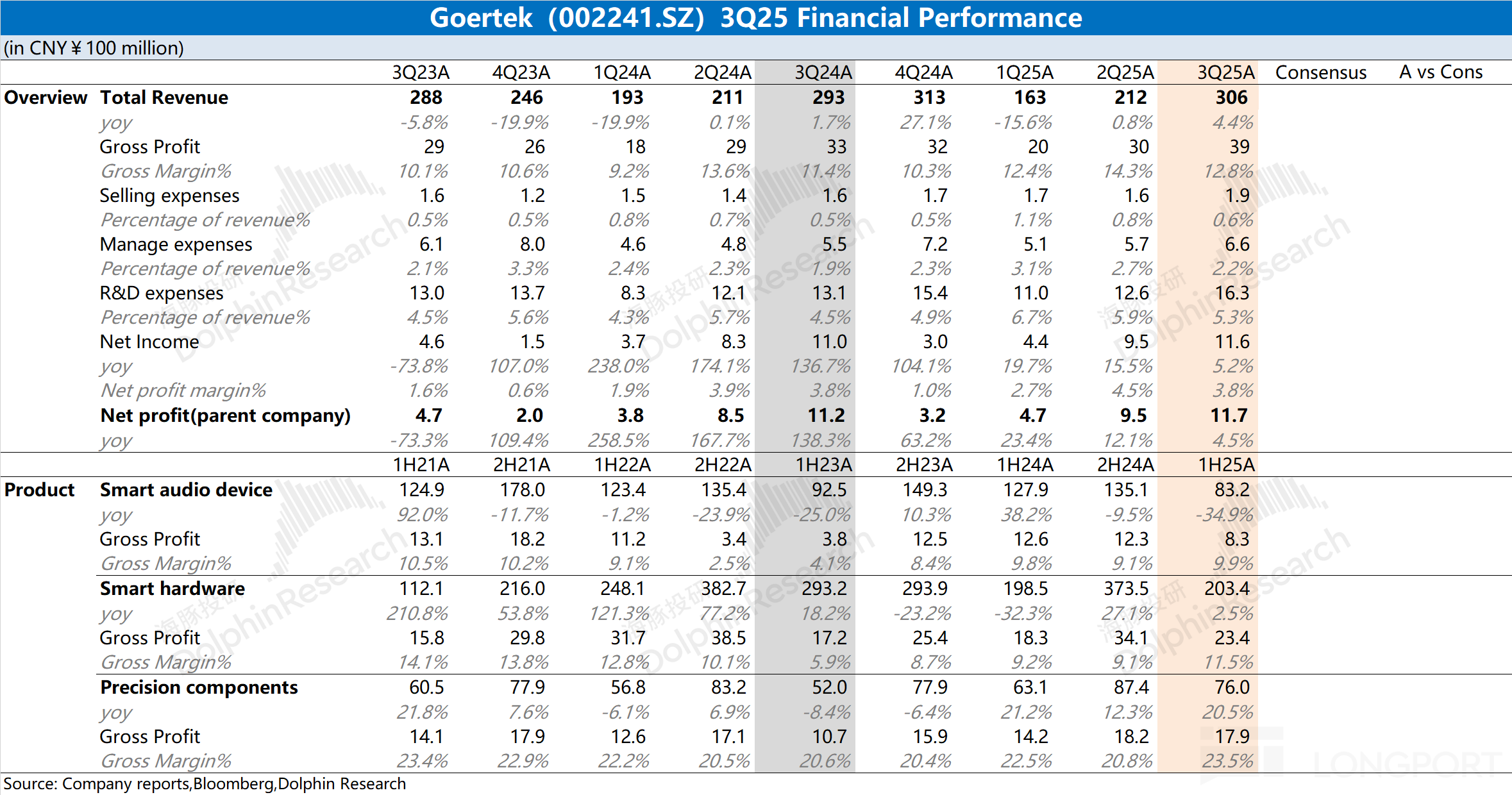
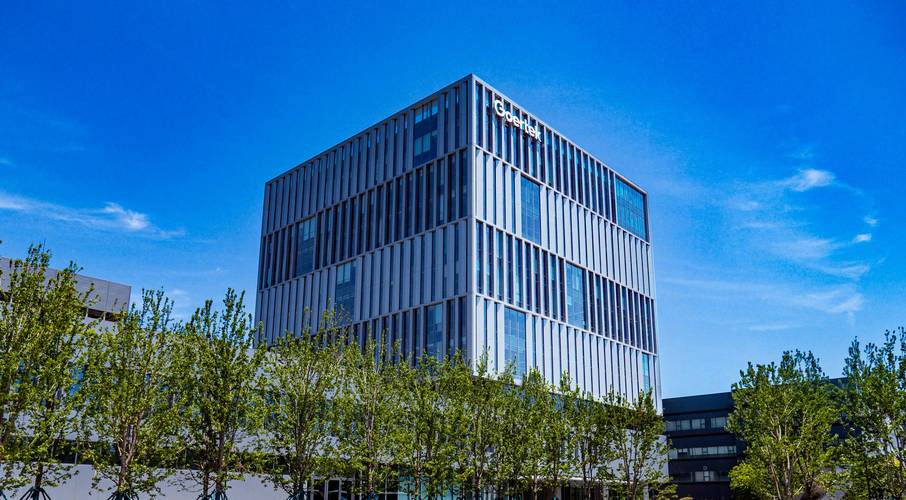
GoerTek: Steady Stocking, Meta's Flat Performance, When Will VR/AR 'Make a Big Move'?
GoerTek Inc. released its Q3 2025 financial report (up to September 2025) after the A-share market closed on the evening of October 24, 2025, Beijing time. The key points are as follows: 1. Overall performance: revenue & gross margin, both have rebounded. ① GoerTek Inc.'s total revenue for the third quarter of 2025 was 30.6 billion yuan, a year-on-year increase of 4.4%, better than the market expectation (28 billion yuan). The growth in the company's revenue was mainly driven by downstream customers' stocking, partly in preparation for the release of new products such as iPhone, AirPods, and MR in September; ② The company's gross margin for this quarter was 12.8%...
+5
GoertekFinancial Analysis - D
The storm has temporarily subsided, will the situation reverse? | Review of today's important news
0410|Dolphin Research focuses on: 🐬 Macro/Industry 1. Trump's "tariff attitude" has undergone a major reversal, authorizing a 90-day tariff suspension for countries that do not take retaliatory actions. A White House spokesperson stated that tailored negotiations will continue. US stocks staged a violent rebound last night, and gold prices surged. It is worth mentioning that US Treasuries faced a fierce sell-off after the tariffs were implemented, reaching an extremely dangerous moment, and only after Trump's attitude reversal did the decline barely stop and begin to recover, avoiding a "collapse" predicament. Today, the markets in Hong Kong and A-shares are rebounding across the board, with the Shanghai Composite Index returning to 3200 points, although the situation has temporarily eased...
 Today’s Key News Recap
 - D
Hong Kong, A accelerates explosion! What happened? | Today's important news review
Dolphin focuses on: 🐬 Macro/Industry 1. Today, both Hong Kong and A-shares were collectively booming, with the Shanghai Composite Index recovering above 3300 points and the Hang Seng Index rising over 2.3%. The market is buzzing with "short essays," mainly focusing on: 1) Two major meetings in December, with rumors suggesting one may be held earlier, as the market speculates on expectations for economic stimulus; 2) It is rumored that the December economic meeting will expand the deficit ratio to 4.5. However, currently, there is no clear evidence supporting these messages, and the direction of sentiment remains difficult to determine...
 Today’s Key News Recap
 - Y
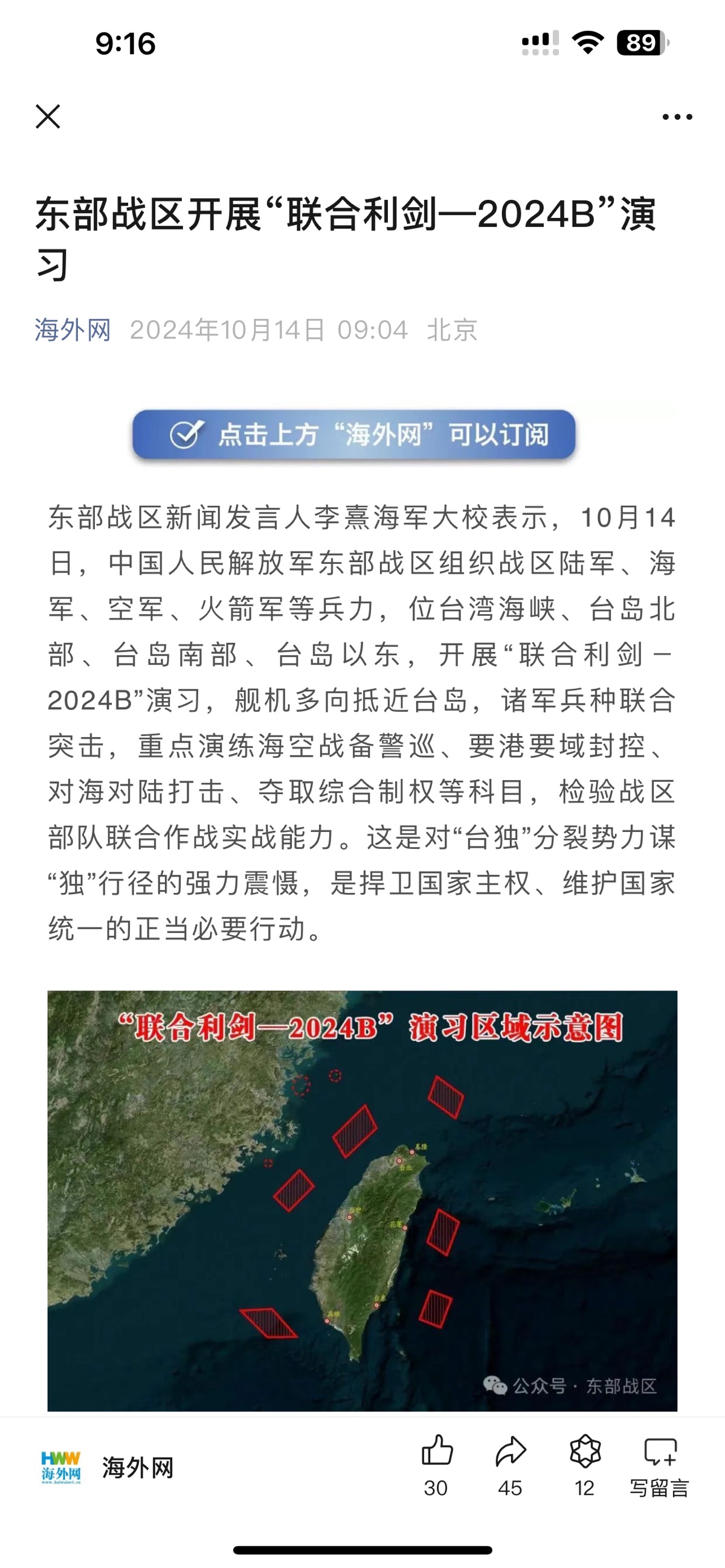
Is the market going to bomb?$SSE Index(000001.SH)$Hang Seng Index(00HSI.HK)
- Y
It would be hilarious if it turns downward$SSE Index(000001.SH)

- Y
Pre-holiday red envelope, the policy finally has some substance
As I've always said, only by taking on more debt can we eliminate debt
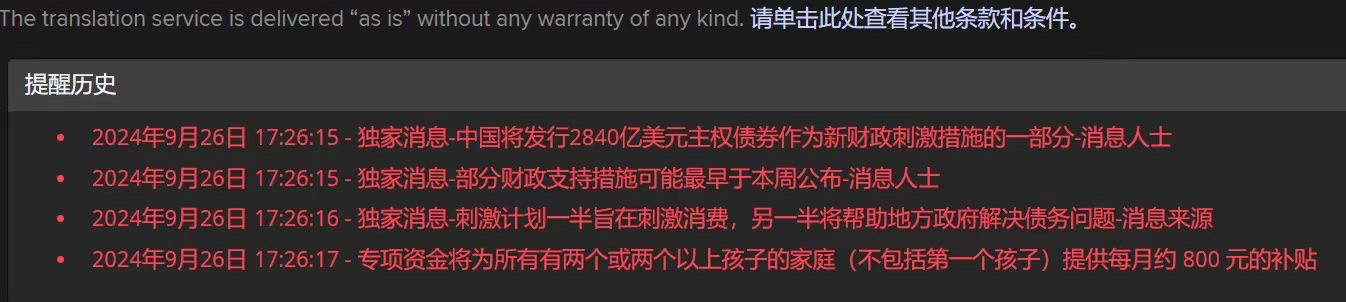
According to Reuters, on September 26, two informed sources stated that as part of a new round of fiscal stimulus measures, China plans to issue approximately 2 trillion yuan (284.43 billion USD) in special sovereign bonds this year. This move will further strengthen efforts to address deflationary pressures and slowing economic growth.
Sources said that as part of this plan, the Ministry of Finance intends to issue 1 trillion yuan in special sovereign bonds, primarily to stimulate consumption and address concerns about the faltering post-pandemic economic recovery.
Some of the funds raised from the Ministry of Finance's special bonds will be used to increase subsidies for consumer goods trade-ins and upgrades of large commercial equipment.
The first source mentioned that the proceeds will also be used to provide an allowance of about 800 yuan (approximately 114 USD) per child per month to all families with two or more children.
Sources also added that China plans to raise an additional 1 trillion yuan through separate special sovereign bond issuances, with the proceeds intended to help local governments resolve debt issues.
Reuters noted that most of China's fiscal stimulus is still directed toward investments, but returns are diminishing, and these expenditures have left local governments saddled with 13 trillion USD in debt. Chinese household spending accounts for less than 40% of GDP, about 20 percentage points below the global average.
Sources indicated that some fiscal support measures could be announced as early as this week. As they were not authorized to speak to the media, the sources declined to be named.
$SSE Index(000001.SH)$Hang Seng Index(00HSI.HK)$Hang Seng TECH Index(STECH.HK)
- Y
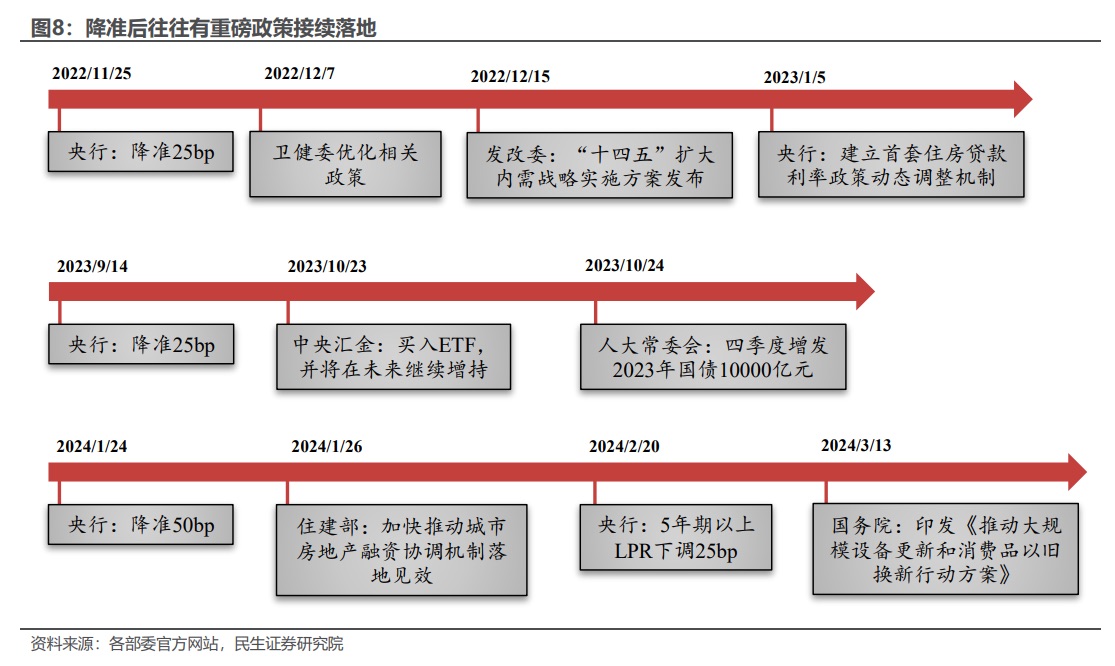
A long drought meets sweet rain! The heavyweight policy is to be continued!
After the rise of AH shares, it's the turn of U.S.-listed Chinese concept stocks! The FTSE China A50 Index Futures expanded its gains to 6%!!!
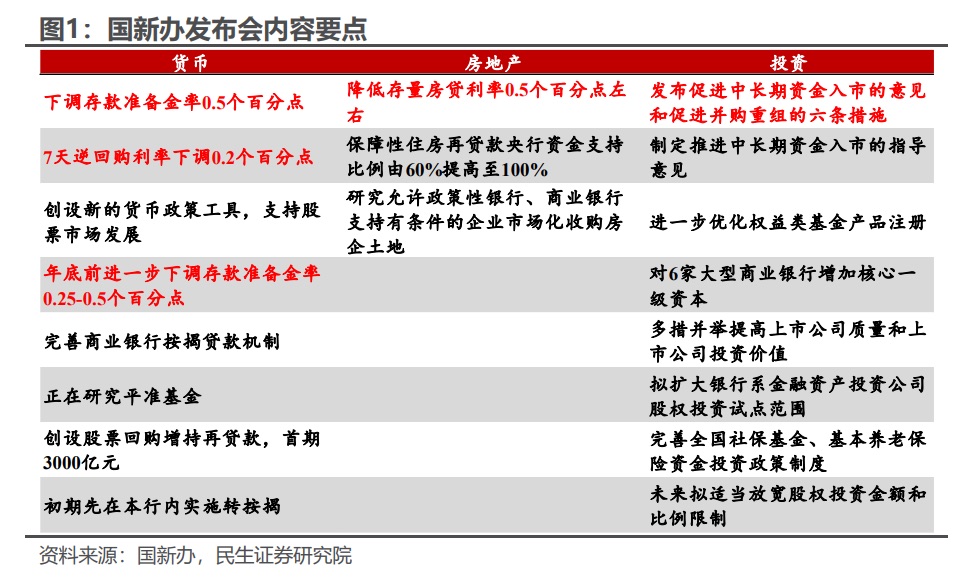
Today's financial "prelude battle" set a good start for the pre-holiday policy expectations. The press conference held by the State Council Information Office this morning, whether in terms of the timing, the level of attendees, or the degree of exceeding expectations in content, highlighted full "sincerity":
· Seizing the last time window of the third quarter is undoubtedly to buy time and stabilize the further recovery of the economy in the fourth quarter.
· The heads of the three major financial departments gathered together, a level last seen possibly at the post-NPC ministerial press conference in March this year.
· Directly addressing the market's most concerned issues such as capital markets, real estate, and financial risks, and centrally introducing multiple incremental policies.
What most "moved" the market might still be the country's more supportive attitude towards the capital market. The central bank newly created two tools to support the stock market this time: the first is to create a swap facility for securities, funds, and insurance companies, with a scale of 500 billion yuan, which can be expanded in the future as needed; the second is to create a special relending facility for stock repurchases and increases, guiding banks to provide loans to listed companies and major shareholders to support repurchases and increases in stock holdings.
From a specific operational perspective, stock assets have essentially become collateral for the central bank's liquidity injection and bank credit expansion, which is the first time in the history of China's monetary policy, and it is of great significance to the stock market.
According to historical experience, RRR cuts are often the "vanguard" of a package of policies, and more follow-up policies to stabilize the economy may already be "on the way." Monetary policy has shown a loosening trend, and after the fiscal stock policies are used up, fiscal loosening follow-ups may also be on the way.
$Hang Seng TECH Index(STECH.HK)$Hang Seng Index(00HSI.HK)$SSE Index(000001.SH)$Direxion FTSE China Bull 3X(YINN.US) $Direxion CSI China Internet Index Bull 2X(CWEB.US)

 +3
+3 - Y
There is only one way to save the economy,
Economically: Flooding the market with liquidity + extremely proactive fiscal policies, using new debt to eliminate old debt...
Politically: ...
The policy signal of not cutting LPR
The unchanged LPR in September does not mean the policy will continue to stay firm. With the Fed cutting rates by 50bp in September, today's unchanged domestic LPR is indeed somewhat surprising. Minmetals Securities tends to believe that the intensity of current policies may be more critical. Especially considering that the economy in September may slow further compared to August, to "strive to complete" the annual targets, introducing policies at the end of Q3 or the beginning of Q4 is undoubtedly necessary. More importantly, a systematic and coordinated "combo of measures" may be the key reason why the LPR was "temporarily" not cut today.
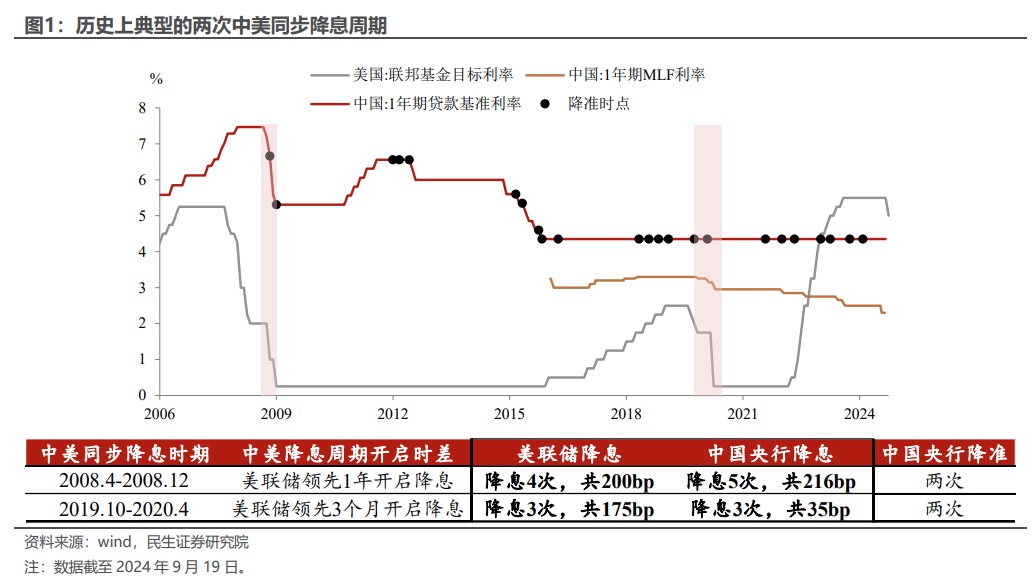
Historical experience: When overseas rate cuts materialize, domestic monetary policy also eases, though the timing is not entirely synchronized. In the two typical overseas rate-cutting cycles (2008, 2019-2020), domestic monetary policy also turned accommodative, but in both cases, the timing of domestic easing was slightly later than overseas.
To balance reducing social financing costs and stabilizing bank interest margins, China's economy may first cut existing mortgage rates and then the 1-year LPR, which could be the optimal choice at present.
$SSE Index(000001.SH)$Hang Seng Index(00HSI.HK)$Hang Seng TECH Index(STECH.HK)