$Micron Tech(MU.US)
If let say it dips till $700 I will re enter again.
Don’t say it never happens, cos it is already on the roller coaster.


Write something you'd like to share with our community...

$Micron Tech(MU.US)
If let say it dips till $700 I will re enter again.
Don’t say it never happens, cos it is already on the roller coaster.
$Micron Tech(MU.US) $CXMT(688825.SH) CXMT (688825.SH) became one of the most closely watched semiconductor listings in China.IPO price: RMB 8.66First-day close: RMB 49.00First-day gain: about 465.82%Market ca...



As I have mentioned before, this market is long overdue for a proper correction and memory stocks could be the first to lead it down.
CXMT’s upcoming listing isn’t just another semiconductor IPO. It’s a direct challenge and a far bigger threat to SK Hynix, Micron and every other player in this space. Yesterday’s sharp drop in memory stocks?
It could be a healthy correction or it could already be pricing in this new competition. Either way, the market has spoken and we can all see it.
How far will this pullback go? I expect it to be short‑term. But over the medium run, memory stocks must deliver on their growth story ,just like Tesla. If cannot deliver, the market will punish them hard.
☕️ [Task Coins Giveaway] Daily Market Talk — Apple Retakes the Crown as Nvidia, SK Hynix Slide
Nvidia's biggest bet is looking shaky. Nvidia (NVDA) sank about 5%, its worst day since February, on fears its reported $250B OpenAI financing guarantee is circular financing in disguise, handing Appl...
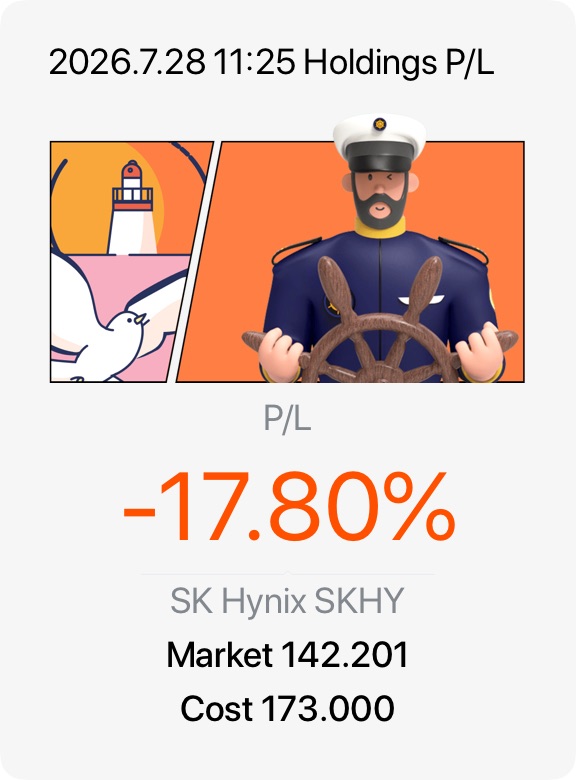
$SK Hynix(SKHY.US)$SK Hynix(SKHY.US)
Yesterday result isn’t today performance.
It will rebound to higher than 170 level in no time.
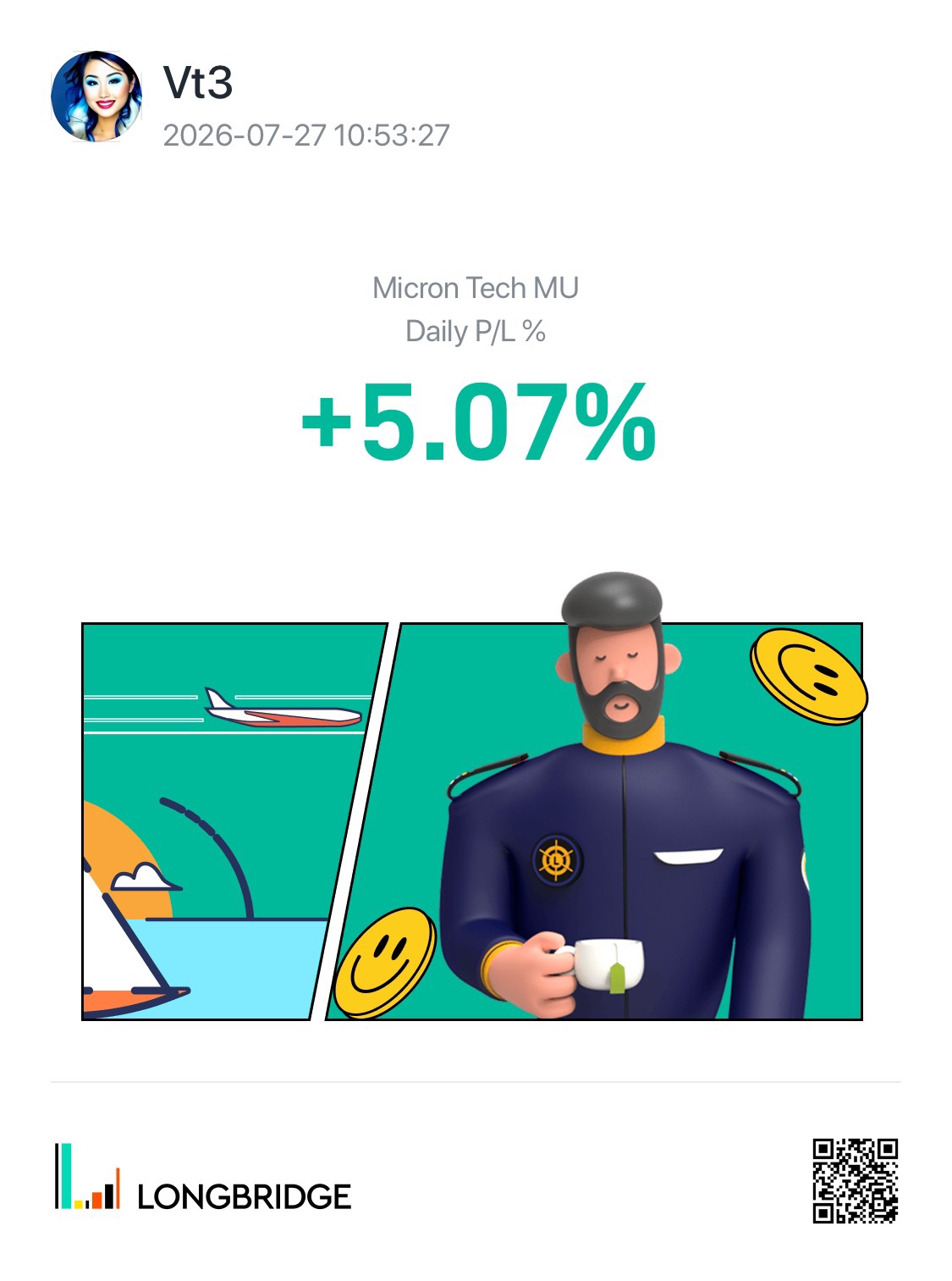
SO, did I manage to resist myself not to buy more last session, especially am 👀 at MU prices flashing at $854?
Left 4 days to reveal the drying July, what comes down is an opportunity as opening to goes up in multiple sessions!
Just a 5 cts of my morning break thought definitely do not follow me☕️☀️
SK Hynix Q2 Earnings Preview & Explanations:
Q1 -> Q2 profit walk based on things like: revenue accruals, wafer economics, utilization game theory, etc.- Revenue: ₩82.5tn- Operating profit: ₩63.0tn- Margin: 76%Just sharing my estimates based on my ongoing research and assumptions.Q2 operating profit walk:1. Q1 2026 operating profit reported: ₩37.6T2. Pricing (DRAM blended ASP of plus low-40s%, NAND plus ~55%): +₩24.5T3. Volume (DRAM bits +6%, NAND bits +17%): +₩3.4T4. Cost-down & operating leverage: +₩1.8T5. M15X early-ramp depreciation & start-up costs: -₩0.5T6. FX (won appreciation reversing Q1 tailwind): -₩1.2T7. Profit-share accrual: -₩2.4T8. One-offs e.g. Nasdaq listing costs: -₩0.2T= Q2E operating profit of ₩63.0TMy operating profit is slightly below ₩64.1tn consensus, yet above KIS Securities of ₩60.4tn.Probably because of more conservative pricing numbers which I explain below.-> Pricing: +₩24.5TReally, this is where most estimates differ due to SK Hynix's DRAM book being repriced with the spot rate.Essentially, their book is split in two parts where roughly half is under multi year LTAs and the other half rides against the spot rate, which ran up 50-60% for convential DRAM in Q2.When you blend them, DRAM ASP comes to the low 40% range.NAND is a little cleaner w/ eSSD mix-shift + QLC contract momentum putting blended ASP at roughtly +55%. No LTA drag on this side either vs. DRAM.So just very conservatively assuming that volumes are flat, and then repricing the Q1 base (DRAM ~₩41.5tn, NAND ~₩10.5tn):Means that pricing along contributes ~₩25tn of revenue at the low end. Which flows down to OP at ~97% before any incentive lines kick in as price carries no wafer costs, only things like freight and royalty crumbs attach.Meaning that price is essentially pure margin (as we've become accustomed to).That's why pricing is probably way more important than volumes for memory companies right now. On sensitivity analysis also:Each "point" of blended DRAM ASP is worth ~₩0.42tn of operating profit.Which is why I have a gap to consensus estimates.The entire gap between me and consensus (₩2.1tn) is 4-5 points of DRAM ASP assumption.So consensus at ₩64.1tn is a bet that the spot-exposed half of SK Hynix's book is materially larger than half, or that LTA resets were more material than +15-25%.E.g. KIS Securities' model ₩60.4tn OP, which is essentially them using way more conservative pricing assumptions where they carry DRAM ASP nearer to +30%.Which means that they assume that the LTA portion of the book is more dominant. I believe that the real "truth" about the LTA structure, which SK hynix has never fully disclosed, gets revealed on Wednesday's earnings by the ASP numbers itself.So this quarter is a bit of an experiment into my modelling that actually measures their contract business.Regardless, it'll be fun to see how far off I was based on my limited info + static assumptions through Q2.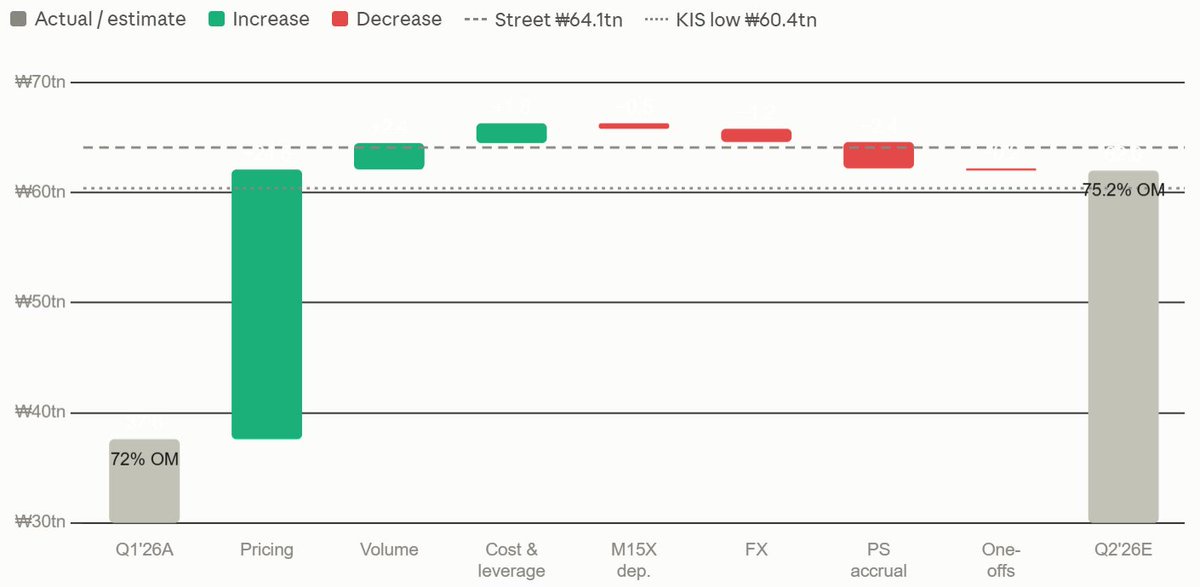
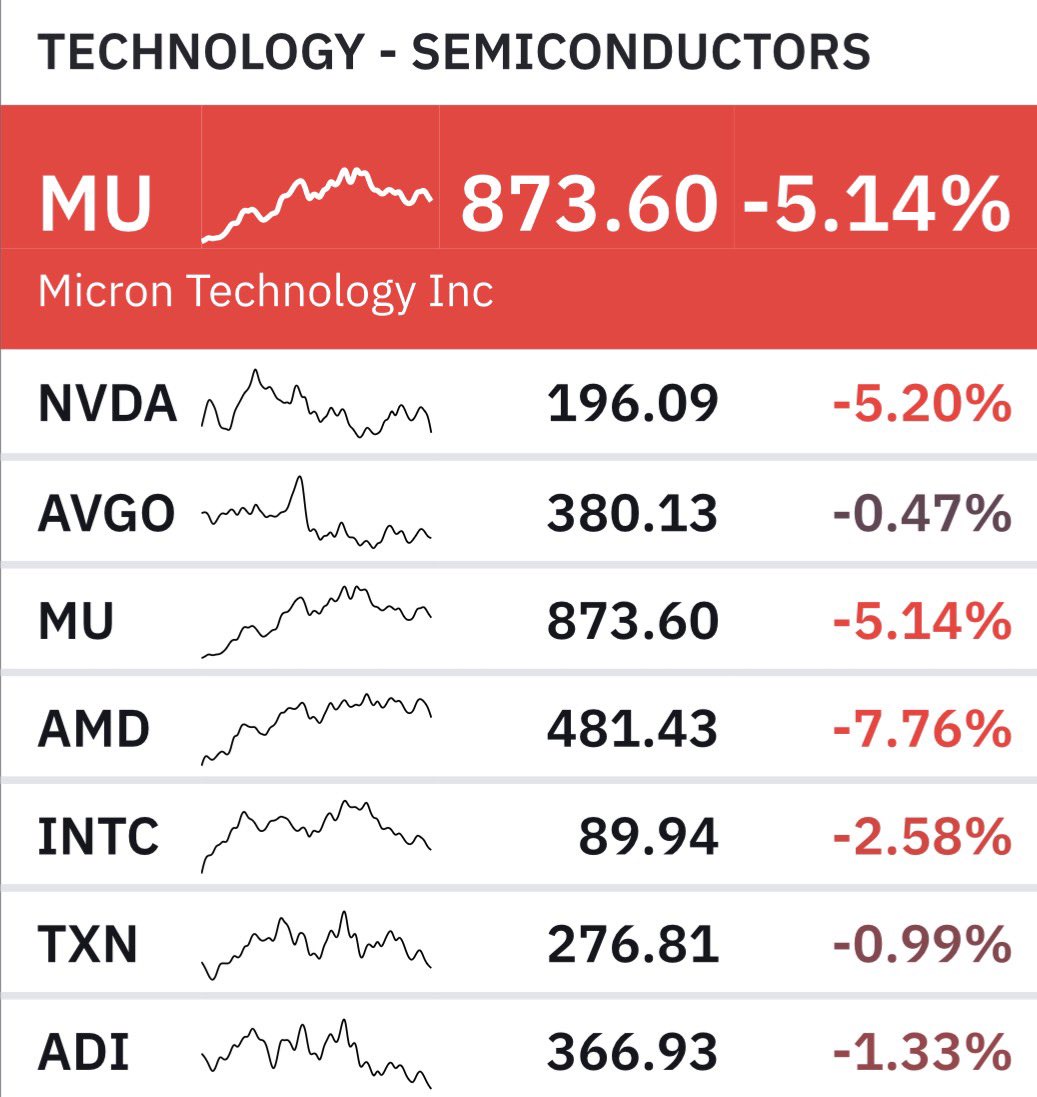
This is turning into of the worst days for Semis all year.
Market seems to be reacting to a few things: - A Chinese state-backed company has started mass-producing its own DUV lithography machines. The market is worried that the development could reduce China’s dependence on Western suppliers like ASML and weigh on future equipment demand- NVDA backstopping OpenAI’s new datacenter buildout with $250B is making the market think that things are getting a bit too circular- NVDA investing $5B into a new AI startup once again is creating fears of circular financing- China just had their second largest IPO ever and it was a memory company which is now making the market think that oversupply of memory and a peak in prices is underwayTrump tried to calm down markets by saying that the US and Iran are talking, which got Oil down 7%, but isn’t really helping the chip stocks. Usually, a drop on oil that big would explode high beta names like semis but the market seems to be taking the China buildout threat seriously.Effectively, the market is saying that China supply coming through means the constraints that create the pricing/earnings power for the semis is diminishing. I’m not sure if this is actually true, especially given how new these reports are, but it goes to show how fragile the entire semi trade is if a headline like this can wipe out $500B+ from the entire sector today. As always, if semis go down hard, the software names go up which is why software is rallying heavy today.Are you buying the semi dip or is this a legitimate concern? $Micron Tech(MU.US) $Sandisk(SNDK.US) $Intel(INTC.US) $NVIDIA(NVDA.US) $AMD(AMD.US)Source: amit
The AI bubble might soon be popping:
$Sandisk(SNDK.US): -11.65%$AMD(AMD.US): -8.04%$Lam Research(LRCX.US): -7.19%$ASML(ASML.US): -7.04%$Intel(INTC.US): -7.89%$NVIDIA(NVDA.US): -5.25%$Applied Materials(AMAT.US): -5.99%$Micron Tech(MU.US): -5.36%$Marvell Tech(MRVL.US): -4.08%$Taiwan Semiconductor(TSM.US): -2.53%$Micron Tech(MU.US) There were days this was getting $100M to $150M in Calls. Now it's $10M Calls $12M Puts.
You NEED WHALES to Move Markets.Until Then - It's Chop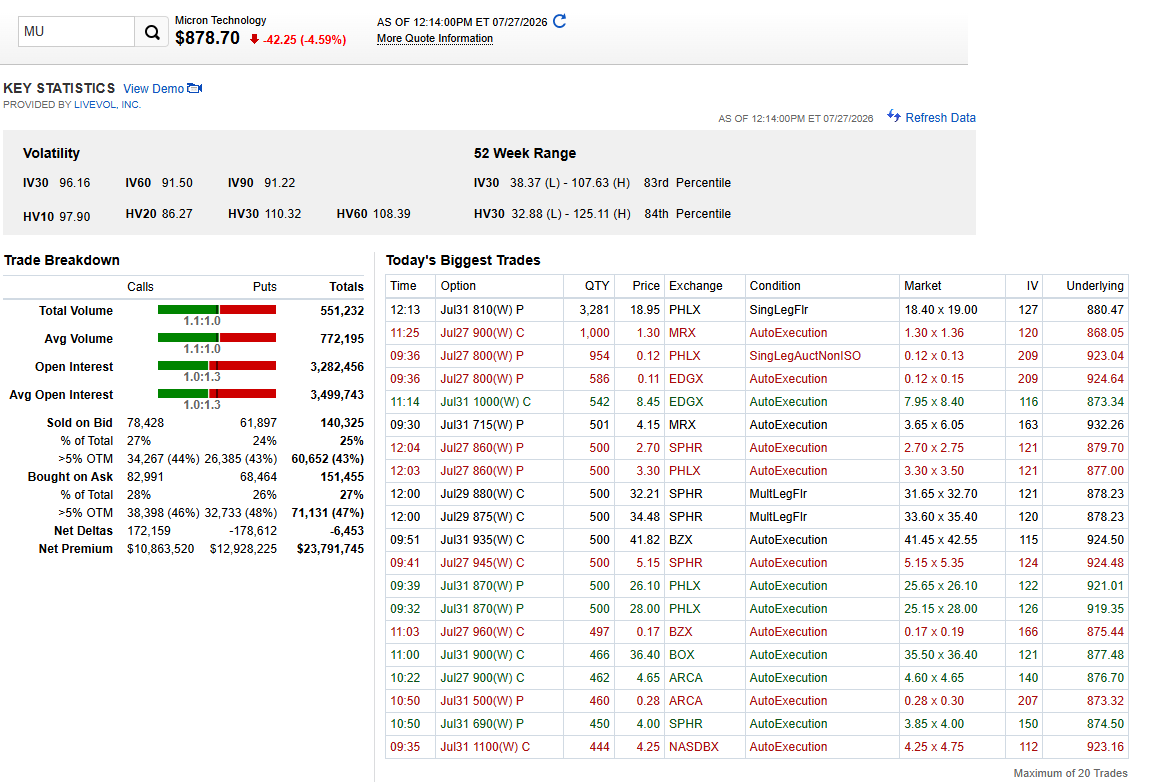
$Micron Tech(MU.US) will Have a RUN in Q4 to Q1.
For Now - PUMPS are BEING NET SOLD!Memory Summer = RUBICON TRAIL VERY HARD TO CROSS - OLD SCHOOL KNOWLEDGE$Micron Tech(MU.US) Price Below 8/21/50 and Chinese Competition is Coming online.Tactical Bounces Sure - All The time.But the Multi- Month Run it had may be stalled for awhile.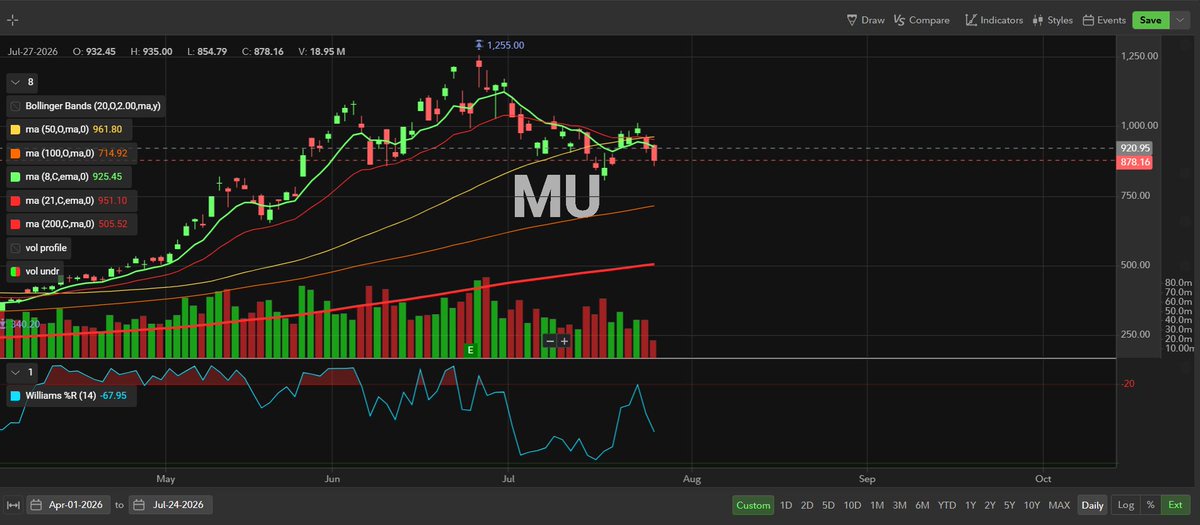
$Micron Tech(MU.US) a rung of the high cost shares sold for good coin.
Source: Sunrise Trader
$Micron Tech(MU.US)
MU is well positioned for continued growth, fueled by AI infrastructure demand and tight memory supply. Analysts expect a return to record highs within months, but volatility and supply expansions risks remain.
On a whole, I am in favour to this trade.
This week I supposed to take a glance of a few good others such as
$Marvell Tech(MRVL.US)
$Intel(INTC.US)
$SpaceX(SPCX.US)
Where almost all turned ❤️
They always said, bite the bullet and hold your 🐎
Hope this works to close drying July!⬆️🆙🙏😝😅😹🎯🥳⚖️🔥
Needham: WFE & Memory
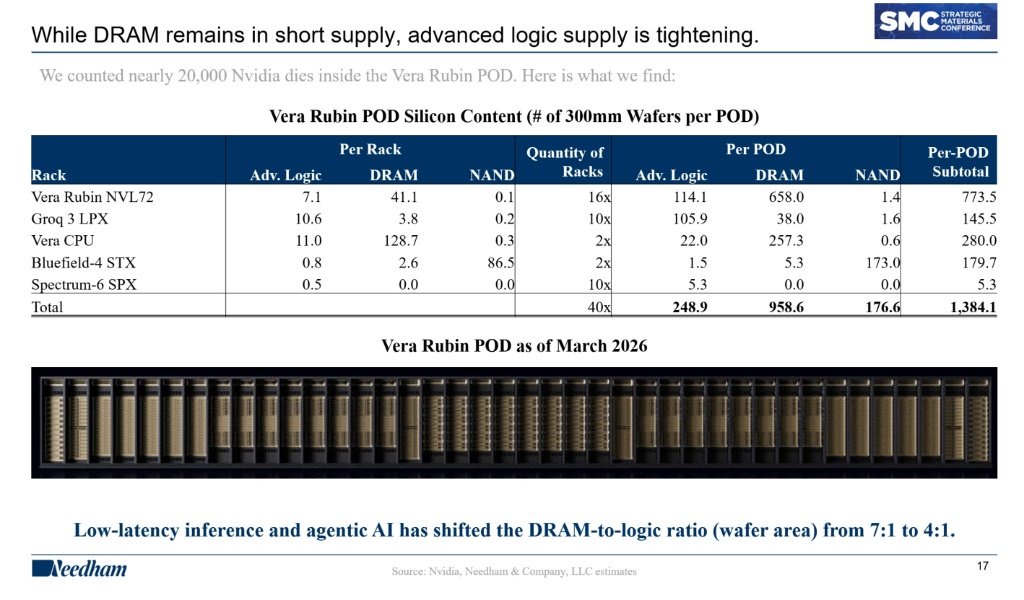
WFE Requirements for Vera Rubin PODs> 1 Million GPUs Impact: Building out greenfield fab capacity to support 1 million Rubin GPUs (roughly 5 GW of data center capacity) drives $14 billion in WFE, split roughly evenly between DRAM/HBM and logic.> WFE Intensity Floor: The total WFE intensity for a Vera Rubin POD sits around 9%, which is expected to act as the intensity floor moving forward.> Growth in Spend: Compared to an individual Rubin GPU package, a full Vera Rubin POD sees a 225% total WFE increase, driven heavily by surges in advanced logic (up 256%) and DRAM/HBM (up 164%).Silicon Content & Ratio Shifts> Total Die Count: Nearly 20,000 Nvidia dies are packed into a single Vera Rubin POD.> Wafer Area Shift: The rise of low-latency inference and agentic AI has shifted the DRAM-to-logic ratio (wafer area) from 7:1 down to 4:1.> Supply Dynamics: While traditional DRAM remains in short supply, the market is seeing advanced logic supply tighten correspondingly.> POD Subtotals: Across its 40 total racks (spanning NVL72, Groq 3 LPX, Vera CPU, Bluefield-4 STX, and Spectrum-6 SPX), a single Rubin POD requires roughly 1,384 total 300mm wafers, dominated heavily by DRAM (958.6 wafers) and advanced logic (248.9 wafers).$NVIDIA(NVDA.US) $Micron Tech(MU.US) $DRAM $EWY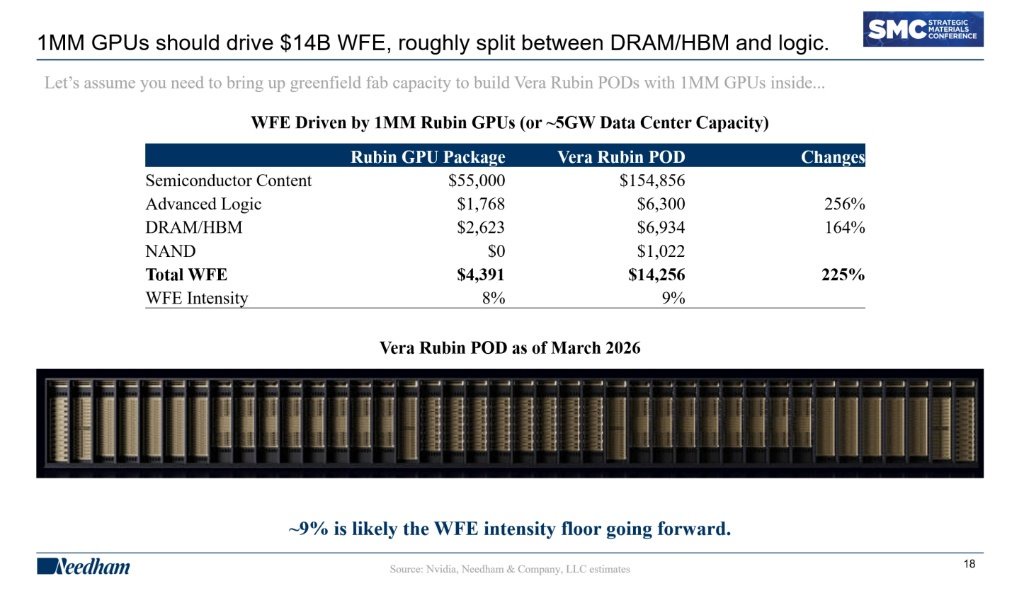
Needham: "DRAM/HBM will remain a real bottleneck for AI."
> DRAM/HBM Bottleneck: DRAM and High Bandwidth Memory (HBM) are projected to remain significant bottlenecks for AI hardware scaling.> Rapid Bit Growth: Total DRAM bit growth (millions of GB) is expected to expand dramatically through 2028, driven heavily by increasing HBM adoption.> Surging HBM Share: HBM bits as a percentage of total DRAM are forecasted to grow steeply, scaling past 15% by 2028.> Wafer Capacity Shift: DRAM wafer capacity dedicated to HBM (measured in kWSPM) is projected to accelerate sharply, with expectations that nearly 50% of total DRAM wafers will go into HBM by 2028.$Micron Tech(MU.US) $DRAM $EWY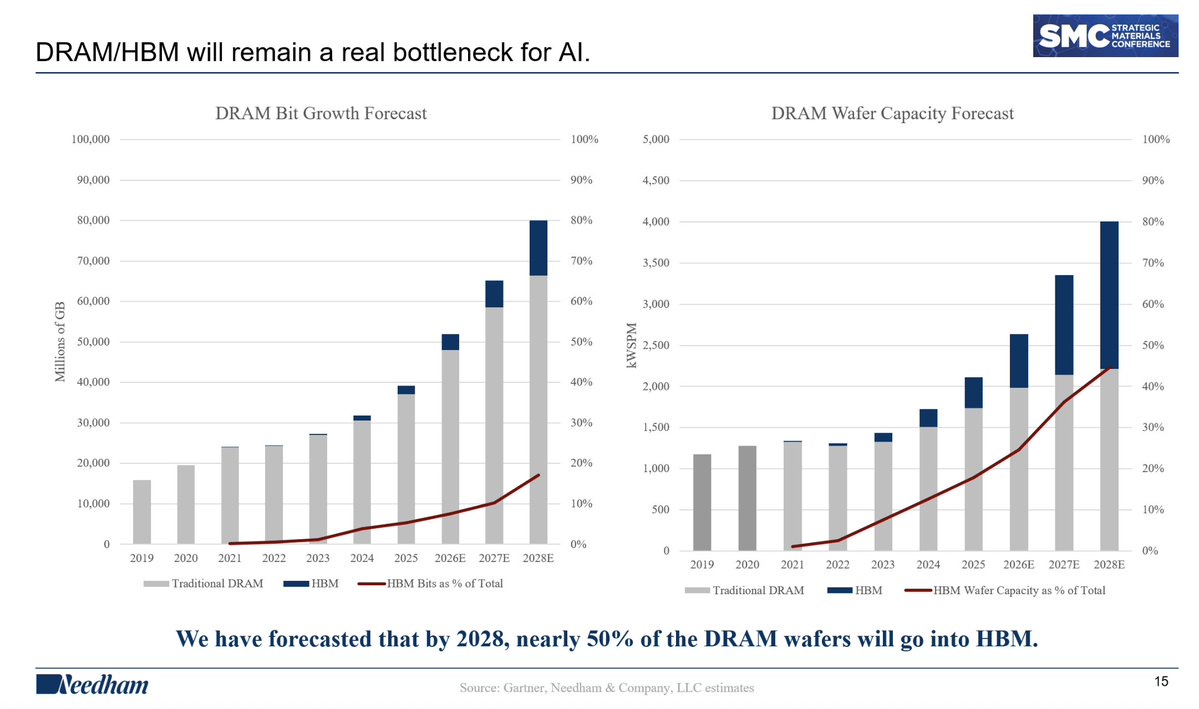
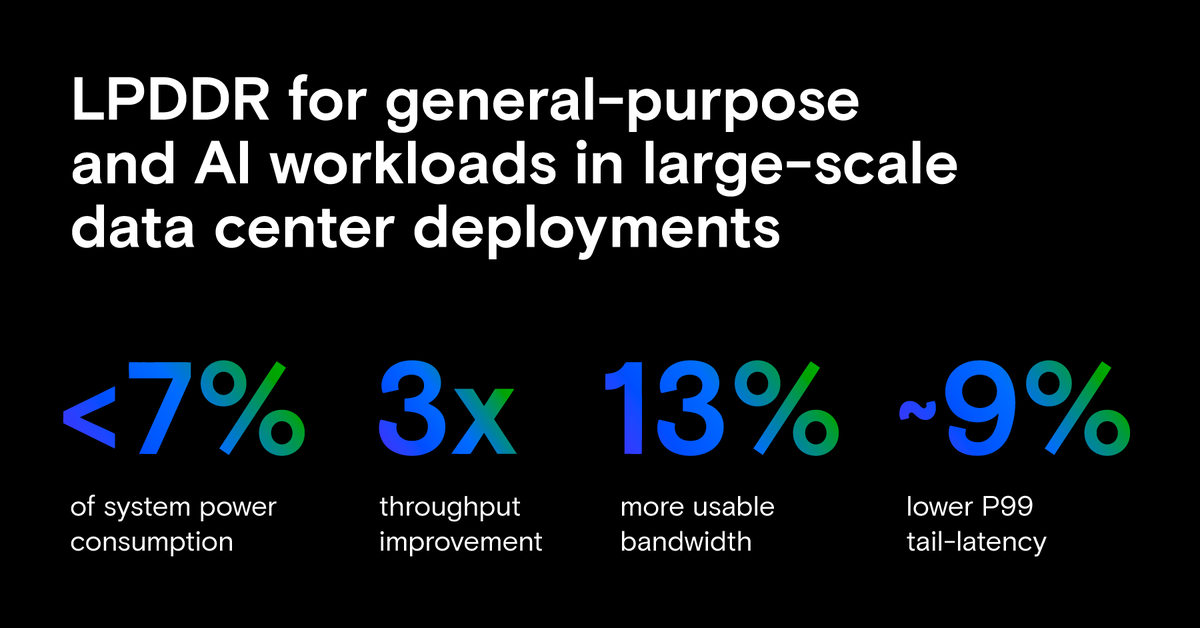
New research from Micron and @Meta explores LPDDR5X performance in large-scale data center workloads using Meta’s open-source DCPerf benchmark suite.
The results challenge conventional thinking, showing how low-power memory can help balance performance, capacity and energy efficiency across both AI and general-purpose workloads. Read the analysis:Source: Micron Tech

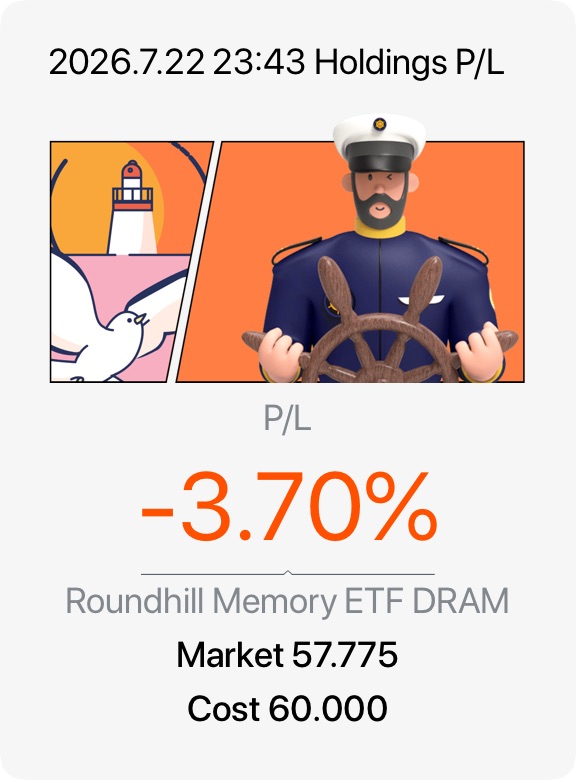
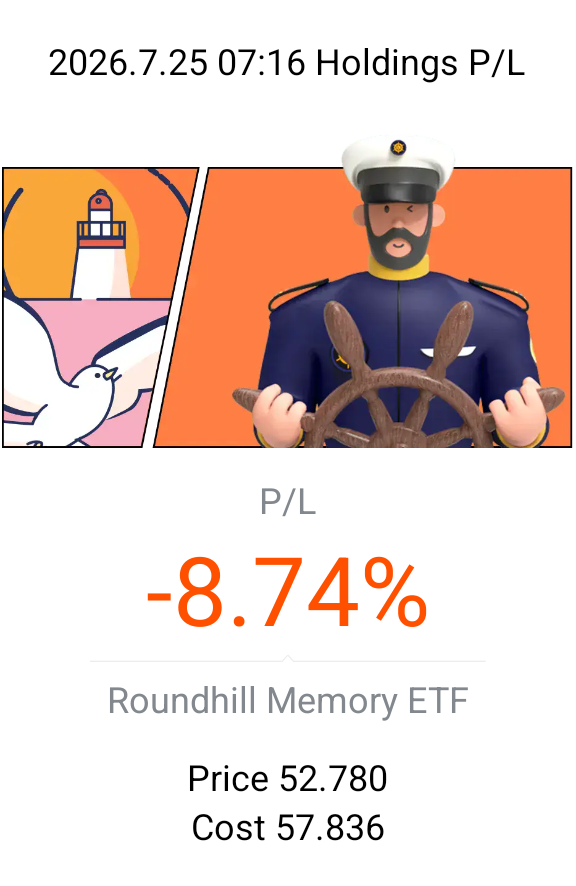
$Roundhill Memory ETF(DRAM.US)dram is down yesterday, will it goes up.
What does it take to create one of the cleanest environments on earth?
Go behind the scenes at Micron’s ID1 facility in Boise, where teams reached a major construction milestone earlier this year known as 'blowdown' — an important step in preparing the cleanroom for semiconductor manufacturing equipment.From a massive construction site to a precision environment built for innovation, this transformation is powered by incredible teamwork, expertise and attention to detail. Watch the story behind the milestone.Source: Micron Tech
$Western Digital(WDC.US) is my favorite after $Micron Tech(MU.US). +236% YTD, not bad right?
Western Digital rode that wave hard, then joined the July cooloff with the rest of the hardware names. If you’re in it, trail it.If you’re late, wait for the market to offer a better price than pride. We need some cooling off in these names.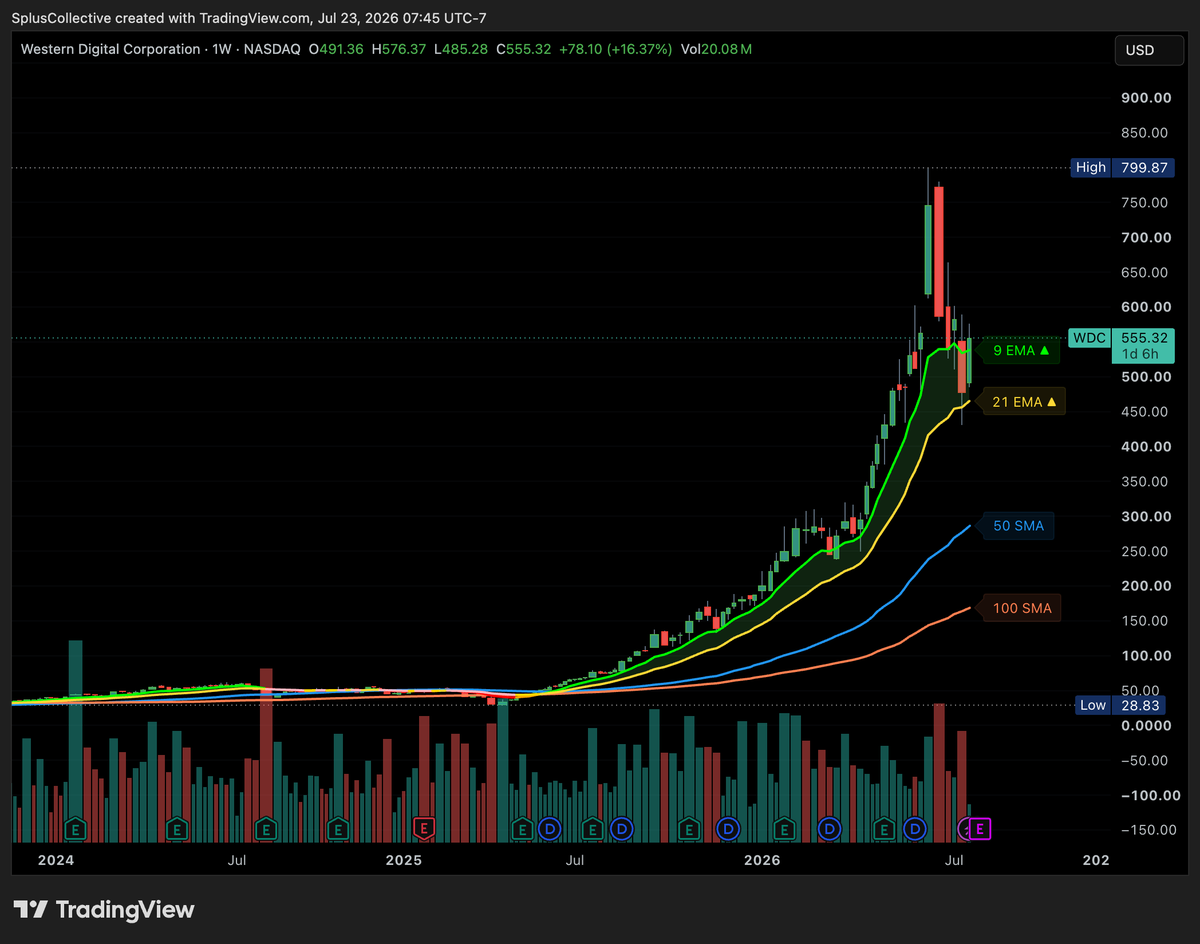
$DRAM is still an interesting short setup. Some names like $Micron Tech(MU.US), $Western Digital(WDC.US) while backtesting is holding this up, once this trend-line gives up I think we will see a good roll on the rock.
PT: Later once we see the breakdown begins.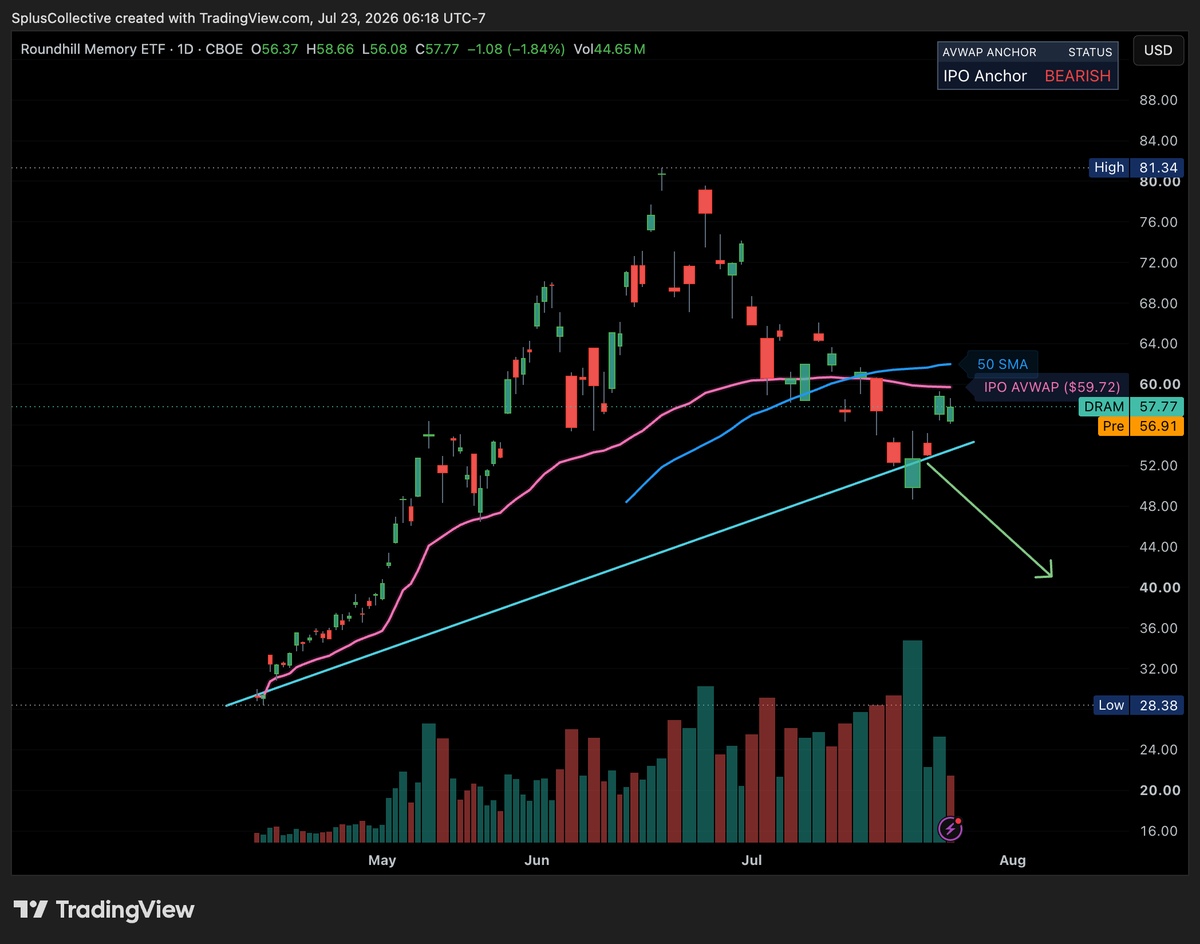

AI5 chip expected to enter mass production by mid next year

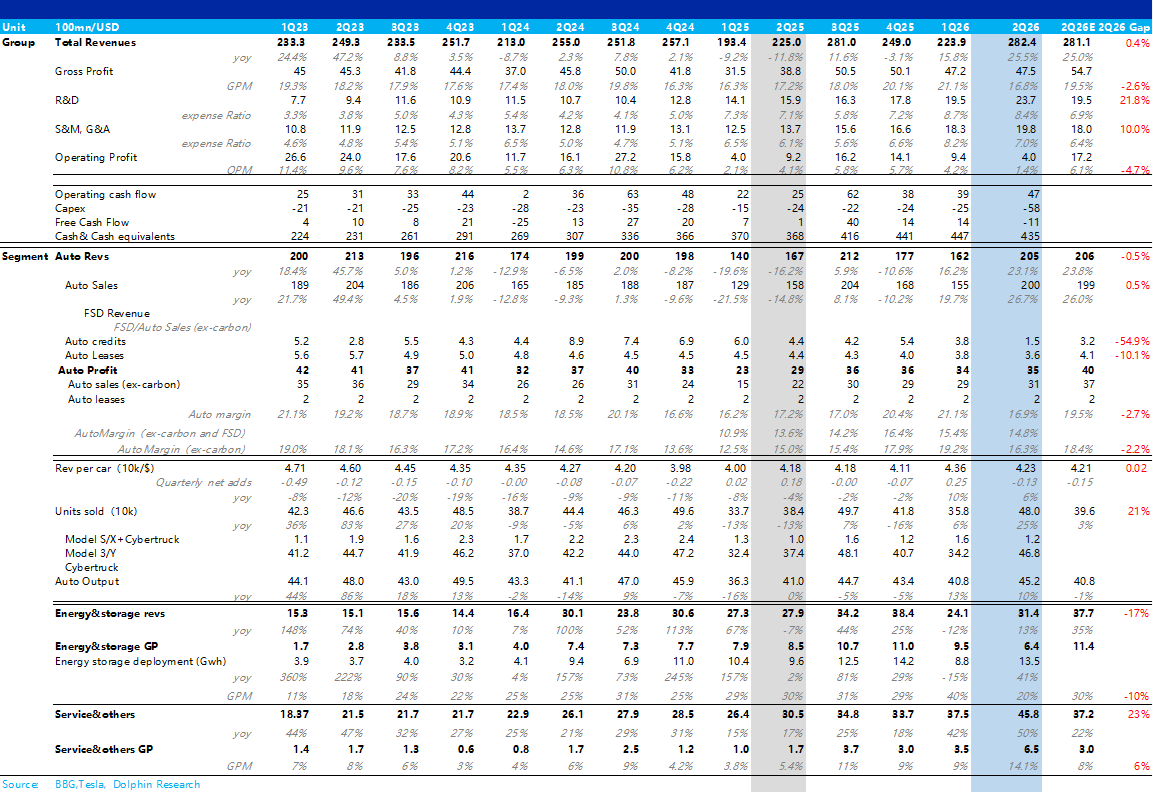

$Roundhill Memory ETF(DRAM.US)’s concentrated, pure-play structure makes it a high-volatility vehicle, more amplified than broad semiconductor ETFs. It tracks the AI-memory narrative tightly but inherits the sector’s historical cyclicality. Recent action shows classic “buy the rumor / sell the news or guidance” behavior mixed with genuine profit-taking after a parabolic phase.
The July 21 rebound occurred against a backdrop of still-elevated physical prices and ongoing shortage commentary, but after-hours/pre-market quotes around that period showed some giveback, underscoring continued two-way risk.
This pattern aligns with the broader AI hardware / HBM customization and demand cycle discussions (structural token-throughput driven demand potentially differentiating from traditional DRAM cycles, alongside capacity and contract dynamics). Volatility is likely to remain elevated near term around earnings, guidance, and any shifts in hyperscaler capex signals.
@Captain's Treasure