BofA: AI LLMs
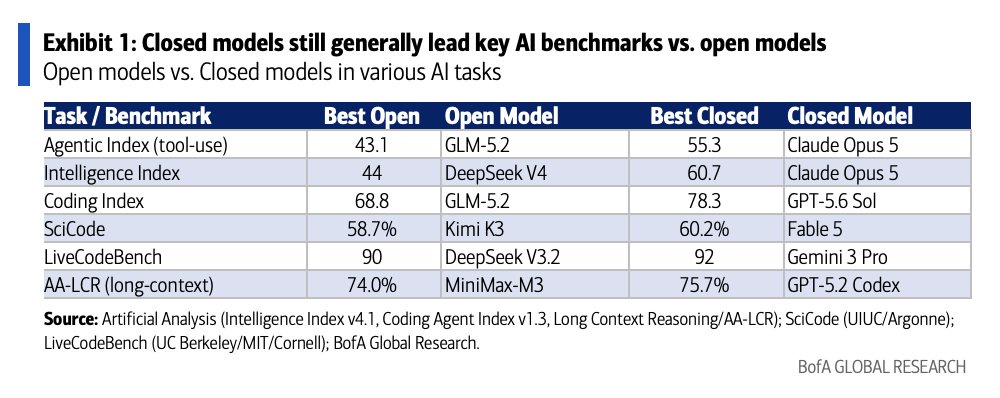
Frontier Leadership & Benchmarks> Closed Models Still Lead: Proprietary (closed) models currently retain top slots on the hardest AI evaluations and benchmarks, including HLE, GPQA Diamond, and SWE-bench.> Performance Gap: The performance gap between closed and open models widens most in critical enterprise value pools, specifically agentic tool-use, coding, and complex reasoning.> Benchmark Examples: Top closed models like Claude Opus 5, GPT-5.6 Sol, and Gemini 3.1 Pro outperform open alternatives like GLM-52, DeepSeek V4, and Kimi K3 across major indices.Adoption Curve & Standards> Industry Standards: Closed model APIs serve as the reference implementation for the industry (defining chat/completions shapes, function-calling schemas, and evaluation norms) which open providers frequently mimic.> Enterprise Preference: Closed models dominate enterprise adoption because they offer zero infrastructure burden, managed compliance, predictable SLAs, and single-vendor accountability. Conversely, self-hosted open models place GPU provisioning and compliance risks directly on the buyer.The Nature of Open Models> Distillation Concerns: Unlike Linux (which was built via clean-room development), leading open models are widely believed to be derivatives of closed models created via distillation. For example, US officials and labs have alleged connections between certain overseas open models and frontier US closed models.> Risks: Open-weight models—many of which originate from China—carry ongoing intellectual property (IP) and national-security risks that could be heavily regulated or altered by governments or closed-lab developers.Coexistence & Market Outlook> Coexistence Over Displacement: The long-term market outcome is expected to be a coexistence model similar to Windows and Linux, rather than open-weights entirely replacing closed systems.> Cost vs. Capability: Open models generally win on cost and efficiency (running 5–10x cheaper per token), while closed models win on technological leadership, adoption, and enterprise trust.> Implications for Semiconductors: Semiconductor demand can benefit regardless of the winner:If closed models lead, frontier-scale training and runs will likely remain highly capital-intensive.If open models proliferate, cheaper tokens will drive broader usage and surge overall inference volumes (Jevons paradox).D

 +15
+15
PinnedMSFT: Tides Turn — Old Guard Back in Favor?
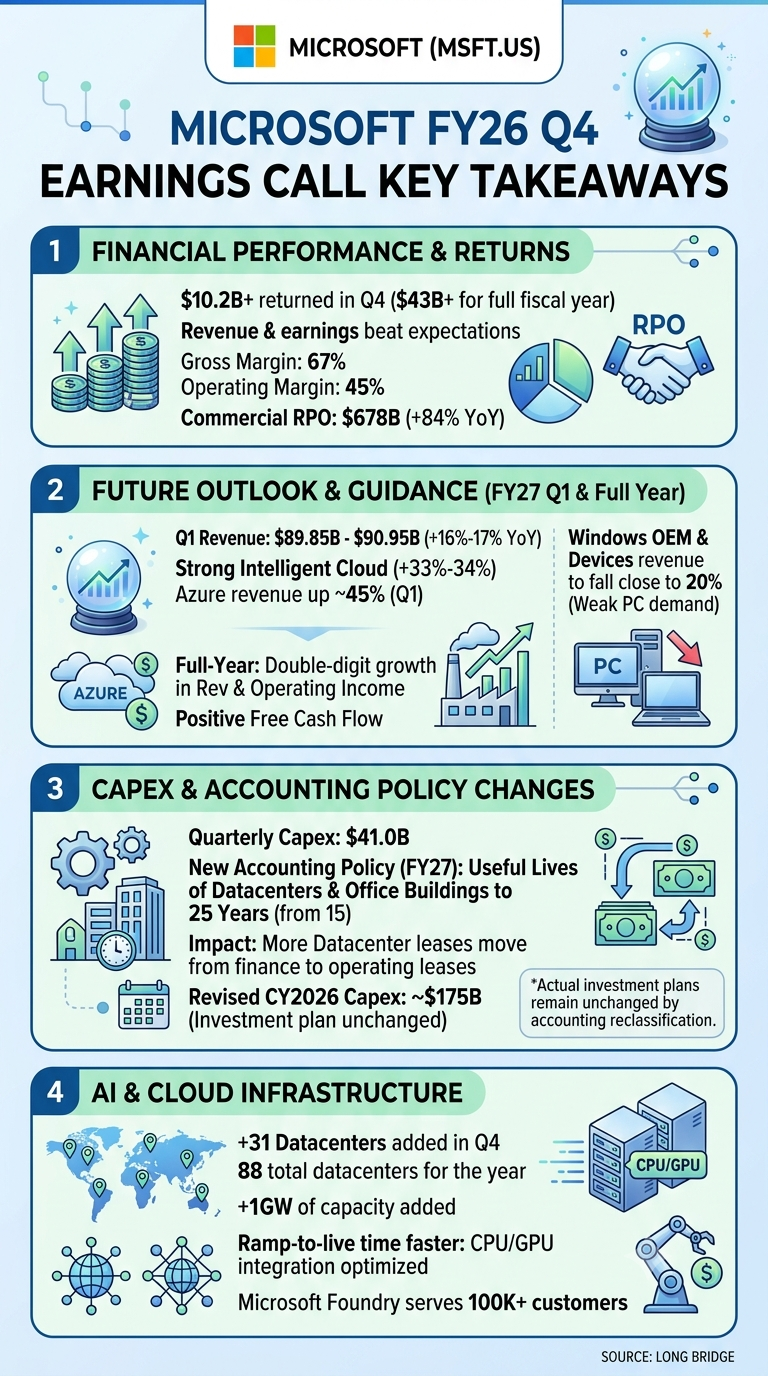
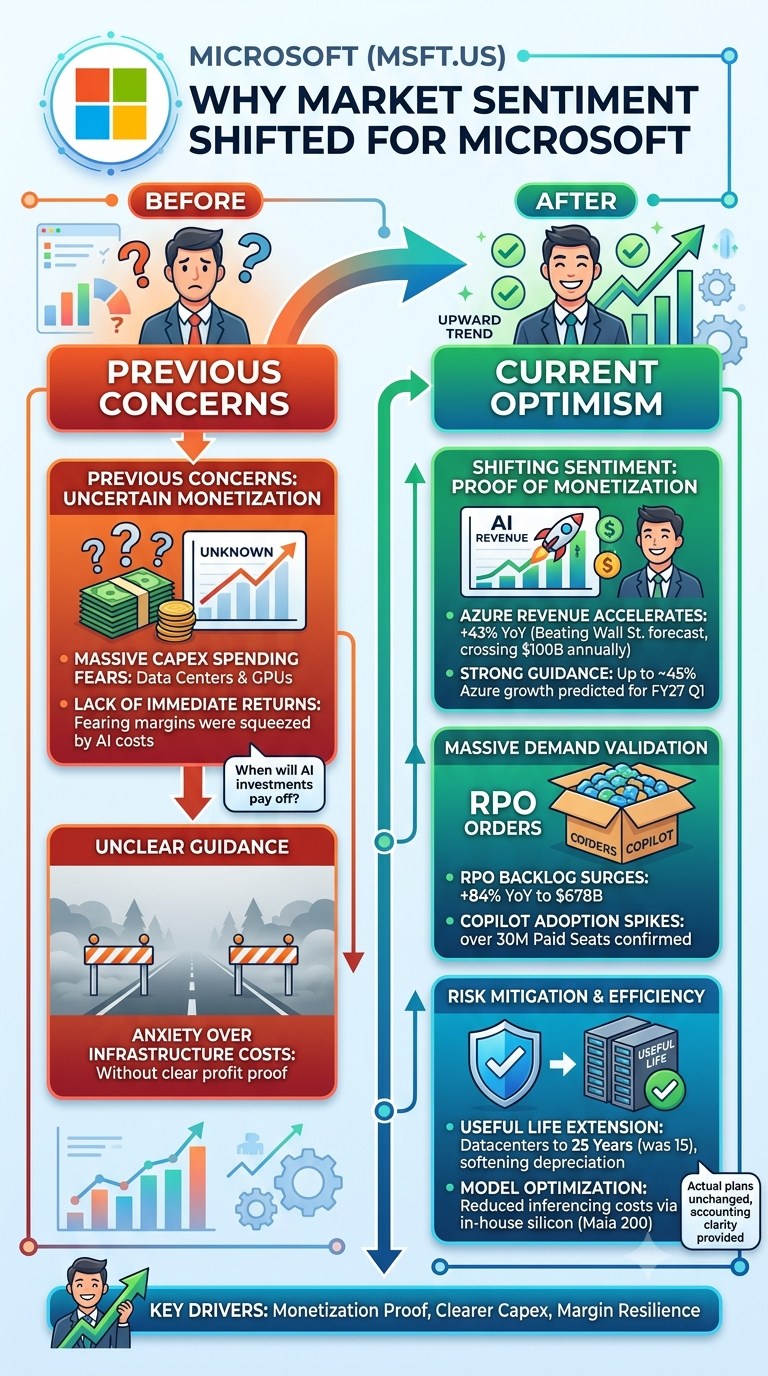
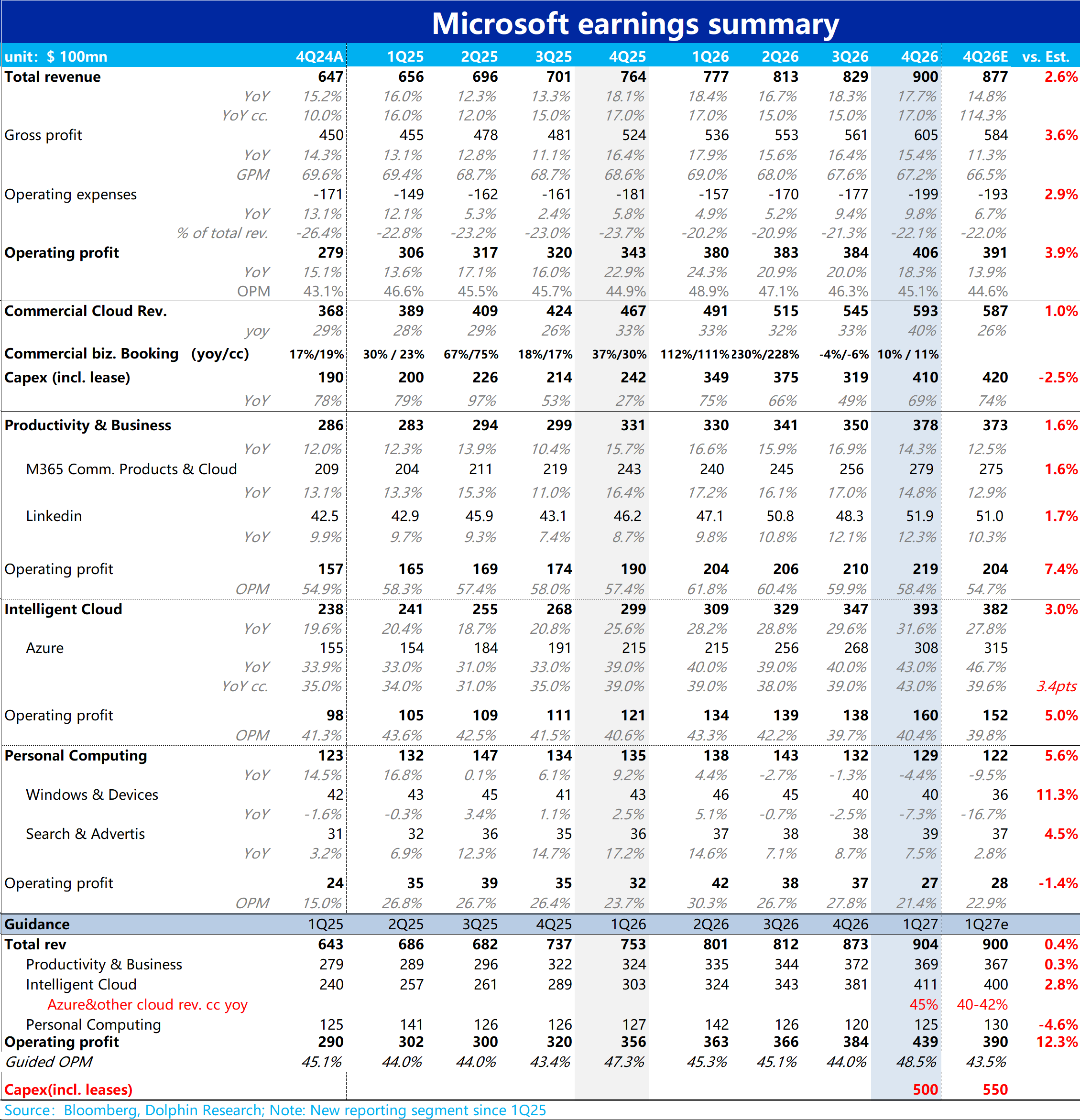
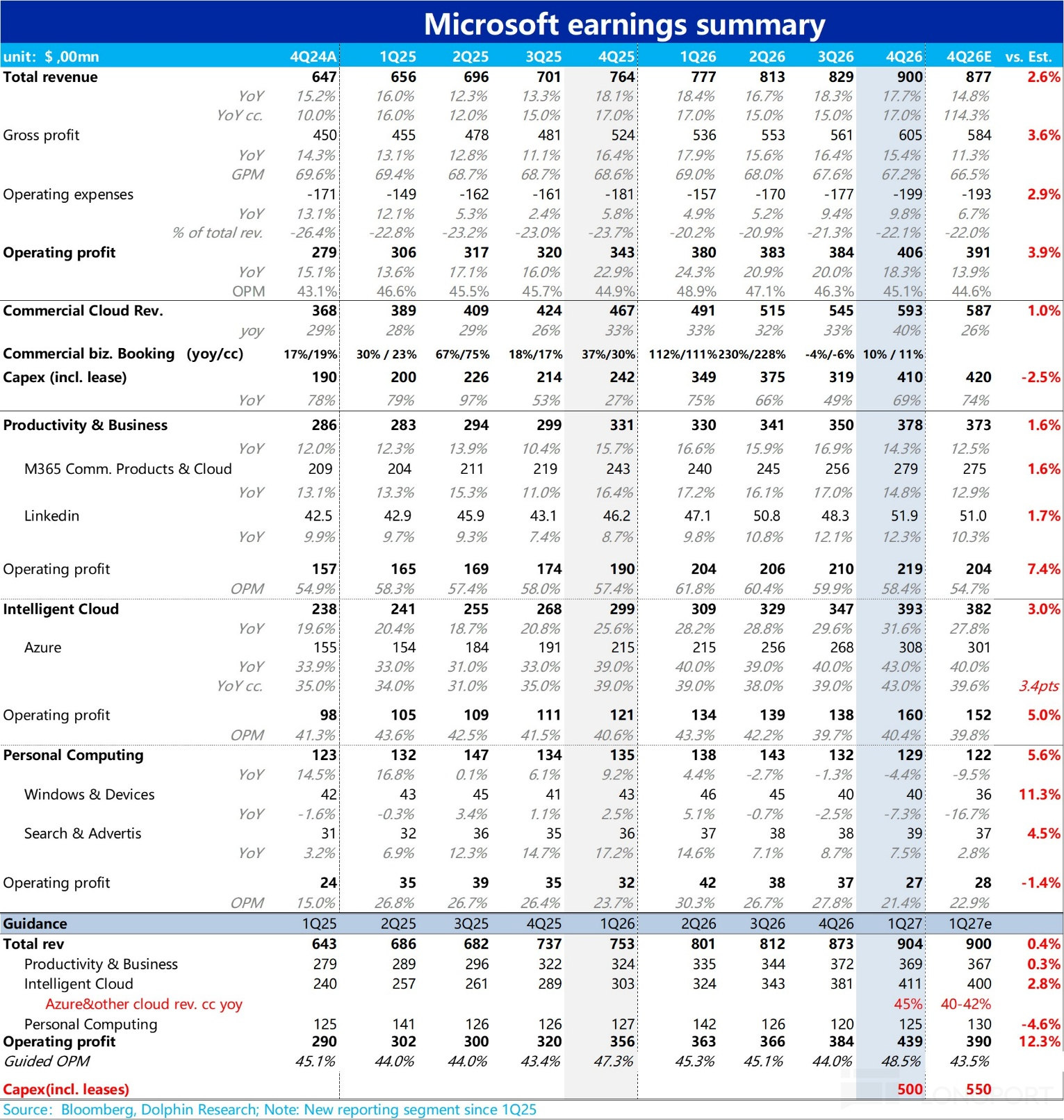
$Microsoft(MSFT.US) reported Q4 FY2026 results for the period ended Jun after the U.S. market close on Jul 30. In short, the AI tide has swung back in its favor, and Microsoft can finally breathe easier.
1) As the key monetization driver for its AI investment, Azure re-accelerated to +43% YoY this quarter (ex-FX the same), vs. more bullish previews at 40–42%. This topped expectations.
More importantly, cc growth guidance for next quarter is 45%, implying further acceleration at Azure. Codex has been catching up fast lately...
+15MicrosoftFinancial Analysis